Research & Development World

  • R&D World Home
  • Topics
    • Aerospace
    • Automotive
    • Biotech
    • Careers
    • Chemistry
    • Environment
    • Energy
    • Life Science
    • Material Science
    • R&D Management
    • Physics
  • Technology
    • 3D Printing
    • A.I./Robotics
    • Software
    • Battery Technology
    • Controlled Environments
      • Cleanrooms
      • Graphene
      • Lasers
      • Regulations/Standards
      • Sensors
    • Imaging
    • Nanotechnology
    • Scientific Computing
      • Big Data
      • HPC/Supercomputing
      • Informatics
      • Security
    • Semiconductors
  • R&D Market Pulse
  • R&D 100
    • 2025 R&D 100 Award Winners
    • 2025 Professional Award Winners
    • 2025 Special Recognition Winners
    • R&D 100 Awards Event
    • R&D 100 Submissions
    • Winner Archive
  • Resources
    • Research Reports
    • Digital Issues
    • Educational Assets
    • R&D Index
    • Subscribe
    • Video
    • Webinars
    • Content submission guidelines for R&D World
  • Global Funding Forecast
  • Top Labs
  • Advertise
  • SUBSCRIBE

Optimization of Alloy Materials: Diffusion Processes in Nano Particles Decoded

By Graz University of Technology | November 13, 2018

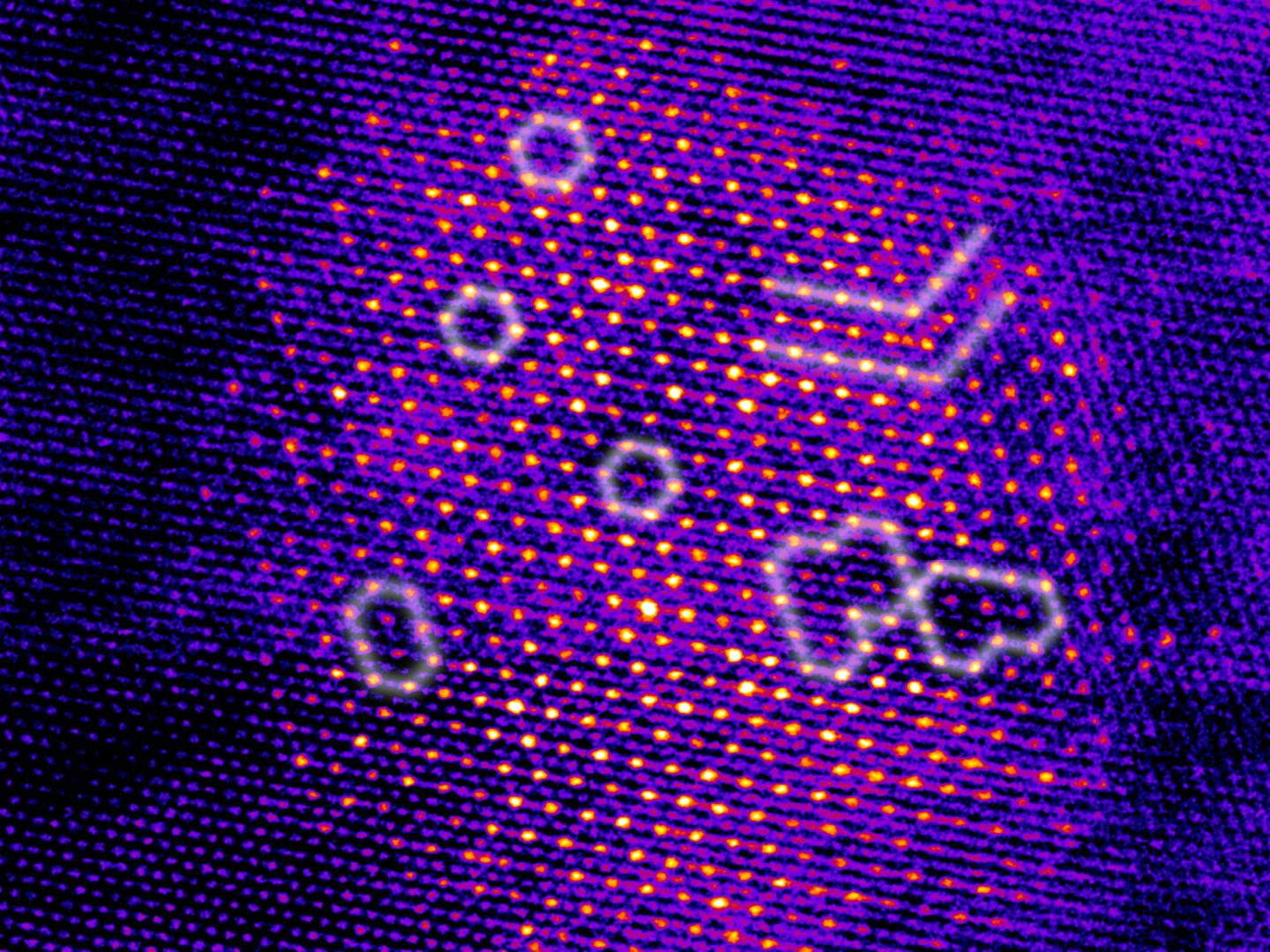
Electron microscopic image of an aluminium nano-precipitate with atom-sized diffusion channels. Credit: TU Graz / FELMI

Aluminium alloys have unique material properties and are indispensable materials in aircraft manufacturing and space technology. With the help of high-resolution electron tomography, researchers at TU Graz have for the first time been able to decode mechanisms crucial for understanding these properties. The research results have recently been published in Nature Materials.

Nano structures responsible for material quality

Alloy elements such as scandium and zircon are added to the aluminium matrix to improve the strength, corrosion resistance and weldability of aluminium alloys. After further treatment, tiny roundish particles only a few nanometres in size, so-called nano-precipitates, are formed. Their form, atomic structure and the ‘struggle’ of the scandium and zircon atoms for the ‘best place’ in the crystal lattice are decisive for the properties and usability of the material.

Researchers at TU Graz analysed these structures with the help of the Austrian Scanning Transmission Electron Microscope (ASTEM) at the Graz Centre for Electron Microscopy (ZFE). The device can produce high-resolution element mappings of three-dimensional structures. ‘The thus arrived at tomographic analysis provided an image which, surprisingly, could not be interpreted according to the previous level of knowledge,’ said Gerald Kothleitner, head of the working group for analytic transmission electron microscopy at the TU Graz’s Institute of Electron Microscopy and Nanoanalysis. ‘We detected anomalies in the generated core-shell structures. On the one hand, we found higher quantities of aluminium in the nano-precipitates then we had presumed. On the other hand, we discovered a zircon-enriched core as well as border zones between the core and shell with an almost perfect composition and crystal structure.’

Quantum mechanics and Monte Carlo methods provide answers

To track down this phenomenon of self-organisation, researchers from the Institute of Electron Microscopy and Nanoanalysis (FELMI) and the Institute of Materials Science, Joining and Forming (IMAT) fell back on quantum mechanical calculations and simulations. It was found that the system separates itself and forms atomically narrow channels in which the foreign atoms can diffuse. Atoms encountering each other block these channels and stabilise the system. Doctoral student Angelina Orthacker, whose thesis was funded by the Austrian Cooperative Research (ACR), gives a graphic explanation of the movement of the atoms: ‘The diffusion process can be compared with the formation of an emergency corridor in an urban area with heavy traffic. The traffic manages to organise itself in a split second to enable the free flow of emergency vehicles. But it only takes a few individual vehicles to block the emergency corridor thus stopping it from working.’ And this is exactly the same behaviour in the interior of aluminium alloys. ‘Emergency corridors’ promote the material transport of scandium and zircon atoms and even slight disturbances stop this transport reaction. The research team presumes that the new findings about these diffusion processes also play a role in other multi-component alloys. Their properties can now be adjusted even more.
Related Articles Read More >

Gadolyn names Jack Lifton advisory board chair, adds Gareth Hatch
Lead-free piezoelectric material converts motion to power without lead
R&D 100 Winners protecting nuclear materials
R&D Winners turn fruit waste into ‘leather’
rd newsletter
EXPAND YOUR KNOWLEDGE AND STAY CONNECTED
Get the latest info on technologies, trends, and strategies in Research & Development.
RD 25 Power Index

R&D World Digital Issues

Fall 2025 issue

Browse the most current issue of R&D World and back issues in an easy to use high quality format. Clip, share and download with the leading R&D magazine today.

R&D 100 Awards
Research & Development World
  • Subscribe to R&D World Magazine
  • Sign up for R&D World’s newsletter
  • Contact Us
  • About Us
  • Drug Discovery & Development
  • Pharmaceutical Processing
  • Global Funding Forecast

Copyright © 2025 WTWH Media LLC. All Rights Reserved. The material on this site may not be reproduced, distributed, transmitted, cached or otherwise used, except with the prior written permission of WTWH Media
Privacy Policy | Advertising | About Us

Search R&D World

  • R&D World Home
  • Topics
    • Aerospace
    • Automotive
    • Biotech
    • Careers
    • Chemistry
    • Environment
    • Energy
    • Life Science
    • Material Science
    • R&D Management
    • Physics
  • Technology
    • 3D Printing
    • A.I./Robotics
    • Software
    • Battery Technology
    • Controlled Environments
      • Cleanrooms
      • Graphene
      • Lasers
      • Regulations/Standards
      • Sensors
    • Imaging
    • Nanotechnology
    • Scientific Computing
      • Big Data
      • HPC/Supercomputing
      • Informatics
      • Security
    • Semiconductors
  • R&D Market Pulse
  • R&D 100
    • 2025 R&D 100 Award Winners
    • 2025 Professional Award Winners
    • 2025 Special Recognition Winners
    • R&D 100 Awards Event
    • R&D 100 Submissions
    • Winner Archive
  • Resources
    • Research Reports
    • Digital Issues
    • Educational Assets
    • R&D Index
    • Subscribe
    • Video
    • Webinars
    • Content submission guidelines for R&D World
  • Global Funding Forecast
  • Top Labs
  • Advertise
  • SUBSCRIBE