Research & Development World

  • R&D World Home
  • Topics
    • Aerospace
    • Automotive
    • Biotech
    • Careers
    • Chemistry
    • Environment
    • Energy
    • Life Science
    • Material Science
    • R&D Management
    • Physics
  • Technology
    • 3D Printing
    • A.I./Robotics
    • Software
    • Battery Technology
    • Controlled Environments
      • Cleanrooms
      • Graphene
      • Lasers
      • Regulations/Standards
      • Sensors
    • Imaging
    • Nanotechnology
    • Scientific Computing
      • Big Data
      • HPC/Supercomputing
      • Informatics
      • Security
    • Semiconductors
  • R&D Market Pulse
  • R&D 100
    • 2026 R&D 100 Award Winners
    • 2026 Professional Award Winners
    • 2026 Special Recognition Winners
    • R&D 100 Awards Event
    • R&D 100 Submissions
    • Winner Archive
  • Resources
    • Research Reports
    • Digital Issues
    • Educational Assets
    • Subscribe
    • Video
    • Webinars
    • PharmSci360
    • Content submission guidelines for R&D World
  • Global Funding Forecast
  • Top Labs
  • Advertise
  • SUBSCRIBE

OSU Researchers Propose CRISPR as Influencer of Low Genetic Diversity in Deadly Bacteria

By Oregon State University | October 19, 2018

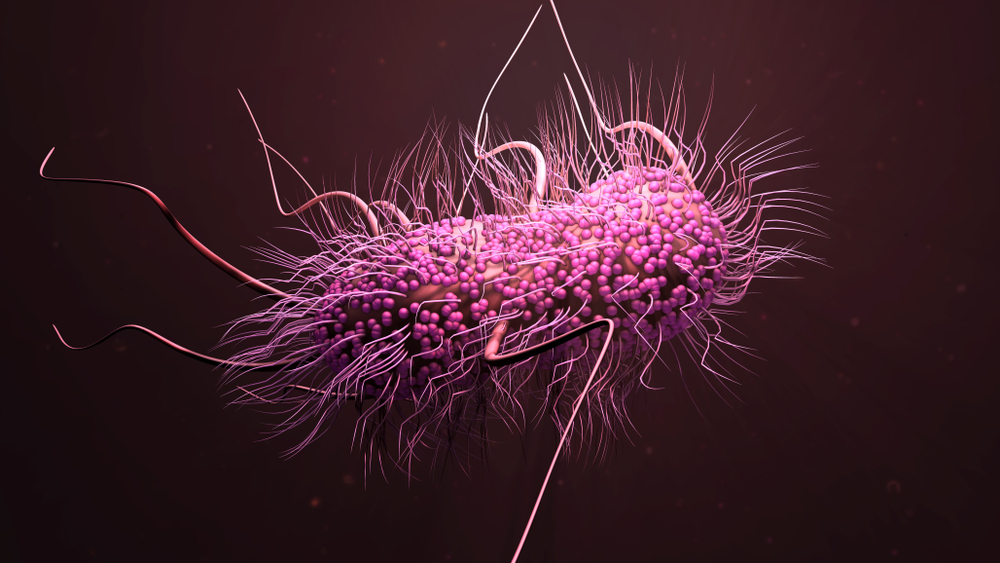
Scientists at Oregon State University have shed light on the evolutionary history of a soil-borne bacteria that is so dangerous to grazing animals it is kept behind lock-and-key to prevent its spread.

Somewhere along the way, Rathayibacter toxicus lost about one-third of its genes. Yet it persists in spite of its genome reduction and low genetic diversity. In a new study, researchers propose a process that emphasizes the importance of the bacteria’s reaction to viral infection. At the center of that process is a clustered regularly interspaced short palindromic repeat (CRISPR) locus.

The U.S. government has declared R. toxicus to be a biological select agent for toxins and specimens are handled at highly secure federal facilties. There is no evidence of the bacterial species in Oregon but concerns are high because the worm that transports it to plants is found in the state. In addition, the worm and bacteria both infect grass seedheads. In 2017, hay and grass seed were the third- and fifth-largest agricultural commodities in Oregon, with a combined value of more than $1 billion.

“The ability to detect and preemptively prevent the movement of R. toxicus is vitally important,” said Jeff Chang, a microbial genomicist in OSU’s College of Agricultural Sciences and the study’s corresponding author. “It’s one thing to see an infected grass, it’s another to detect microbes before you even see their effects. With genome-enabled epidemiology, we can track the movement of specific lineages of bacteria and try to stop them from moving around.”

CRISPRs are used in genome editing technology but are less known for their ecological roles. In this study, the scientists relied on whole genome sequencing to understand how different species of Rathayibacter are related and how they evolve.

“Now that we have a whole genome sequenced and understand it, we can identify specific sequences that can be used for molecular diagnostics. That could be a powerful way to massively survey seed lots to find out if R. toxicus is present,” Chang said.

In the study, the researchers used DNA extracted from R. toxicus collected during a 30-year period of sampling in three regions of Australia. Their analysis also included strains collected from seeds produced in Oregon. R. toxicus was not detected in seed samples from Oregon, and the two dominant species of Rathayibacter found in Oregon lack the genes necessary to make the toxin that has afflicted grazing animals in Australia.

More than 100 sequenced Rathayibacter genomes were analyzed. R. toxicus is the most genetically distant, and that’s likely because it is the only Rathayibacter to have acquired a CRISPR adaptive immune system to protect against viruses, said Ed Davis, an OSU doctoral graduate and one of the study’s co-lead authors.

“In its evolution, not only did it lose genes but it gained genes, including the CRISPR locus,” Davis said. “It gained genes that other Rathayibacter bacteria don’t have. Its genome is normal, except some sections were removed. This suggests that this species experienced a dramatic event in its evolution.”

Related Articles Read More >

Big Tech now spends almost 3x more on R&D than Big Pharma 
Inside the Lab: NARI’s Ga-68 Dolacga measures liver function CT scans can’t see
Verily secures new investment from Nvidia
How Lantern Med Digital is helping build the digital layer of Costa Rica’s medtech boom
rd newsletter
EXPAND YOUR KNOWLEDGE AND STAY CONNECTED
Get the latest info on technologies, trends, and strategies in Research & Development.

R&D World Digital Issues

Fall 2025 issue

Browse the most current issue of R&D World and back issues in an easy to use high quality format. Clip, share and download with the leading R&D magazine today.

R&D 100 Awards
Research & Development World
  • Subscribe to R&D World Magazine
  • Sign up for R&D World’s newsletter
  • Contact Us
  • About Us
  • Drug Discovery & Development
  • Pharmaceutical Processing
  • Global Funding Forecast

Copyright © 2026 Arrowfly LLC. All Rights Reserved. The material on this site may not be reproduced, distributed, transmitted, cached or otherwise used, except with the prior written permission of Arrowfly
Privacy Policy | Advertising | About Us

Search R&D World

  • R&D World Home
  • Topics
    • Aerospace
    • Automotive
    • Biotech
    • Careers
    • Chemistry
    • Environment
    • Energy
    • Life Science
    • Material Science
    • R&D Management
    • Physics
  • Technology
    • 3D Printing
    • A.I./Robotics
    • Software
    • Battery Technology
    • Controlled Environments
      • Cleanrooms
      • Graphene
      • Lasers
      • Regulations/Standards
      • Sensors
    • Imaging
    • Nanotechnology
    • Scientific Computing
      • Big Data
      • HPC/Supercomputing
      • Informatics
      • Security
    • Semiconductors
  • R&D Market Pulse
  • R&D 100
    • 2026 R&D 100 Award Winners
    • 2026 Professional Award Winners
    • 2026 Special Recognition Winners
    • R&D 100 Awards Event
    • R&D 100 Submissions
    • Winner Archive
  • Resources
    • Research Reports
    • Digital Issues
    • Educational Assets
    • Subscribe
    • Video
    • Webinars
    • PharmSci360
    • Content submission guidelines for R&D World
  • Global Funding Forecast
  • Top Labs
  • Advertise
  • SUBSCRIBE