Research & Development World

  • R&D World Home
  • Topics
    • Aerospace
    • Automotive
    • Biotech
    • Careers
    • Chemistry
    • Environment
    • Energy
    • Life Science
    • Material Science
    • R&D Management
    • Physics
  • Technology
    • 3D Printing
    • A.I./Robotics
    • Software
    • Battery Technology
    • Controlled Environments
      • Cleanrooms
      • Graphene
      • Lasers
      • Regulations/Standards
      • Sensors
    • Imaging
    • Nanotechnology
    • Scientific Computing
      • Big Data
      • HPC/Supercomputing
      • Informatics
      • Security
    • Semiconductors
  • R&D Market Pulse
  • R&D 100
    • 2025 R&D 100 Award Winners
    • 2025 Professional Award Winners
    • 2025 Special Recognition Winners
    • R&D 100 Awards Event
    • R&D 100 Submissions
    • Winner Archive
  • Resources
    • Research Reports
    • Digital Issues
    • Educational Assets
    • R&D Index
    • Subscribe
    • Video
    • Webinars
    • Content submission guidelines for R&D World
  • Global Funding Forecast
  • Top Labs
  • Advertise
  • SUBSCRIBE

Proteins Imaged in Graphene Liquid Cell Possess Higher Radiation Tolerance

By Leibniz Institute for New Materials | December 10, 2018

Electron microscopy is one of the main methods used to examine protein structure. Studying these structures is of key importance to elucidate their function feeding fundamental information into a number of fields such as structural biology, cell biology, cancer research, and other biomedical fields. It also enhances the understanding of biomineralization.

A new option for imaging proteins is liquid-phase electron microscopy (LPEM), which is capable of imaging native (unstained) protein structure and other samples such as nanomaterials or cells in liquid. This technology was developed over the past 15 years.

Until recently, it debated whether the radiation tolerance of liquid samples would be better or worse compared to amorphous ice.

In their recent publication, Sercan Keskin and Niels de Jonge from the INM-Leibniz Institute for New Materials now demonstrate that the radiation tolerance is increased by an order of magnitude compared to a sample in ice.

This result was achieved by preparing a microtubule sample in a graphene liquid cell. Essential was to use a low as possible rate at which the electron beam irradiation was applied.

Traditionally, samples were fixed, stained with a metal to enhance their contrast, subsequently dried, embedded in plastic, cut in thin sections, and then imaged in the vacuum environment required for electron microscopy.

Cryo electron microscopy overcomes the drawbacks associated with this sample preparation and provides the means to study proteins in a close to native hydrated state by preparing them in amorphous ice.

However, a key imitating is the high sensitivity of the samples to electron beam irradiation, so that statistical noise in the image prevents high resolution and many ten thousand noisy images of identical structures need to be imaged in order to resolve the structure.
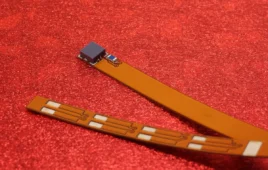
Source: Leibniz Institute for New Materials

Related Articles Read More >

The emerging materials shaping next-generation semiconductor electronics
24 R&D trends that redefined 2024
Graphene-based flowmeter sensor measures nano-rate fluid flows, Part 3: The sensor
Graphene-based flowmeter sensor measures nano-rate fluid flows, Part 2: The graphene context
rd newsletter
EXPAND YOUR KNOWLEDGE AND STAY CONNECTED
Get the latest info on technologies, trends, and strategies in Research & Development.
RD 25 Power Index

R&D World Digital Issues

Fall 2025 issue

Browse the most current issue of R&D World and back issues in an easy to use high quality format. Clip, share and download with the leading R&D magazine today.

R&D 100 Awards
Research & Development World
  • Subscribe to R&D World Magazine
  • Sign up for R&D World’s newsletter
  • Contact Us
  • About Us
  • Drug Discovery & Development
  • Pharmaceutical Processing
  • Global Funding Forecast

Copyright © 2025 WTWH Media LLC. All Rights Reserved. The material on this site may not be reproduced, distributed, transmitted, cached or otherwise used, except with the prior written permission of WTWH Media
Privacy Policy | Advertising | About Us

Search R&D World

  • R&D World Home
  • Topics
    • Aerospace
    • Automotive
    • Biotech
    • Careers
    • Chemistry
    • Environment
    • Energy
    • Life Science
    • Material Science
    • R&D Management
    • Physics
  • Technology
    • 3D Printing
    • A.I./Robotics
    • Software
    • Battery Technology
    • Controlled Environments
      • Cleanrooms
      • Graphene
      • Lasers
      • Regulations/Standards
      • Sensors
    • Imaging
    • Nanotechnology
    • Scientific Computing
      • Big Data
      • HPC/Supercomputing
      • Informatics
      • Security
    • Semiconductors
  • R&D Market Pulse
  • R&D 100
    • 2025 R&D 100 Award Winners
    • 2025 Professional Award Winners
    • 2025 Special Recognition Winners
    • R&D 100 Awards Event
    • R&D 100 Submissions
    • Winner Archive
  • Resources
    • Research Reports
    • Digital Issues
    • Educational Assets
    • R&D Index
    • Subscribe
    • Video
    • Webinars
    • Content submission guidelines for R&D World
  • Global Funding Forecast
  • Top Labs
  • Advertise
  • SUBSCRIBE