Image from Owkin
Over the past two years, software engineering has handed a growing share of its routine work to AI agents. At one end of the spectrum, companies ranging from Google to Anthropic use AI to write the bulk of their code. At the other, there are reports of the bills coming due for heavy users at companies like Uber and Microsoft. Drug discovery is hoping to capture the speed these agents promise without inheriting the quality and cost problems trailing them, aiming to take the workflows that consume a trained expert’s time and let an agent run them at scale.
A wave of companies now sells versions of that idea under the banner of the “AI co-scientist.” Google DeepMind helped popularize the name and, on May 19, its peer-reviewed standing: Nature published the paper documenting Co-Scientist, a multi-agent system built on Gemini that generates, debates, and ranks hypotheses, with wet-lab validations in cancer drug repurposing and liver fibrosis, and Google has begun rolling it out to researchers as Hypothesis Generation inside its Gemini for Science suite. Lila Sciences, a Flagship Pioneering spinout, has raised more than $200 million to build what it calls “scientific superintelligence,” pairing models with robotic labs. FutureHouse and its for-profit spinout Edison Scientific build autonomous literature-and-reasoning agents, one of which reached Nature the same week as Google’s. At the smaller end, the Seattle startup Potato, backed by $4.5 million led by Draper Associates, sells an AI co-scientist named Tater that turns a researcher’s intent into robot-ready experimental protocols.

Jonas Béal, head of product at Owkin. (Photo: Owkin)
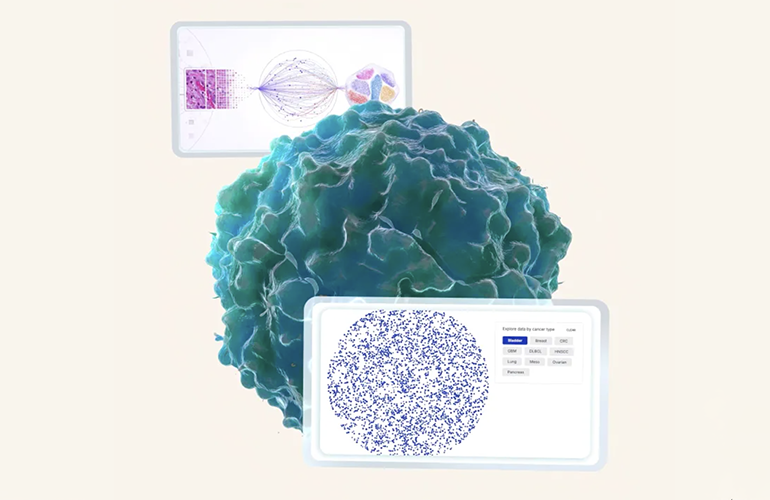
Owkin, the French-American techbio that has raised $300 million across a decade, is the latest entrant, with a platform it bills as an “AI Scientist.” K Pro, built on that decade of Owkin’s biomedical AI work, lets pharmaceutical teams query multimodal patient data in natural language and run AI agents across the pipeline, from early discovery through clinical development. What Owkin argues sets it apart is that data layer, drawn from more than 800 hospitals, which head of product Jonas Béal calls the difference between real biological insight and, without it, “LLM guesses.”
Owkin focuses on validation through a “lab-in-the-loop” system in which the AI designs the experiments needed to confirm or kill its own hypotheses. “That’s what you would expect from a real scientific copilot,” he said in March, “not only generating the idea, but generating what you need to make the idea concrete and validated.”
Three months later, Owkin has signed two major K Pro agreements: a five-year license with Sanofi and a three-year license with AstraZeneca. Béal confirmed by email that neither includes lab-in-the-loop validation from Owkin’s side, and that the initial scope of both is competitive intelligence and decision support. “Validation is absolutely a bottleneck,” he wrote, “but currently this deal does not include lab-in-the-loop validation from the Owkin side.”
In a recent Q&A, lightly edited for length and clarity, Béal walked through what the Sanofi deal adds to a relationship that goes back to 2021, what Owkin’s “purpose-built” agents actually are, and why the bottleneck he flagged in March sits outside the deal’s initial scope.
R&D World: Your 2021 partnership covered target identification, patient subgrouping, and drug positioning. What does this collaboration let Sanofi do that the earlier one did not?
Béal: The prior agreement was a strategic alliance for target identification in oncology which expanded into drug positioning in I&I. This new collaboration is specifically to license Owkin’s K Pro and build specialized agents on top of the platform. K Pro offers much of the same functionality, from drug discovery to development, with many common capabilities, now packaged into one single platform to make them available at the user’s fingertips with specialized agents. We are not yet disclosing the exact capabilities of the specialist agents.
R&D World: Does “purpose-built” mean new OwkinZero-style fine-tuned models trained on Sanofi data, new tool-and-recipe scaffolding around frontier models, or both? And who owns the resulting models and weights?
Béal: OwkinZero is a fine-tuned LLM, we are not building these for Sanofi. We are not disclosing the exact capabilities of the agents, but they will likely function as tool-and-recipe scaffolding that can be called by the K Pro orchestrator around specific use cases of interest. We can’t disclose if they will integrate frontier models, or the ownership of those models/weights.
R&D World: How do Owkin’s agents interoperate with Sanofi’s existing AI stack? Is this an MCP-based integration, and does data flow back to improve K Pro generally, or stay with Sanofi?
Béal: K Pro is built in a modular way so that the agentic platform can easily connect to additional capabilities provided by the client, for instance through MCP amongst other ways. In this way Sanofi can connect their internal AI stack to K Pro. Sanofi’s data will remain internal to Sanofi as part of our strict safeguards on partner privacy and data security.
R&D World: You’ve called validation the real bottleneck. Does this collaboration include the lab-in-the-loop validation loop, and where in the pipeline do the first Sanofi agents operate?
Béal: Validation is absolutely a bottleneck, but currently this deal does not include lab-in-the-loop validation from the Owkin side. Exact validation strategies will be defined specifically for use cases of interest, leveraging the best of Owkin and Sanofi data and capabilities. Yes, the initial scope is competitive intelligence and decision support. I’m afraid we can’t yet comment on where in the pipeline the specialist agents will operate.
R&D World: Owkin frames K Pro as a step toward Biological Artificial Superintelligence and the eventual automation of R&D. For this deal specifically, what does success look like in measurable terms over the coming years?
Béal: Yes, Owkin’s eventual goal is to automate K Pro (our AI scientist) to allow it to make discoveries humans alone could not make. When we have done this successfully we will have achieved Biological Artificial Superintelligence (BASI). K Pro users (like Sanofi) benefit from our progress towards this on the platform, but the goal of our partnership with Sanofi is not to come closer to BASI. Instead, in the short to mid-term, success looks like delivering three specialist agents to the highest standards and ensuring Sanofi’s satisfied and increased use of K Pro in their work. The validation and trust gained along the way will form the basis for increasingly automatized behavior.