Research & Development World

  • R&D World Home
  • Topics
    • Aerospace
    • Automotive
    • Biotech
    • Careers
    • Chemistry
    • Environment
    • Energy
    • Life Science
    • Material Science
    • R&D Management
    • Physics
  • Technology
    • 3D Printing
    • A.I./Robotics
    • Software
    • Battery Technology
    • Controlled Environments
      • Cleanrooms
      • Graphene
      • Lasers
      • Regulations/Standards
      • Sensors
    • Imaging
    • Nanotechnology
    • Scientific Computing
      • Big Data
      • HPC/Supercomputing
      • Informatics
      • Security
    • Semiconductors
  • R&D Market Pulse
  • R&D 100
    • 2025 R&D 100 Award Winners
    • 2025 Professional Award Winners
    • 2025 Special Recognition Winners
    • R&D 100 Awards Event
    • R&D 100 Submissions
    • Winner Archive
  • Resources
    • Research Reports
    • Digital Issues
    • Educational Assets
    • R&D Index
    • Subscribe
    • Video
    • Webinars
    • Content submission guidelines for R&D World
  • Global Funding Forecast
  • Top Labs
  • Advertise
  • SUBSCRIBE

Report: 3D Printing is Disrupting The Way We Provide Personalized Medicine

By IDTechEx | January 21, 2019

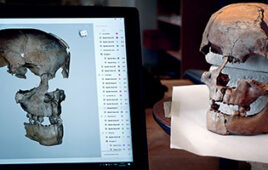
Compared to traditional manufacturing workflows, 3D printing confers several potential advantages to the dental industry (PRNewsfoto/IDTechEx)

From its humble beginnings in the late 1980s, through to the global force that it is today, the capabilities of 3D printing technology have expanded dramatically, to establish itself as an attractive manufacturing solution for prototyping and production. Conferring advantages such as shorter lead times, reduced waste and opportunity for mass customisation, the potential of 3D printing was quickly realised and has gone from strength to strength since. One of the key industries to have successfully leveraged these advantages is the medical and dental industry. In the IDTechEx Research report, 3D Printing in the Medical and Dental Industry 2019 – 2029, 3D printing in the medical and dental industry is forecast to be worth over $8.1 billion by 2029.

3D printing streamlines the production of personalized medical devices  

3D printing allows the production of a wide range of devices such as hearing aids to Invisalign® aligners to prosthetic limbs. Use of 3D printing in these applications leverage its ability for mass customization from 3D imaging data. Personalization is particularly important to medical devices designed to be worn by the patient for extended time, as this improves patient comfort, and with that, adherence to the treatment. No manufacturing process in the medical sector has been as disrupted by 3D printing as that of the hearing aid. 3D printed hearing aids are made with digital precision, an improvement over the lengthy hand-crafting process that sometimes resulted in pieces that were not perfectly fitted. This is important where less than a millimetre of difference can lead to discomfort for the wearer. Thus, adoption of 3D printing has not only streamlined but also enhanced the manufacturing process. Given these benefits, 3D printing is gaining popularity in the field of dentistry, and is also emerging as a method of manufacture for several other medical devices where customization is key to improved patient comfort and improved therapeutic outcomes.   

3D printing improves surgical outcomes  

The range of applications is not limited to the manufacture of medical devices. 3D printing is also used extensively in surgical procedures, whether in the creation of patient-specific 3D models for teaching, planning and visualization, intraoperative surgical guides, disposable surgical instrumentation, or custom plates, implants, valves, and stents to be implanted into the patient. 3D printing advances surgical standards and improves efficiency, resulting in improved surgical outcomes for the patient. 3D printed implants are durable, lightweight and customized to fit the patient for better functional and aesthetic outcomes.

3D printing will provide personalized medicine  

The range of applications is not limited to medical devices or surgery. 3D printing can used to manufacture pharmaceuticals, such as patient-specific pills. Personalized medication is especially promising in disrupting the way we treat chronic conditions, by helping patients streamline the number of pills that they must take, and by creating patient-specific dosages that will limit the unwanted side effects experienced. Moreover, as the development of 3D bioprinting continues to evolve, there is scope for the implantation of personalized organs as part of regenerative medicine.
Related Articles Read More >

R&D 100 winner LLNL achieves 1,000x speed boost in 3D nanofabrication
Caltech team 3D-prints drug depots deep inside living tissue
What could make MXene a key to ultra-precise, additive-free 3D microprinting?
Industry 4.0 Modern Factory: Facility Operator Controls Workshop Production Line, Uses Computer with Screens Showing Complex UI of Machine Operation Processes, Controllers, Machinery Blueprints
Building the thinking factory: An additive exec on AI, automation, and the skills crisis
rd newsletter
EXPAND YOUR KNOWLEDGE AND STAY CONNECTED
Get the latest info on technologies, trends, and strategies in Research & Development.
RD 25 Power Index

R&D World Digital Issues

Fall 2025 issue

Browse the most current issue of R&D World and back issues in an easy to use high quality format. Clip, share and download with the leading R&D magazine today.

R&D 100 Awards
Research & Development World
  • Subscribe to R&D World Magazine
  • Sign up for R&D World’s newsletter
  • Contact Us
  • About Us
  • Drug Discovery & Development
  • Pharmaceutical Processing
  • Global Funding Forecast

Copyright © 2026 WTWH Media LLC. All Rights Reserved. The material on this site may not be reproduced, distributed, transmitted, cached or otherwise used, except with the prior written permission of WTWH Media
Privacy Policy | Advertising | About Us

Search R&D World

  • R&D World Home
  • Topics
    • Aerospace
    • Automotive
    • Biotech
    • Careers
    • Chemistry
    • Environment
    • Energy
    • Life Science
    • Material Science
    • R&D Management
    • Physics
  • Technology
    • 3D Printing
    • A.I./Robotics
    • Software
    • Battery Technology
    • Controlled Environments
      • Cleanrooms
      • Graphene
      • Lasers
      • Regulations/Standards
      • Sensors
    • Imaging
    • Nanotechnology
    • Scientific Computing
      • Big Data
      • HPC/Supercomputing
      • Informatics
      • Security
    • Semiconductors
  • R&D Market Pulse
  • R&D 100
    • 2025 R&D 100 Award Winners
    • 2025 Professional Award Winners
    • 2025 Special Recognition Winners
    • R&D 100 Awards Event
    • R&D 100 Submissions
    • Winner Archive
  • Resources
    • Research Reports
    • Digital Issues
    • Educational Assets
    • R&D Index
    • Subscribe
    • Video
    • Webinars
    • Content submission guidelines for R&D World
  • Global Funding Forecast
  • Top Labs
  • Advertise
  • SUBSCRIBE