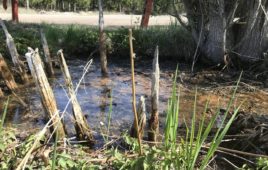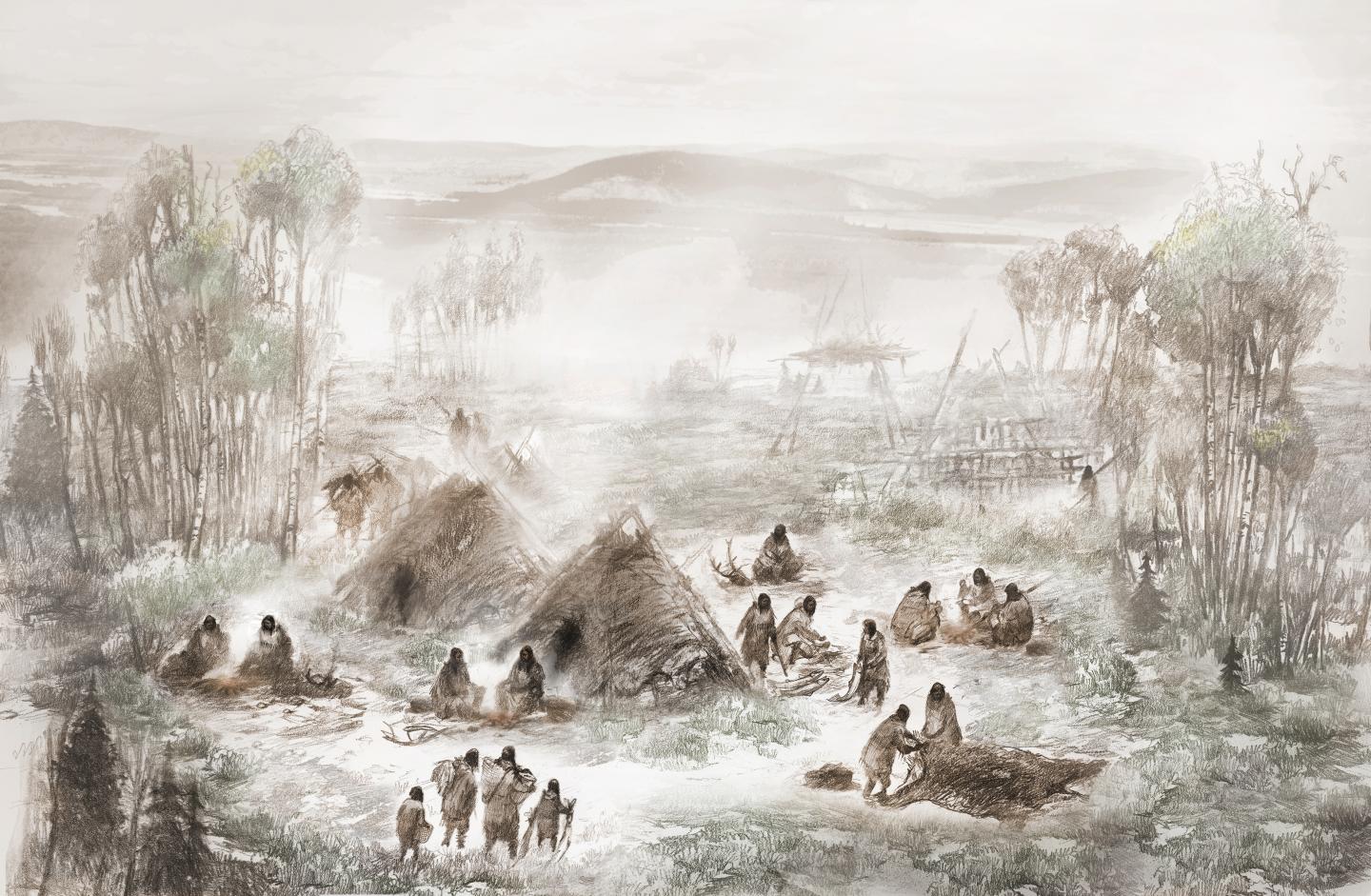
A scientific illustration of the Upward Sun River camp in what is now Interior Alaska. CREDIT Illustration by Eric S. Carlson in collaboration with Ben A. Potter
Genetic analysis of ancient DNA from a 6-week-old infant found at an Interior Alaska archaeological site has revealed a previously unknown population of ancient people in North America.
The findings, published in the Jan. 3 edition of the journal Nature, represent a major shift in scientists’ theories about how humans populated North America. The researchers have named the new group “Ancient Beringians.”
“We didn’t know this population existed,” said Ben Potter, one of the lead authors of the study and a professor of anthropology at the University of Alaska Fairbanks. “These data also provide the first direct evidence of the initial founding Native American population, which sheds new light on how these early populations were migrating and settling throughout North America.”
Genetic analysis and demographic modeling, which help scientists draw connections among groups of people over time, indicate that a single founding ancestral Native American group split from East Asians about 35,000 year ago. Then, about 20,000 years ago, that group split into two groups: the Ancient Beringians and the ancestors of all other Native Americans. Lead authors J. Victor Moreno-Mayar, Eske Willerslev and the team at the Centre for GeoGenetics at the University of Copenhagen’s Natural History Museum of Denmark completed the genetics work.
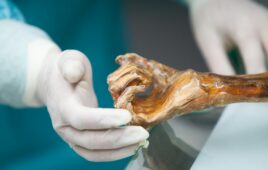
The DNA from the infant, named “Xach’itee’aanenh T’eede Gaay” (sunrise girl-child) by the local indigenous community, has provided an unprecedented window into the history of her people, Potter said. She and a younger female infant found at the Upward Sun River site in 2013 lived about 11,500 years ago and were closely related, likely first cousins. The younger infant has been named “Ye?kaanenh T’eede Gaay” (dawn twilight girl-child).
“It would be difficult to overstate the importance of this newly revealed people to our understanding of how ancient populations came to inhabit the Americas,” Potter said. “This new information will allow us a more accurate picture of Native American prehistory. It is markedly more complex than we thought.”
The findings also suggest two new scenarios for populating the New World. One is that there were two distinct groups of people who crossed over the Beringian land bridge prior to 15,700 years ago. A second is that one group of people crossed over the land bridge and then split in Beringia into two groups: Ancient Beringians and other Native Americans, with the latter moving south of the ice sheets 15,700 years ago.
Potter’s National Science Foundation-funded work at the Upward Sun River site has spanned a decade. He said that when the science team began the analysis of the genetic material, they expected it to match the genetic profile of other northern Native American people. Instead, it matched no other known ancient population.
What this suggests is that the Ancient Beringian people remained in the Far North for thousands of years, while the ancestors of other Native American peoples spread south throughout the rest of North America. The DNA results, along with other archaeological data, suggest that Athabascan ancestors moved north again, possibly around 6,000 years ago, eventually absorbing or replacing the Ancient Beringian population and establishing deep roots in their ancestral lands.
“There is very limited genetic information about modern Alaska Athabascan people,” Potter said. “These findings create opportunities for Alaska Native people to gain new knowledge about their own connections to both the northern Native American and Ancient Beringian people.”