Research & Development World

  • R&D World Home
  • Topics
    • Aerospace
    • Automotive
    • Biotech
    • Careers
    • Chemistry
    • Environment
    • Energy
    • Life Science
    • Material Science
    • R&D Management
    • Physics
  • Technology
    • 3D Printing
    • A.I./Robotics
    • Software
    • Battery Technology
    • Controlled Environments
      • Cleanrooms
      • Graphene
      • Lasers
      • Regulations/Standards
      • Sensors
    • Imaging
    • Nanotechnology
    • Scientific Computing
      • Big Data
      • HPC/Supercomputing
      • Informatics
      • Security
    • Semiconductors
  • R&D Market Pulse
  • R&D 100
    • 2025 R&D 100 Award Winners
    • 2025 Professional Award Winners
    • 2025 Special Recognition Winners
    • R&D 100 Awards Event
    • R&D 100 Submissions
    • Winner Archive
  • Resources
    • Research Reports
    • Digital Issues
    • Educational Assets
    • R&D Index
    • Subscribe
    • Video
    • Webinars
    • Content submission guidelines for R&D World
  • Global Funding Forecast
  • Top Labs
  • Advertise
  • SUBSCRIBE

Researchers Identify Structural Changes That Occur in Enveloped Viruses Before Invading Host

By Georgia State University | August 21, 2018

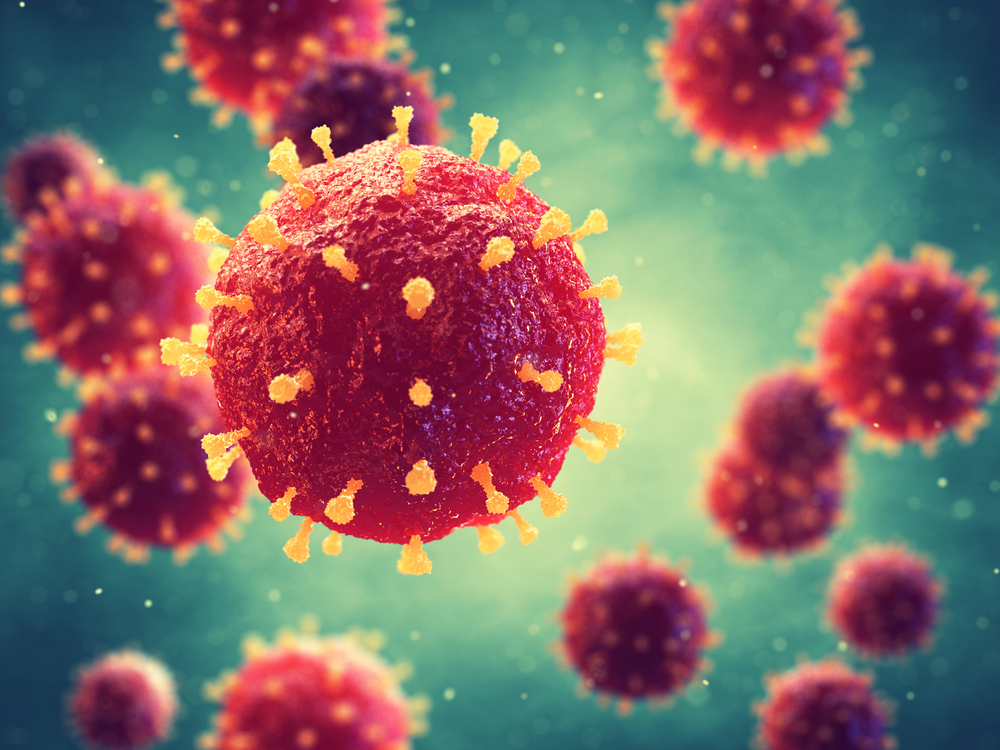
The critical, structural changes that enveloped viruses, such as HIV, Ebola and influenza, undergo before invading host cells have been revealed by scientists using nano-infrared spectroscopic imaging, according to a study led by Georgia State University and the University of Georgia.

The researchers found that an antiviral compound was effective in stopping the influenza virus from entering host cells during lower pH exposure, the optimal condition for the virus to cause infection. The findings, which provide important details on how enveloped viruses attack a host and a possible way to prevent these viral attacks, are published in the journal PLoS One.

Enveloped viruses are among the most deadly known viruses. These viruses have an outer membrane covering their genetic material, and to invade host cells enveloped viruses must first attach to a cell and then open their membrane to release genetic material. Originally, scientists believed this mechanism was controlled by the host cell.

In this study, which focused on influenza virus, the researchers examined the structural changes that occur for the virus to open and release its genetic material. They conducted the experiment in the absence of cells and instead simulated the cell environment.

When influenza virus infects a person’s body, it goes from a neutral environment outside the cell to a more acidic environment (a lower pH) inside the cell. To simulate the cell environment for this study, the researchers made the environment more acidic. The researchers exposed influenza virus particles to the lower pH and monitored structural changes in the virus.

“What we saw is that even without the cell, if we change the environment, the virus particle will break and release the genetic material,” said Dr. Ming Luo, a senior author of the study and professor in the Department of Chemistry at Georgia State. “So it has a proactive mechanism built into the virus particle. Once the virus particle finds that the environment has changed, it will itself release the material. It doesn’t need the help of the cell membrane. It has to find a sweet spot to release the genetic material, and that sweet spot happens to have a low pH.”

The researchers used nano-infrared spectroscopy, a microscopic imaging system, to observe how influenza virus particles change when their environment changes. During his work at Georgia State, Dr. Yohannes Abate, now at the University of Georgia, adapted the imaging technology to have a new, unique function that allowed them to study virus particles in more detail.

“We can actually look at one particular virus particle,” Luo said. “Before when people took images, you could not select which one you looked at. You had to look at many of them and everything happened at different stages. Now, we can continuously monitor one virus particle from the beginning to the end to see what changes are going on. We could see step-by-step how the virus particles release genetic materials in the absence of the cell.”

The researchers also studied chemical compounds and found one that binds to influenza virus and blocks changes in the viral structure.

“The compound stabilized the virus particle,” Luo said. “The virus won’t release the genetic material. If it won’t release, then it cannot infect the cell. It’s a mechanism to stop virus infection. If we could make it work in humans, it could be a good drug to stop the infection of enveloped viruses.”

Related Articles Read More >

JWST spots a 6-mile moon hiding in Uranus’ rings
DNA microscope offers new 3D view of organisms from the inside out
A tale of two industries: How manufacturing and medical imaging experts can learn from each other
Dark energy camera captures the glittering galaxies of the Antlia Cluster
rd newsletter
EXPAND YOUR KNOWLEDGE AND STAY CONNECTED
Get the latest info on technologies, trends, and strategies in Research & Development.
RD 25 Power Index

R&D World Digital Issues

Fall 2025 issue

Browse the most current issue of R&D World and back issues in an easy to use high quality format. Clip, share and download with the leading R&D magazine today.

R&D 100 Awards
Research & Development World
  • Subscribe to R&D World Magazine
  • Sign up for R&D World’s newsletter
  • Contact Us
  • About Us
  • Drug Discovery & Development
  • Pharmaceutical Processing
  • Global Funding Forecast

Copyright © 2026 WTWH Media LLC. All Rights Reserved. The material on this site may not be reproduced, distributed, transmitted, cached or otherwise used, except with the prior written permission of WTWH Media
Privacy Policy | Advertising | About Us

Search R&D World

  • R&D World Home
  • Topics
    • Aerospace
    • Automotive
    • Biotech
    • Careers
    • Chemistry
    • Environment
    • Energy
    • Life Science
    • Material Science
    • R&D Management
    • Physics
  • Technology
    • 3D Printing
    • A.I./Robotics
    • Software
    • Battery Technology
    • Controlled Environments
      • Cleanrooms
      • Graphene
      • Lasers
      • Regulations/Standards
      • Sensors
    • Imaging
    • Nanotechnology
    • Scientific Computing
      • Big Data
      • HPC/Supercomputing
      • Informatics
      • Security
    • Semiconductors
  • R&D Market Pulse
  • R&D 100
    • 2025 R&D 100 Award Winners
    • 2025 Professional Award Winners
    • 2025 Special Recognition Winners
    • R&D 100 Awards Event
    • R&D 100 Submissions
    • Winner Archive
  • Resources
    • Research Reports
    • Digital Issues
    • Educational Assets
    • R&D Index
    • Subscribe
    • Video
    • Webinars
    • Content submission guidelines for R&D World
  • Global Funding Forecast
  • Top Labs
  • Advertise
  • SUBSCRIBE