Research & Development World

  • R&D World Home
  • Topics
    • Aerospace
    • Automotive
    • Biotech
    • Careers
    • Chemistry
    • Environment
    • Energy
    • Life Science
    • Material Science
    • R&D Management
    • Physics
  • Technology
    • 3D Printing
    • A.I./Robotics
    • Software
    • Battery Technology
    • Controlled Environments
      • Cleanrooms
      • Graphene
      • Lasers
      • Regulations/Standards
      • Sensors
    • Imaging
    • Nanotechnology
    • Scientific Computing
      • Big Data
      • HPC/Supercomputing
      • Informatics
      • Security
    • Semiconductors
  • R&D Market Pulse
  • R&D 100
    • 2026 R&D 100 Award Winners
    • 2026 Professional Award Winners
    • 2026 Special Recognition Winners
    • R&D 100 Awards Event
    • R&D 100 Submissions
    • Winner Archive
  • Resources
    • Research Reports
    • Digital Issues
    • Educational Assets
    • Subscribe
    • Video
    • Webinars
    • PharmSci360
    • Content submission guidelines for R&D World
  • Global Funding Forecast
  • Top Labs
  • Advertise
  • SUBSCRIBE

Researchers measure photovoltaic external quantum efficiency to transform the future of solar cells

By Heather Hall | July 1, 2022

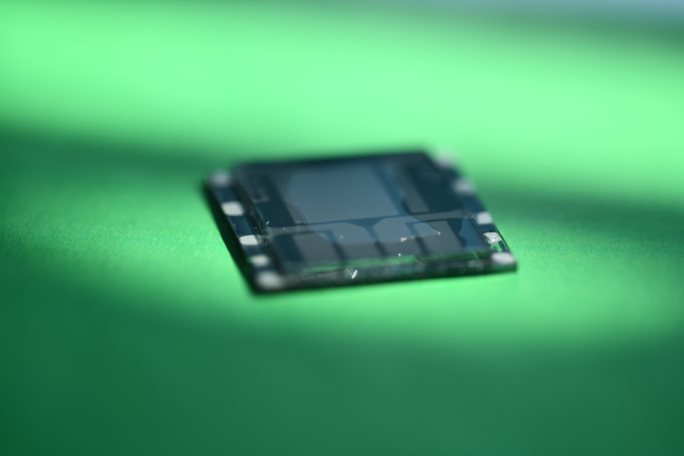
Researchers at Swansea University, U.K., have proven that it is possible to achieve near-unity charge generation quantum yields in organic solar cells. These findings present a route for designing and constructing higher-performance solar cells, which help to secure the future using renewable energy sources to meet sustainability goals.

The research, led by Dr. Wei Li and Dr. Ardalan Armin at Swansea, focused on advanced characterization methods, and how they can aid our understanding of PV materials and device physics, as well as helping to reach better and more practical engineering solutions. To achieve this, the team conducted a range of temperature dependent measurements, including temperature dependent photovoltaic external quantum efficiency (EQE), and temperature dependent absorbance to investigate the thermodynamic and kinetic processes.

The results show that it is possible to rapidly measure the EQE of solar cells at different temperatures, for the first time allowing researchers to investigate the kinetic processes accurately. The research also reveals the relationship between the charge generation,
recombination, and device efficiency in novel state-of-art non-fullerene solar cells, further improving our understanding of PV processes.1

“We’re pleased to share the positive results of our research with the wider scientific community, and we’re excited to see what the future holds for PV cells as a reliable, high-performing renewable energy source. The Linkam LTS420E-P stage is a vital component within our research, as it regulates temperatures with precision, which is essential for our highly sensitive measurements,” said Dr. Ardalan Armin, associate professor in the Department of Physics, Swansea University.

“The team at Swansea has made a significant breakthrough in the PV space, which is set to bring us one step closer to a sustainable future fuelled by renewable energy. We are proud to see the contribution of our LTS420E-P stage and we hope it continues to serve the team at Swansea University in its work into the performance of new organic materials,” said Dr. Duncan Stacey, sales and marketing director, Linkam Scientific Instruments.

The Linkam LTS420E-P stage is an evolution of the original LTS420 stage. Compact, easy to use, and easy to connect to other instrumentation, the LTS420E-P provides precise temperature and environmental control of the sample, and its larger stage body allows up to 8 positional tungsten probes to be attached to electrical connectors within the sample chamber. This enables the user to make electrical measurements on the sample, while at the same time accurately controlling the temperature inside a gas tight environment.

For more information about the LTS420E-P, visit linkam.co.uk/lts420e-p


REFERENCES
[1] Li, W., Zeiske, S., Sandberg, O.J., Riley, D.B., Meredith, P., Armin, A. Energy Environ.
Sci., 2021,14, 6484-6493
 

Related Articles Read More >

The Space Systems Division (05)-developed Parallelogram Synchronized Truss Assembly (PaSTA), seen Aug. 12, 2025, is a mechanism that will be integrated into the Life-Extension In-orbit Servicer (LEXI) and Astroscale Prototype Servicer for Refueling (APS-R) spacecrafts.
One SwRI R&D 100 winner turns buckled fiberglass into a spacecraft truss. The other models freight rail with 900 hours of BNSF field data
Inside the Lab: NETL’s Oil and Gas Center of Excellence focuses on technologies to enhance production   
Inside S&C Electric’s and Argonne National Lab’s CRADA partnership
As U.S. power demand surges, Brookhaven taps AWS in aim to drive 20-100x faster power grid decision-making with GridSearch AI
rd newsletter
EXPAND YOUR KNOWLEDGE AND STAY CONNECTED
Get the latest info on technologies, trends, and strategies in Research & Development.

R&D World Digital Issues

Fall 2025 issue

Browse the most current issue of R&D World and back issues in an easy to use high quality format. Clip, share and download with the leading R&D magazine today.

R&D 100 Awards
Research & Development World
  • Subscribe to R&D World Magazine
  • Sign up for R&D World’s newsletter
  • Contact Us
  • About Us
  • Drug Discovery & Development
  • Pharmaceutical Processing
  • Global Funding Forecast

Copyright © 2026 Arrowfly LLC. All Rights Reserved. The material on this site may not be reproduced, distributed, transmitted, cached or otherwise used, except with the prior written permission of Arrowfly
Privacy Policy | Advertising | About Us

Search R&D World

  • R&D World Home
  • Topics
    • Aerospace
    • Automotive
    • Biotech
    • Careers
    • Chemistry
    • Environment
    • Energy
    • Life Science
    • Material Science
    • R&D Management
    • Physics
  • Technology
    • 3D Printing
    • A.I./Robotics
    • Software
    • Battery Technology
    • Controlled Environments
      • Cleanrooms
      • Graphene
      • Lasers
      • Regulations/Standards
      • Sensors
    • Imaging
    • Nanotechnology
    • Scientific Computing
      • Big Data
      • HPC/Supercomputing
      • Informatics
      • Security
    • Semiconductors
  • R&D Market Pulse
  • R&D 100
    • 2026 R&D 100 Award Winners
    • 2026 Professional Award Winners
    • 2026 Special Recognition Winners
    • R&D 100 Awards Event
    • R&D 100 Submissions
    • Winner Archive
  • Resources
    • Research Reports
    • Digital Issues
    • Educational Assets
    • Subscribe
    • Video
    • Webinars
    • PharmSci360
    • Content submission guidelines for R&D World
  • Global Funding Forecast
  • Top Labs
  • Advertise
  • SUBSCRIBE