Research & Development World

  • R&D World Home
  • Topics
    • Aerospace
    • Automotive
    • Biotech
    • Careers
    • Chemistry
    • Environment
    • Energy
    • Life Science
    • Material Science
    • R&D Management
    • Physics
  • Technology
    • 3D Printing
    • A.I./Robotics
    • Software
    • Battery Technology
    • Controlled Environments
      • Cleanrooms
      • Graphene
      • Lasers
      • Regulations/Standards
      • Sensors
    • Imaging
    • Nanotechnology
    • Scientific Computing
      • Big Data
      • HPC/Supercomputing
      • Informatics
      • Security
    • Semiconductors
  • R&D Market Pulse
  • R&D 100
    • 2025 R&D 100 Award Winners
    • 2025 Professional Award Winners
    • 2025 Special Recognition Winners
    • R&D 100 Awards Event
    • R&D 100 Submissions
    • Winner Archive
  • Resources
    • Research Reports
    • Digital Issues
    • Educational Assets
    • R&D Index
    • Subscribe
    • Video
    • Webinars
    • Content submission guidelines for R&D World
  • Global Funding Forecast
  • Top Labs
  • Advertise
  • SUBSCRIBE

Sandia unveils Spectra, a reconfigurable supercomputer for nuclear stockpile simulations

By Julia Rock-Torcivia | December 8, 2025

Sandia National Laboratory and NextSilicon, a technology company, collaborated to create a supercomputer designed to prioritize tasks in real time, Sandia announced on Monday. The computer, called Spectra, could alter how the nation conducts high-stakes simulations for its nuclear deterrence mission. In other words, while it won’t top the TOP500 list of supercomputers, the prototype will test a novel architecture.

The power of the Maverick-2

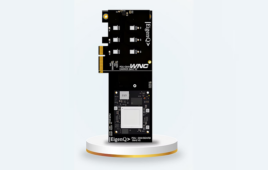
Spectra features 128 of NextSilicon’s Maverick-2 dual-die accelerators, specialized chips that analyze code to prioritize tasks. Spectra’s prioritization ability could increase performance while reducing power consumption.

An advantage of the Maverick-2’s design is that it simplifies moving applications to the new system. Maverick-2’s algorithms can profile an entire application and identify hotspots and likely flows, allowing it to optimize the hardware autonomously. The Maverick-2 does not require code changes or software stack reinvestment. It supports a variety of popular programming languages, including C/C++, FORTRAN, OpenMP and Kokkos. Many applications can run on Maverick-2 without modification, meaning researchers do not need to rewrite code. This could save months to years of work that researchers normally spend optimizing their software to the latest hardware.

Enhancing national security

Sandia is now leading a consortium with Lawrence Livermore and Los Alamos National Laboratories under the National Nuclear Security Administration’s Advanced Simulation and Computing (ASC) program. The collaboration aims to understand how Spectra will handle national security-related tasks that help assess the safety of the nation’s nuclear deterrent without underground testing, which the U.S. ended in 1992.

Spectra is the second platform in Sandia’s Vanguard program, which explores the viability of emerging technologies for ASC mission applications. The first platform, called Astra, was introduced in 2018. Astra is a supercomputer run on Arm processors. Previously, Arm processors had been used for low-power mobile computers like phones.

“By deploying prototype systems, we will investigate whether new technologies can be integrated into our large production platforms in the coming years,” said Simon Hammond, director of the Office of Advanced Simulation and Computing and Institutional Research and Development Programs at the National Nuclear Security Administration.
Related Articles Read More >

Machine learning model predicts binding of molecules used for bioimaging
NASA R&D 100 Winner enables high-speed data transfer from space
Inside the connected lab: Elemental Machines’ CEO on taming alarms, drift and data chaos
Lab automation is “vaporizing”: Why the hottest innovation is invisible
rd newsletter
EXPAND YOUR KNOWLEDGE AND STAY CONNECTED
Get the latest info on technologies, trends, and strategies in Research & Development.
RD 25 Power Index

R&D World Digital Issues

Fall 2025 issue

Browse the most current issue of R&D World and back issues in an easy to use high quality format. Clip, share and download with the leading R&D magazine today.

R&D 100 Awards
Research & Development World
  • Subscribe to R&D World Magazine
  • Sign up for R&D World’s newsletter
  • Contact Us
  • About Us
  • Drug Discovery & Development
  • Pharmaceutical Processing
  • Global Funding Forecast

Copyright © 2026 WTWH Media LLC. All Rights Reserved. The material on this site may not be reproduced, distributed, transmitted, cached or otherwise used, except with the prior written permission of WTWH Media
Privacy Policy | Advertising | About Us

Search R&D World

  • R&D World Home
  • Topics
    • Aerospace
    • Automotive
    • Biotech
    • Careers
    • Chemistry
    • Environment
    • Energy
    • Life Science
    • Material Science
    • R&D Management
    • Physics
  • Technology
    • 3D Printing
    • A.I./Robotics
    • Software
    • Battery Technology
    • Controlled Environments
      • Cleanrooms
      • Graphene
      • Lasers
      • Regulations/Standards
      • Sensors
    • Imaging
    • Nanotechnology
    • Scientific Computing
      • Big Data
      • HPC/Supercomputing
      • Informatics
      • Security
    • Semiconductors
  • R&D Market Pulse
  • R&D 100
    • 2025 R&D 100 Award Winners
    • 2025 Professional Award Winners
    • 2025 Special Recognition Winners
    • R&D 100 Awards Event
    • R&D 100 Submissions
    • Winner Archive
  • Resources
    • Research Reports
    • Digital Issues
    • Educational Assets
    • R&D Index
    • Subscribe
    • Video
    • Webinars
    • Content submission guidelines for R&D World
  • Global Funding Forecast
  • Top Labs
  • Advertise
  • SUBSCRIBE