 As companies look for ways to let AI systems and outside partners analyze sensitive data without exposing entire files, NTT Research is launching Scale Academy, an internal incubator whose first product is SaltGrain, a zero-trust data security suite built on attribute-based encryption.
The launch of SaltGrain comes on the heels of the November debut of Zero Trust Data Security (ZTDS) Suite, which NTT described then as “a new set of cybersecurity solutions powered by attribute-based encryption (ABE) of data.”
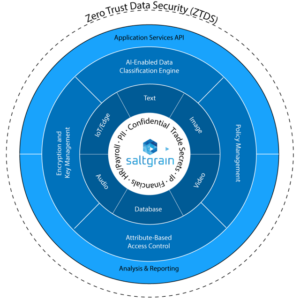
SaltGrain attaches access rules to encrypted data. In practice, that means an organization can let a user or system see only the portions of a document, image or video it is authorized to access, rather than opening the whole file. NTT is pitching the functionality as a better fit for AI-driven workflows and cross-organization collaboration, where data needs to move without becoming fully visible to every tool or person touching it.
The launch also gives NTT Research a new commercialization arm after years of emphasizing basic research. Bennett Indart, the company’s senior vice president of product innovation, will lead Scale Academy, which NTT says will provide stage gates, seed funding, and product-development support for technologies emerging from its labs and broader R&D organization.
ABE dates back to a 2004 paper titled “Fuzzy Identity-Based Encryption” co-authored by UCLA’s Amit Sahai and Brent Waters, now director of NTT Research’s Cryptography and Information Security Lab. Unlike conventional security models that depend on perimeter defenses or broad file-level permissions, ABE binds policy to the encrypted data itself, allowing more granular control over who can access what.
In an interview last year, Waters said the original paper,was aimed at a narrower target than what ABE eventually became. He had been thinking about using biometrics, like a fingerprint or retinal scan, as a decryption key, with enough error tolerance that a slightly different reading could still unlock the data. “What really happened longer term was that the whole fuzzy IBE thing, in itself, didn’t really get used,” Waters said. “But it was this vision of identity, and the techniques we used for fuzzy IBE, ended up generalizing to attribute-based encryption.”
The main early technical hurdle, Waters said, was making the scheme resistant to collusion attacks, where two users with partial credentials could combine their keys to decrypt content neither was authorized to see alone.
NTT says SaltGrain is aimed at enterprises and institutions handling high-value or regulated data, including healthcare, financial services, and large technology organizations. The company also said a recent performance breakthrough has prepared the platform’s ABE core for post-quantum deployment, although it did not disclose technical benchmarks, customer names, or pricing. Those details will matter in judging whether Scale Academy becomes a real commercialization pipeline or mainly a new wrapper for promising internal research.