[Image courtesy of SpaceX]
Update: NASA announced on March 17 that it will provide live coverage of the Crew-9 return and splashdown, starting with spacecraft hatch closure preparations. Weather permitting, the Crew-9 astronauts — NASA’s Nick Hague, Suni Williams, and Butch Wilmore, along with Roscosmos cosmonaut Aleksandr Gorbunov — are set to undock early Tuesday, March 18, and target splashdown later that same day.
Williams and Wilmore had been stranded on the ISS for over nine months. The two astronauts originally arrived in June 2024 aboard Boeing’s CST-100 Starliner for what was meant to be a short test mission. Faced with safety concerns about reentry, NASA made the call to leave the astronauts aboard the ISS and send Starliner back to Earth empty. Weeks of attempted fixes and plans to send them home sooner were unsuccessful turning what was supposed to be just over a week in space into nearly nine months for Wilmore and Williams. Speaking of technical issues, the SpaceX Crew-10 mission had also faced a delay earlier in the week after an initial launch attempt was scrapped owing to a hydraulic issue with a ground support clamp arm on the Falcon 9 rocket.
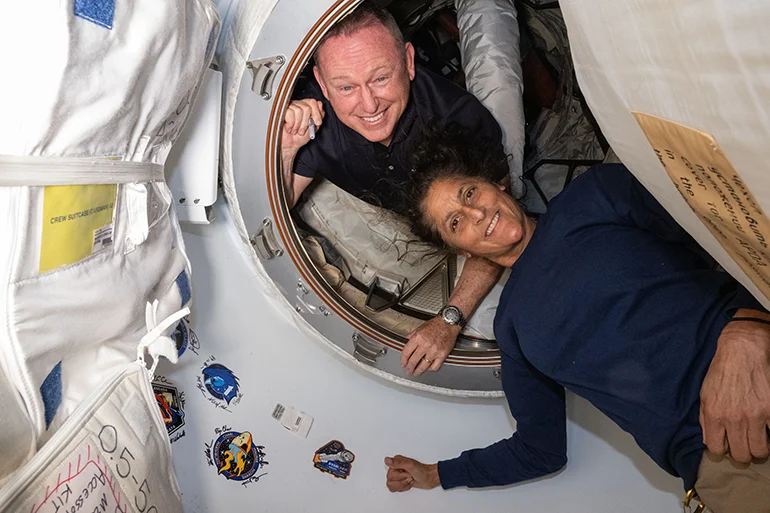
NASA astronauts Butch Wilmore (center left) and Suni Williams (lower right) pose on June 13, 2024 for the camera. [Image courtesy of NASA]
A timeline of spacecraft docking technology
March 1966: First spacecraft docking
Gemini 8 achieved the world’s first docking between two spacecraft when astronauts Neil Armstrong and David Scott linked their Gemini capsule with an Agena target vehicle. The triumph was short-lived—just minutes after docking, a stuck thruster on Gemini 8 sent the combined vehicles into an uncontrolled spin, forcing an emergency mission abort, as NASA has noted..
October 1967: First automated docking
The Soviet Union’s Cosmos 186 and 188 missions made history with the fully automated docking of two uncrewed spacecraft. The Soviet automated system (Igla) successfully guided the vehicles together without human control, a feat the U.S. wouldn’t match for decades.
1969-1972: Apollo docking tech
Apollo command and lunar modules used a probe-and-drogue mechanism: one spacecraft carried a probe that latched into a cone-shaped drogue on the other, then rigidized to form a connection. This system was tested in Earth orbit during Apollo 9 and became routine during lunar missions.
1973: Skylab docking challenges
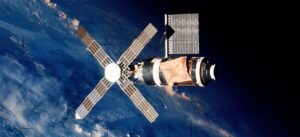 The first crew to Skylab encountered a jammed docking mechanism when trying to attach their Apollo capsule to the damaged station. After eight failed attempts, astronauts Charles “Pete” Conrad and Paul Weitz had to don pressure suits, partially disassemble the docking probe, and try again—succeeding in making a hard dock on the next attempt.
1975: First International Docking
The Apollo-Soyuz Test Project highlighted an important innovation: an androgynous docking adapter that allowed two different spacecraft to join. Both Apollo and Soyuz modified their docking ports to a common design (the APAS-75 system). It was the first international docking in space.
1980s-1990s: Soviet/Russian automated docking
The Salyut stations and later Mir used the Kurs radar system for automatic rendezvous of Soyuz crew capsules and uncrewed Progress supply ships. These systems enabled routine dockings without crew intervention.
1997: Mir-progress collision
During a test of manual remote docking, a Progress cargo craft veered off course and struck the Mir station’s Spektr module. The collision punctured the hull, depressurizing one module and crippling a solar array. (See: Lessons Learned: Mir Collision).
1995-2011: Space shuttle dockings
Space Shuttles regularly docked to Mir and later to the ISS using an APAS adapter. Astronauts piloted these shuttle dockings manually. That is, they would fly the 100-ton orbiter to a gentle contact aided by onboard laser rangefinders and camera alignments
Early 2010s: International Docking system standard
After the shuttle era, NASA, Roscosmos, and other partners developed the International Docking System Standard (IDSS) – an androgynous interface meant to be used by all future vehicles. Engineers created the International Docking Adapters (IDAs) to convert the older APAS-95 shuttle-era ports to the new standard. (See: International Docking Adapter – Wikipedia).
2012-2018: SpaceX Cargo Dragon Berthing
Early Dragon capsules navigated close to the ISS and then berthed with the help of Canadarm2, using the DragonEye system with LIDAR and thermal imagers to judge distance and alignment.
March 2019: First Autonomous Docking
SpaceX launched Crew Dragon Demo-1, which became the first American spacecraft to dock with ISS autonomously, without human pilot intervention (See: SpaceX Demo-1 Successfully Docks to ISS).
As for the technical glitches behind the stranding of Wimore and Williams, investigations discovered valve and seal problem in the propulsion system, where moisture and oxidizer interactions caused corrosion. Boeing’s Starliner program, already contending with previous uncrewed test anomalies, has since implemented design changes and stricter testing. NASA has signaled that Starliner needs more testing before it can be fully trusted for routine crew transport.
SpaceX offers novel approaches with autonomous docking
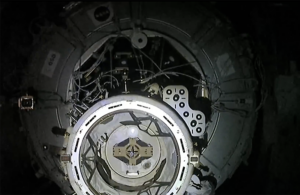
SpaceX’s Crew Dragon uses a hinged nosecone that exposes its docking ring and a suite of LIDAR, camera, and thermal sensors to guide fully automated rendezvous and docking. This technology, deployed on multiple Crew Dragon flights, is central to rescuing stranded crews when other vehicles fail. It represents an advance over manual approaches of past decades in that it reduces astronauts; workload and offers a reliable means to ferry crew to and from the ISS.
SpaceX’s experience with cargo missions laid the groundwork for the Crew Dragon (Dragon 2), which from the start was designed for fully autonomous docking. Unveiled under NASA’s Commercial Crew Program, Crew Dragon incorporated a docking mechanism behind a hinged nosecone and a suite of sensors (Think: LIDAR, cameras and thermal imaging) to execute automated rendezvous with the ISS.
In March 2019, SpaceX launched Crew Dragon Demo-1, an uncrewed test flight, to the ISS. Some 27 hours after launch, the capsule eased itself into contact with the Harmony module’s new IDA adapter—the first American spacecraft to dock with ISS autonomously, without a human pilot , as Odyssey Space Research, LLC noted. This milestone was the culmination of years of R&D work: SpaceX and NASA engineers had developed guidance software allowing Dragon to “see” the docking target and adjust its course using its Draco thrusters.
Since Demo-1, multiple SpaceX Crew missions (Crew-1 through Crew-10 at the time of writing) have used the Dragon’s automated system to shuttle astronauts to and from the ISS. An integrated set of computers and sensors handle all phases of rendezvous, while astronauts monitor or can take over if needed.
The docking system on Dragon (and Boeing’s Starliner) is an implementation of the International Docking System Standard (IDSS) standard, meaning these new vehicles can use any compatible port. In fact, SpaceX Dragons have demonstrated flexibility by even performing port relocations: in April 2021, Crew-1’s Dragon undocked from one ISS port, flew around and docked to another port to make way for another incoming vehicle — all under autonomous control, with astronauts supervising.
From a design perspective, Crew Dragon’s docking mechanism and approach sensors are encapsulated behind its nosecone during launch and reentry, reducing exposure and improving reusability. The spacecraft’s computing uses advanced machine vision to track the docking target on the ISS, cross-checking with LIDAR for redundancy, as Geo Week News has reported. In essence, SpaceX applied the latest in autonomous robotics to orbital docking — bearing some resemblance to its self-driving car tech but with a target moving at 28,000 km/h (17,398 MPH). Elon Musk has noted the irony that while his Tesla cars famously avoided LIDAR, SpaceX leaned on it heavily for Dragon’s docking.
The technological redundancy built into modern space station operations—from the standardized docking interfaces to the multiple spacecraft systems—has proven pivotal in ensuring crew safety. Wilmore and Williams, along with NASA astronaut Nick Hague and Russian cosmonaut Aleksandr Gorbunov, are expected to return to Earth on Wednesday, March 19, completing what inadvertently became one of the longest test missions in spaceflight history.”