Trifluoroacetic acid (TFA) is widely used in organic synthesis because of its versatile properties, including volatility, solubility in organic solvents, and particularly its strength as an acid.
Many chemical transformations are performed using TFA as a solvent or as an acid catalyst, including rearrangements, functional group deprotection, oxidation, reduction, condensation, hydroarylation, trifluoromethylation and solvolysis reactions. However, some of the attributes that make TFA such a useful tool can cause problems when you need to remove the excess TFA after use. It is common to remove excess TFA by evaporation because other methods of reagent removal often are affected by this organic acid.
In this article we review some common reactions with TFA and the precautions required when removing excess TFA using an evaporator.
Protecting Group removal using TFA
TFA can be used to remove the protecting groups on nitrogen and oxygen by solvolysis under aqueous or anhydrous conditions. Different methods for the cleavage of O– and N– protecting groups by TFA are shown below.
Deprotection of N–tert-butyloxycarbonyl (N-Boc) Group
This example of N-Boc deprotection was used in the syntheses of Coccinellid alkaloids (Sherwood, et al., 2014). After N-Boc deprotection in TFA and dichloromethane, the amine is free to react with the ketone to form the iminium ion which frequently generates the enamine.

Fig. 1 – Deprotection of N-tert-butyloxycarbonyl (N-Boc) Group
Deprotection of t-butyl ether (O–tBu; O-Tr) Group using TFA
The t-butyl ether (trityl-ether) functionality is stable to most reagents except strong acids, such as trifluoroacetic acid. The O-trityl group can be removed using anhydrous TFA at 0-20°C. During the synthesis of brevetoxin A (below), a TFA O-t-butyl ether deprotection was used to form the BCDE ring systems (Nicolaou, et al., 1999).
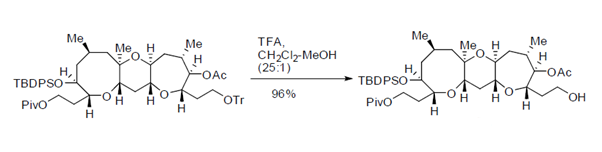
Fig. 2 – Deprotection of t-butyl ether (O-tBu; O-Tr) Group using TFA
Rearrangements using TFA
TFA is a widely preferred catalyst for many acid-catalyst rearrangements, such as the Claisen rearrangement, Wagner-Meerwein and Curtius type rearrangements, to name a few. This is because of its low boiling point and easy elimination after reaction using evaporation. The reaction shown below is a TFA catalyzed Cope rearrangement of 2-acyl-1,5-dienes (Dauben & Chollet, 1981).
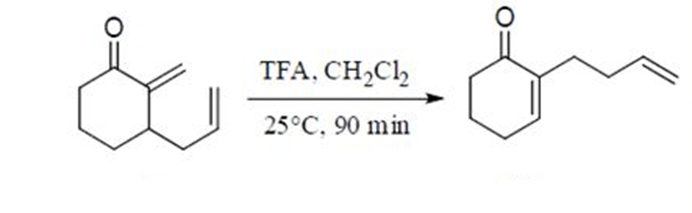
Fig. 3 – TFA catalyzed Cope rearrangement of 2-acyl-1,5-dienes
Oxidation using TFA
In the Bayer-Villiger reaction illustrated below, benzophenone is oxidised using sodium percarbonate and TFA to form the corresponding ester (Olah, et al., 1991).
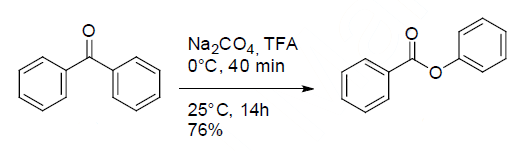
Fig. 4 – Baeyer-Villiger Oxidation of Ketones to Esters with Sodium Percarbonate/Trifluoroacetic Acid
Demonstrating its versatility, researchers have also cited TFA for use at low concentration as an ion pairing agent in reverse phase chromatography for isolation of peptides and proteins. In addition, TFA is also widely used in reverse phase HPLC as the mobile phase to improve the peak shape through reducing peak broadening and trailing issues.
Why TFA poses a challenge in post-reaction handling
In the reactions described above, a common challenge faced by chemists is that excess TFA must be removed before progressing to the next stage of synthesis.
TFA has low surface tension when compared to water (at 25°C it is 72 dyn/cm (University of Iowa, 2018)). This is due to the three fluorine groups in TFA repelling each other (one could say TFA has a high degree of self-loathing), and without a stabilising solvent such as water present, will exhibit “creep”. The liquid will “flow” up the sides of a container to the same height that the TFA vapour reaches, carrying dissolved sample as it does so. This can result in spillages, or cross-contamination when evaporating multiple samples (e.g. in the microplate format).
This means that care needs be taken with high TFA concentrations during all stages of use, beginning with sample preparation, loading, and during and after evaporation. Reduction of creep can normally be achieved by dilution in water (40% v/v).
The very low surface tension of TFA can also enable it to pass directly through the micro-pores in low-grade plastic labware. Not only can this lead to sample loss but it also creates unexpected spillages that could be hazardous to unprepared lab personnel.
Removing TFA by evaporation
When choosing an evaporation system to remove TFA, the highly corrosive nature of the acid must be considered. For instance, blow-down evaporators should be avoided as the TFA vapours generated are very likely to cause corrosion and damage to your fume handling system.
In addition, any evaporator must be constructed using suitable materials proven to withstand the highly reactive nature of TFA. To remove TFA using a vacuum evaporator, care has to be taken with the type of vacuum pump the system uses and the cold trap used to collect solvent vapours. Dry, oil-free vacuum pumps such as a chemically resistant diaphragm pump or dry scroll pumps are the best choices for handling TFA.
The volatile nature of TFA means that vacuum levels of only a few millibar are required for effective evaporation. Consequently deep vacuums, as generated by rotary vane oil pumps are not necessary, and in fact, may make collection of solvent vapours in the cold trap more difficult.
The most important features when selecting a cold trap are: firstly, that it must hold a low temperature (even under load) on the inner walls so that it can efficiently collect the TFA vapours. Secondly, the materials of construction must be resistant to TFA (making almost all metals unsuitable).
Finally, when defrosting the cold trap, great care must be taken to control the process to protect the user, and also to prevent acid vapours boiling back into the evaporator and causing damage to the system or the samples. Best practise here dictates that samples be removed from the evaporator before defrosting.
Summary
When working with TFA you should be aware of its creep properties and take precautions to ensure that it remains contained within your sample vessels.
When selecting an evaporator to remove TFA, it is recommended to look for purpose designed systems which:
- Minimise the use of glass (or use easily and inexpensively replicable glass parts). TFA will attack the glass and damage it over time.
- Uses materials resistant to TFA, such as PFA coating metals. In general, most other plastics (including PTFE) should be avoided. EPDM seals are better than nitrile seals.
- Include easy to use control systems that help prevent creep, solvent bumping and allow precise control over the whole system to achieve fast, safe evaporation and ensure that the condenser is controlled during defrosting.
- Can reduce exposure to solvent vapours when opening the system – TFA has a very distinctive odour.