Research & Development World

  • R&D World Home
  • Topics
    • Aerospace
    • Automotive
    • Biotech
    • Careers
    • Chemistry
    • Environment
    • Energy
    • Life Science
    • Material Science
    • R&D Management
    • Physics
  • Technology
    • 3D Printing
    • A.I./Robotics
    • Software
    • Battery Technology
    • Controlled Environments
      • Cleanrooms
      • Graphene
      • Lasers
      • Regulations/Standards
      • Sensors
    • Imaging
    • Nanotechnology
    • Scientific Computing
      • Big Data
      • HPC/Supercomputing
      • Informatics
      • Security
    • Semiconductors
  • R&D Market Pulse
  • R&D 100
    • 2025 R&D 100 Award Winners
    • 2025 Professional Award Winners
    • 2025 Special Recognition Winners
    • R&D 100 Awards Event
    • R&D 100 Submissions
    • Winner Archive
  • Resources
    • Research Reports
    • Digital Issues
    • Educational Assets
    • Subscribe
    • Video
    • Webinars
    • PharmSci360
    • Content submission guidelines for R&D World
  • Global Funding Forecast
  • Top Labs
  • Advertise
  • SUBSCRIBE

Study Discovers Over 6,000 Antibiotic Resistance Genes in the Bacteria that Inhabit the Human Gut

By University of Birmingham | November 30, 2018

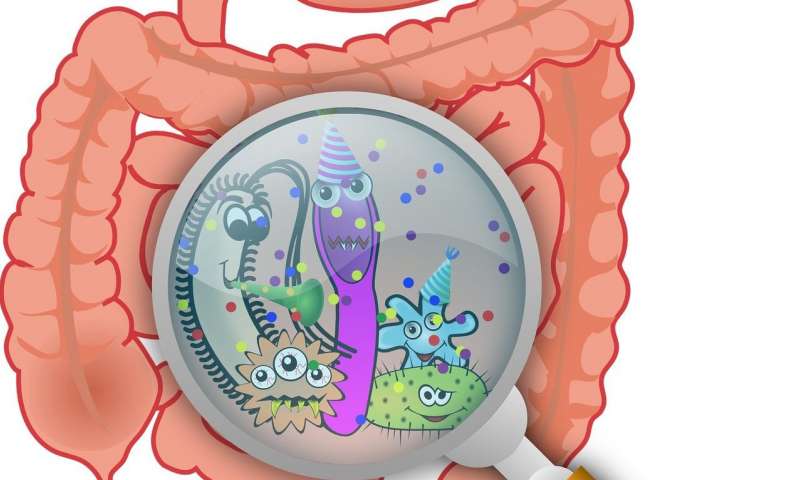
Credit: CC0 Public Domain

A study carried out in collaboration with the University of Birmingham has used an innovative approach to identify thousands of antibiotic resistance genes found in bacteria that inhabit the human gut.

The human gut is home to trillions of microorganisms, mainly bacteria. Most of these are sensitive to antibiotics, but a significant number of bacteria in the human gut have mechanisms that make them resistant to antibiotics. However, we still lack a mechanistic understanding of the genes that confer resistance to antibiotics in gut bacteria.

A team of researchers, led by the Institut National de la Recherche Agronomique (INRA)in France, in collaboration with Professor Willem van Schaik at the University of Birmingham, developed a new method to identify resistance genes in gut bacteria by comparing the three-dimensional structures of known antibiotic resistance enzymes to the proteins that are produced by gut bacteria.

The researchers, in collaboration with other European teams, then applied this method to a catalogue of several million genes of the gut. Thanks to this method, they have identified more than 6,000 antibiotic resistance genes that are very different from previously identified genes in pathogenic bacteria.

Professor Willem van Schaik, of the University of Birmingham’s Institute of Microbiology and Infection, said: “Most gut bacteria live in a harmless relationship with the human host. However, the gut is also home to bacteria that can cause infections in hospitalised patients.

“Unfortunately, these bacteria are becoming increasingly resistant to antibiotics and we need to understand the processes that contribute to this development.

“By comparing the structures of known antibiotic resistance proteins to proteins that are produced by the bacteria of the human gut, we found thousands of new antibiotic resistance genes in the human gut, highlighting the immense diversity of antibiotic resistance genes in this environment.

“Most of these genes appeared to be present in bacteria that live in a harmless relationship with the human host, so may not be an immediate threat to human health.

“However, the continuing use of antibiotics may lead to these resistance genes being transferred to pathogenic bacteria, thereby further reducing the effectiveness of antibiotics in treating infections.”

Related Articles Read More >

As AI floods drug discovery with designs, Twist uses DNA chips to tackle the wet-lab bottleneck
Purple Glowing Spiral Fractal Background Image, Illustration - Vortex repeating spiral patterns, Symmetrical repeating geometric patterns. Abstract design, black background
Recursion says its Norstella-backed real-time simulation can expand trial eligibility by up to 40%
NIH employees warn of ‘institutionalized destruction’ one year after Bethesda Declaration
Cradle’s CEO on the AI agent boom and the reality of experimental feedback in life sciences
rd newsletter
EXPAND YOUR KNOWLEDGE AND STAY CONNECTED
Get the latest info on technologies, trends, and strategies in Research & Development.

R&D World Digital Issues

Fall 2025 issue

Browse the most current issue of R&D World and back issues in an easy to use high quality format. Clip, share and download with the leading R&D magazine today.

R&D 100 Awards
Research & Development World
  • Subscribe to R&D World Magazine
  • Sign up for R&D World’s newsletter
  • Contact Us
  • About Us
  • Drug Discovery & Development
  • Pharmaceutical Processing
  • Global Funding Forecast

Copyright © 2026 Arrowfly LLC. All Rights Reserved. The material on this site may not be reproduced, distributed, transmitted, cached or otherwise used, except with the prior written permission of Arrowfly
Privacy Policy | Advertising | About Us

Search R&D World

  • R&D World Home
  • Topics
    • Aerospace
    • Automotive
    • Biotech
    • Careers
    • Chemistry
    • Environment
    • Energy
    • Life Science
    • Material Science
    • R&D Management
    • Physics
  • Technology
    • 3D Printing
    • A.I./Robotics
    • Software
    • Battery Technology
    • Controlled Environments
      • Cleanrooms
      • Graphene
      • Lasers
      • Regulations/Standards
      • Sensors
    • Imaging
    • Nanotechnology
    • Scientific Computing
      • Big Data
      • HPC/Supercomputing
      • Informatics
      • Security
    • Semiconductors
  • R&D Market Pulse
  • R&D 100
    • 2025 R&D 100 Award Winners
    • 2025 Professional Award Winners
    • 2025 Special Recognition Winners
    • R&D 100 Awards Event
    • R&D 100 Submissions
    • Winner Archive
  • Resources
    • Research Reports
    • Digital Issues
    • Educational Assets
    • Subscribe
    • Video
    • Webinars
    • PharmSci360
    • Content submission guidelines for R&D World
  • Global Funding Forecast
  • Top Labs
  • Advertise
  • SUBSCRIBE