Research & Development World

  • R&D World Home
  • Topics
    • Aerospace
    • Automotive
    • Biotech
    • Careers
    • Chemistry
    • Environment
    • Energy
    • Life Science
    • Material Science
    • R&D Management
    • Physics
  • Technology
    • 3D Printing
    • A.I./Robotics
    • Software
    • Battery Technology
    • Controlled Environments
      • Cleanrooms
      • Graphene
      • Lasers
      • Regulations/Standards
      • Sensors
    • Imaging
    • Nanotechnology
    • Scientific Computing
      • Big Data
      • HPC/Supercomputing
      • Informatics
      • Security
    • Semiconductors
  • R&D Market Pulse
  • R&D 100
    • 2026 R&D 100 Award Winners
    • 2026 Professional Award Winners
    • 2026 Special Recognition Winners
    • R&D 100 Awards Event
    • R&D 100 Submissions
    • Winner Archive
  • Resources
    • Research Reports
    • Digital Issues
    • Educational Assets
    • Subscribe
    • Video
    • Webinars
    • PharmSci360
    • Content submission guidelines for R&D World
  • Global Funding Forecast
  • Top Labs
  • Advertisers
    • Advertise
    • PR Submissions
    • Eblast Submissions
  • SUBSCRIBE

Study Finds That Numerous Exoplanets May be Water-Rich

By Kenny Walter | August 21, 2018

A team of scientists has found that several exoplanets between two and four times the size of Earth likely contain a substantial amount of water, a discovery that could have implications for the search of life in the galaxy.

The researchers made the discovery that several of the known exoplanets can contain as much as 50 percent water after analyzing data from the Kepler Space Telescope and the Gaia mission.

“It was a huge surprise to realize that there must be so many water-worlds,” lead researcher Li Zeng, PhD, of Harvard University, said in a statement.

Previously, scientists split the 4,000 confirmed or candidate exoplanets into two size categories—planets with a planetary radius around 1.5 the size of Earth’s or planets with a planetary radius around 2.5 times that of Earth.

In the new study, the scientists analyzed the exoplanets further with mass measurements and radius measurements to develop a model of their internal structure that indicates that the planets about 1.5 times the size of Earth tend to be rocky planets, while the other ones could be water worlds.

“We have looked at how mass relates to radius, and developed a model which might explain the relationship,” Zeng said. “This is water, but not as commonly found here on Earth. Their surface temperature is expected to be in the 200 to 500 degree Celsius range.

“Their surface may be shrouded in a water-vapor-dominated atmosphere, with a liquid water layer underneath. Moving deeper, one would expect to find this water transforms into high-pressure ices before we reaching the solid rocky core. The beauty of the model is that it explains just how composition relates to the known facts about these planets.”

The new data indicates that about 35 percent of the known exoplanets larger than Earth are water-rich.

“These water worlds likely formed in similar ways to the giant planet cores [Jupiter, Saturn, Uranus and Neptune] which we find in our own solar system,” Zeng said. “The newly-launched TESS mission will find many more of them, with the help of ground-based spectroscopic follow-up.

“The next generation space telescope, the James Webb Space Telescope, will hopefully characterize the atmosphere of some of them. This is an exciting time for those interested in these remote worlds.”  

The researchers presented their findings during the Goldschmidt Conference in Boston from August 12 to 17.
Related Articles Read More >

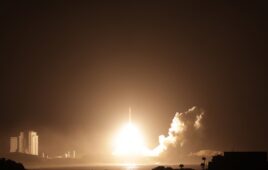
An H3 rocket carrying JAXA's MMX spacecraft lifts off at night from Tanegashima Space Center
LLNL’s gamma-ray sensor is bound for a Martian moon
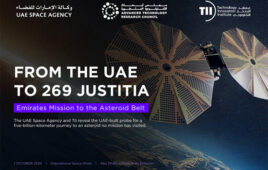
The UAE’s new space probe will crash into the asteroid it’s designed to study
Semiconductors, biomanufacturing and dual-use tech fill ISS National Lab’s startup cohort 
Eggshell-inspired shield cut projectile speed by 65% in simulation, but light-gas gun testing has not confirmed it 
rd newsletter
EXPAND YOUR KNOWLEDGE AND STAY CONNECTED
Get the latest info on technologies, trends, and strategies in Research & Development.

R&D World Digital Issues

Fall 2026 issue

Browse the most current issue of R&D World and back issues in an easy to use high quality format. Clip, share and download with the leading R&D magazine today.

R&D 100 Awards
Research & Development World
  • Subscribe to R&D World Magazine
  • Sign up for R&D World’s newsletter
  • Contact Us
  • About Us
  • Drug Discovery & Development
  • Pharmaceutical Processing
  • Global Funding Forecast

Copyright © 2026 Arrowfly LLC. All Rights Reserved. The material on this site may not be reproduced, distributed, transmitted, cached or otherwise used, except with the prior written permission of Arrowfly
Privacy Policy | Advertising | About Us

Search R&D World

  • R&D World Home
  • Topics
    • Aerospace
    • Automotive
    • Biotech
    • Careers
    • Chemistry
    • Environment
    • Energy
    • Life Science
    • Material Science
    • R&D Management
    • Physics
  • Technology
    • 3D Printing
    • A.I./Robotics
    • Software
    • Battery Technology
    • Controlled Environments
      • Cleanrooms
      • Graphene
      • Lasers
      • Regulations/Standards
      • Sensors
    • Imaging
    • Nanotechnology
    • Scientific Computing
      • Big Data
      • HPC/Supercomputing
      • Informatics
      • Security
    • Semiconductors
  • R&D Market Pulse
  • R&D 100
    • 2026 R&D 100 Award Winners
    • 2026 Professional Award Winners
    • 2026 Special Recognition Winners
    • R&D 100 Awards Event
    • R&D 100 Submissions
    • Winner Archive
  • Resources
    • Research Reports
    • Digital Issues
    • Educational Assets
    • Subscribe
    • Video
    • Webinars
    • PharmSci360
    • Content submission guidelines for R&D World
  • Global Funding Forecast
  • Top Labs
  • Advertisers
    • Advertise
    • PR Submissions
    • Eblast Submissions
  • SUBSCRIBE