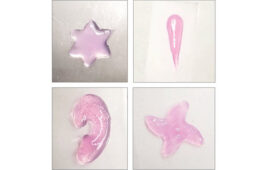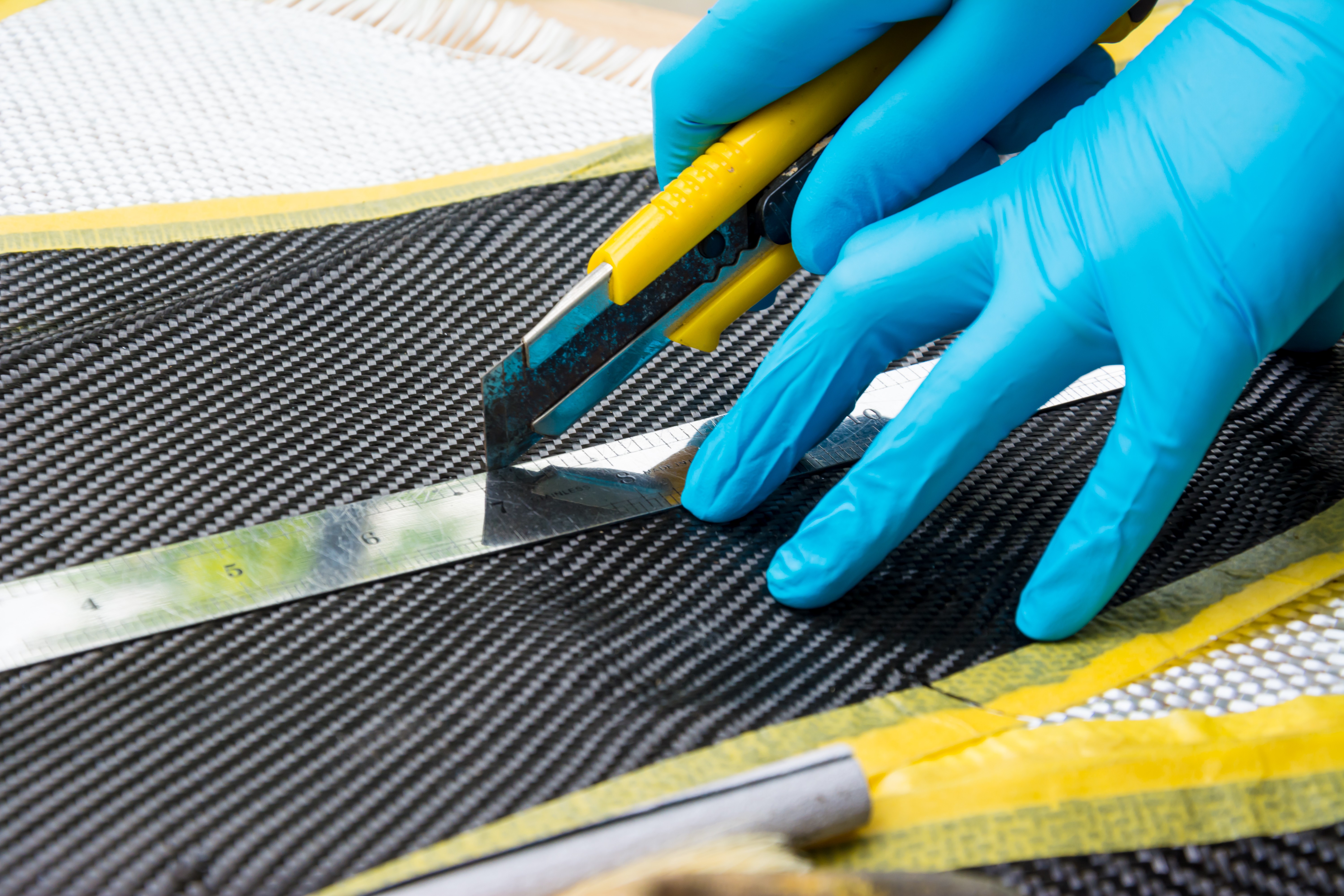
An example of carbon fiber 3D printing using traditional composites. Credit: Markforged
3D printing carbon fiber is perhaps the second most sought-after additive manufacturing technology, after metal. Thanks to recent developments in the additive manufacturing space, printers capable of utilizing the elusive material are finally a reality. However, not all carbon fiber 3D printers are created equal — some machines use microscopic chopped fibers to enhance conventional thermoplastics, while others uses continuous fiber laid inside of a base thermoplastic matrix (often filled with chopped fibers) to create a “skeleton” inside the part.
Understanding carbon fiber
Carbon fiber is made up of aligned strands of carbon atoms that exhibit extremely high strength in tension. Alone, they’re not particularly useful—their thin, brittle nature makes them easy to break in any realistic application. However, when grouped and adhered together using a bonding agent, the fibers distribute load smoothly and form an incredibly strong, light composite material. These carbon fiber composites come in the form of sheets, tubes, or custom molded features and are used in industries like aerospace and automotive in which strength-to-weight ratio is king. Conventionally, a thermoset resin is used as the bonding agent.
Printing in carbon fiber
Recent developments in 3D printing technology have enabled companies to print with carbon fiber, albeit with a different binding material than standard carbon fiber processes. Resins do not melt so they can’t be extruded through nozzles—to remedy this, 3D printers substitute resins with readily printable thermoplastics. While these parts are not as heat resistant as resin-matrix carbon fiber composites, they do benefit from the strength of the fiber.
Printing with chopped carbon fiber vs continuous carbon fiber
There are two carbon fiber printing methods available today: chopped carbon fiber filled thermoplastic and continuous carbon fiber reinforcement. Chopped carbon fiber filled thermoplastics are printed through a standard FFF (FDM) printer, and are comprised of a thermoplastic (PLA, ABS, or Nylon) reinforced with tiny chopped strands are carbon fiber. Continuous carbon fiber fabrication, on the other hand, is a distinct printing process that lays continuous strands of carbon fiber into a standard FFF (FDM) thermoplastic base.
Both chopped carbon fiber filled plastic and continuous fiber fabrication use carbon fiber, yet the difference between them is enormous. Knowing how each works and their ideal applications will help you make an informed decision about which to pursue in your additive manufacturing efforts.

3D printed carbon fiber created using chopped carbon fiber filled thermoplastic. Credit: Markforged
Chopped carbon fiber is basically a booster pack for standard thermoplastics. It allows companies to print typically weaker materials with added strength. The material is then mixed with thermoplastics, and the resulted blend is extruded into a spool for Fused Filament Fabrication (FFF) technology. For Composites using FFF methods, the materials are composed of chopped fibers (usually carbon fiber) mixed with traditional thermoplastics like nylon, ABS, or PLA. While the FFF process remains unchanged, the chopped fibers increase the strength, stiffness of the model, as well as improving its dimensional stability, surface finish, and precision.
This approach doesn’t always come without compromise. Some chopped fiber reinforced filaments prioritized strength by oversaturating the material with fibers. This detrimentally affects the overall quality of the piece, decreasing surface quality and part accuracy. Prototypes and end-use parts can be made using chopped carbon fiber, as it gives the strength and appearance needed for in-house testing or customer-facing parts.
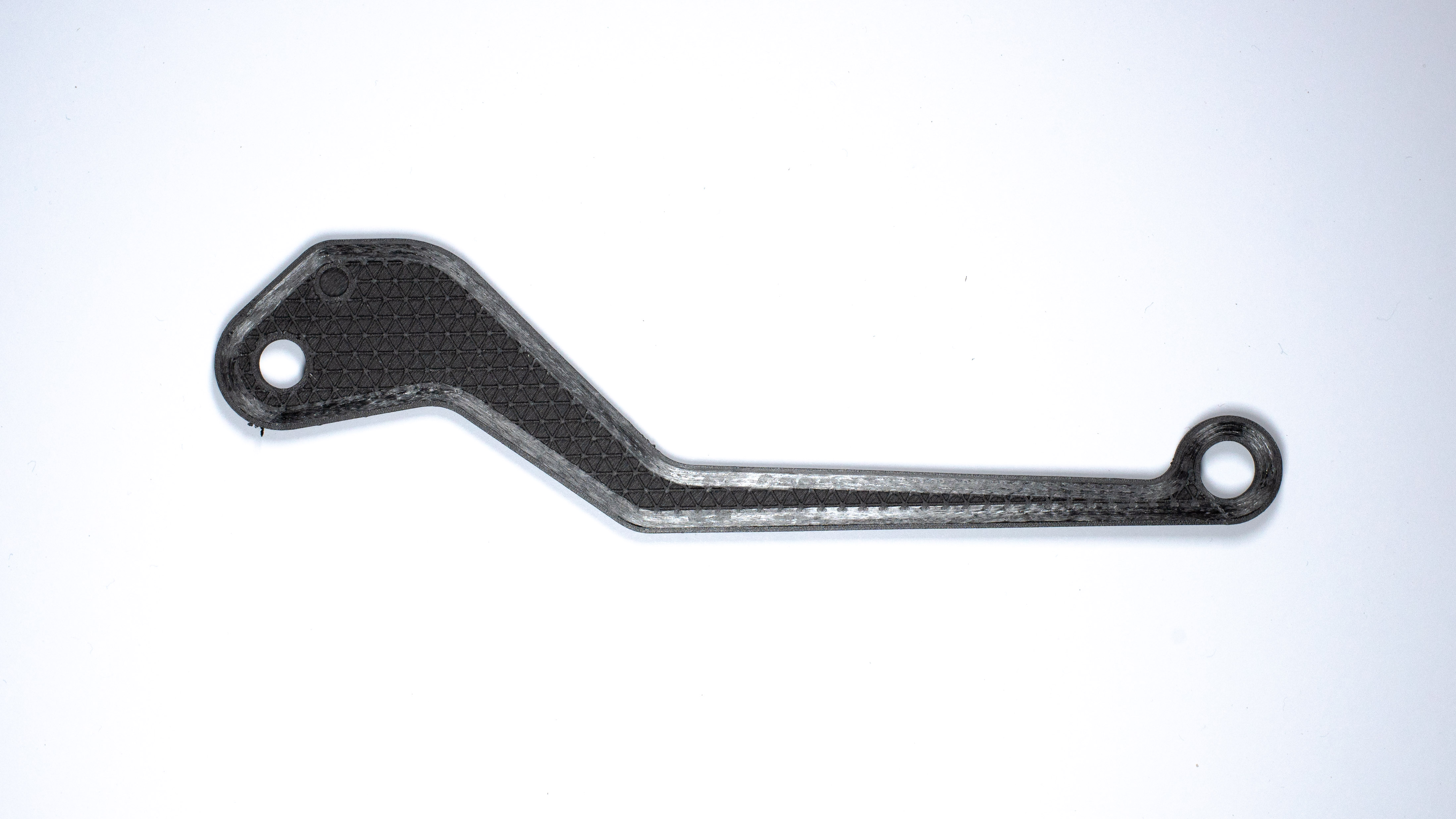
Carbon fiber 3D printed using continuous fiber reinforcement. Credit: Markforged
Continuous carbon fiber is where the real strength is. It is a cost-effective solution for replacing traditional metal parts with 3D printed composite parts because it achieves similar strengths at a fraction of the weight. It can be inlaid in thermoplastics using Continuous Filament Fabrication (CFF) technology. Printers using this method lay continuous strands of high strength fibers (such as carbon fiber, fiberglass, or Kevlar) via a second print nozzle within FFF-extruded thermoplastics while printing. The reinforcing fibers form the “backbone” of the printed part, yield stiff, strong, and durable results.
Continuous carbon fiber not only adds strength, but it also allows the user to selectively reinforce in areas that require more durability. Due to the FFF nature of the core process, you can choose on a layer-by-layer basic where to reinforce. Within each layer, there are two reinforcement methods: concentric and isotropic. Concentric infill reinforces the outer boundaries of each layer (both internal and external) and extends into the part by a user-defined number of loops. Isotropic infill creates unidirectional composite reinforcement on each layer, and can mimic carbon fiber weaves by altering the reinforcement direction on layers. These reinforcement strategies enable industries such as aerospace, automotive, and manufacturing to integrate composites into their workflow in a new way. Printed parts excel as tools and fixtures such as end-of-arm tooling, soft jaws, and CMM fixtures—for these, continuous carbon fiber is required to effectively mimic metal properties.
The additive manufacturing space has exploded, with several printers offering the ability to print in carbon fiber. However, it is best to be mindful of the composites you are purchasing and the applications each fiber has opened up. Unless it specifies that it’s continuous carbon fiber, the material is almost certainly comprised of chopped carbon fiber reinforced filament. While both provide value independent, having the ability to print with both is the best way to cover all your application needs.