Research & Development World

  • R&D World Home
  • Topics
    • Aerospace
    • Automotive
    • Biotech
    • Careers
    • Chemistry
    • Environment
    • Energy
    • Life Science
    • Material Science
    • R&D Management
    • Physics
  • Technology
    • 3D Printing
    • A.I./Robotics
    • Software
    • Battery Technology
    • Controlled Environments
      • Cleanrooms
      • Graphene
      • Lasers
      • Regulations/Standards
      • Sensors
    • Imaging
    • Nanotechnology
    • Scientific Computing
      • Big Data
      • HPC/Supercomputing
      • Informatics
      • Security
    • Semiconductors
  • R&D Market Pulse
  • R&D 100
    • 2026 R&D 100 Award Winners
    • 2026 Professional Award Winners
    • 2026 Special Recognition Winners
    • R&D 100 Awards Event
    • R&D 100 Submissions
    • Winner Archive
  • Resources
    • Research Reports
    • Digital Issues
    • Educational Assets
    • Subscribe
    • Video
    • Webinars
    • PharmSci360
    • Content submission guidelines for R&D World
  • Global Funding Forecast
  • Top Labs
  • Advertise
  • SUBSCRIBE

World-First Program to Stop Hacking by Supercomputers

By Monash University | July 20, 2018

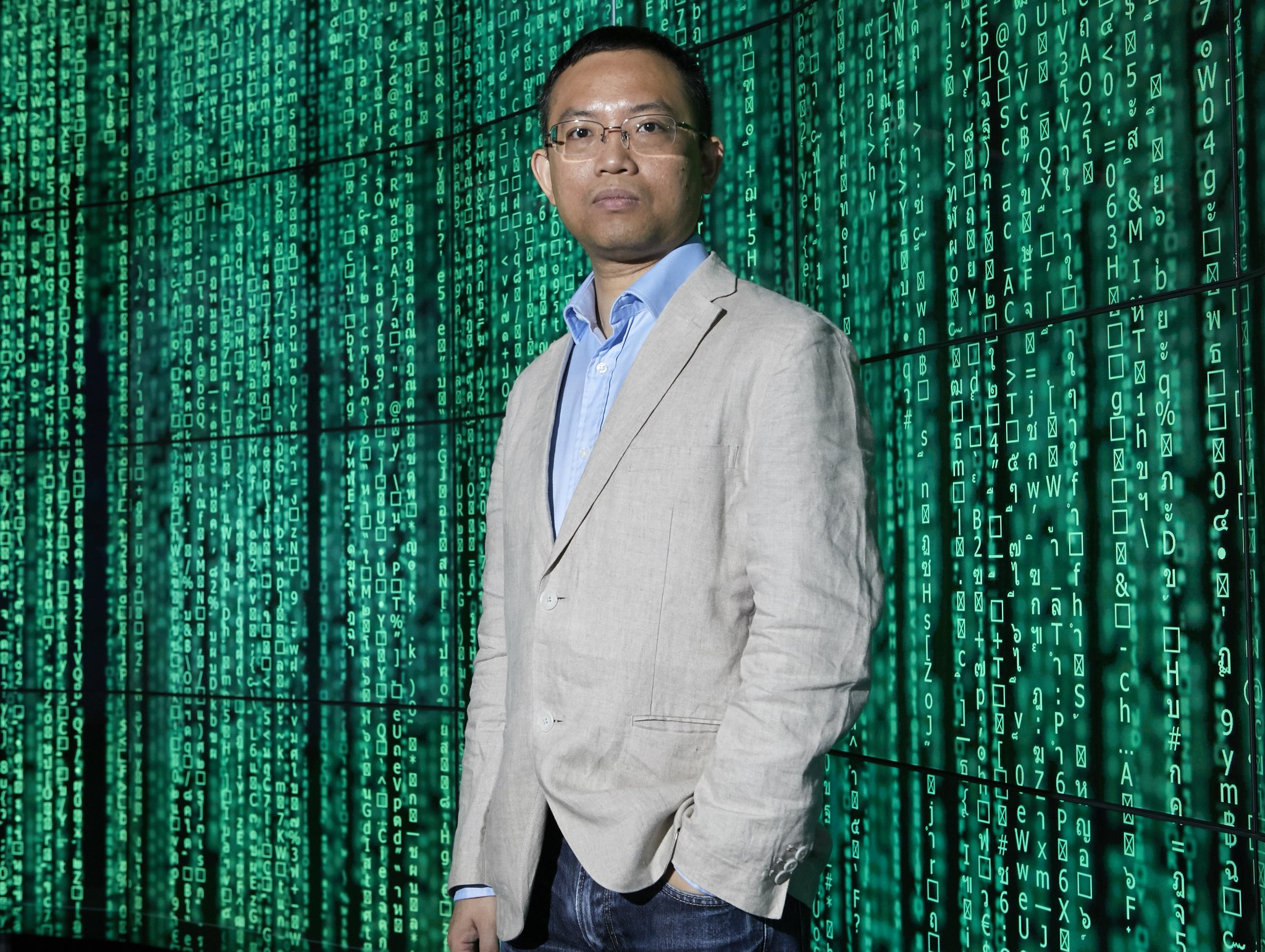
Joseph Liu, senior lecturer and director of the Blockchain Research Lab at Monash University. (Image: Courtesy of Monash University)

The Lattice-Based One Time Ring Signature (L2RS) enhanced security and privacy-preserving features enable large transactions and transfer of data without risk of being hacked by quantum computers and privacy revoked by unauthorised users.

Monash IT experts consider L2RS as a significant leap forward in maintaining data security, user privacy and integrity for blockchain technology as the race to build powerful quantum computers gains momentum. 

Senior Lecturer and Director of the Blockchain Research Lab at Monash, Dr Joseph Liu, says data security will become essential as quantum computing gets closer to being able to unravel the technology that underpins the security of blockchains – a milestone estimated to reach the world within the next 10 years.

“The L2RS deploys cryptographical techniques to protect the privacy of users. It allows any user to hide his identity among a group of users. The transaction amount will be hidden as well. No one knows how much money has been transferred in each transaction,” Dr Liu said. 

“It is also post-quantum secure. That is, even in the existence of the future powerful quantum computer — which can easily break the current security algorithms such as RSA — HCash is still secure, and user privacy remains preserved,” he said. 

Dr Liu said blockchain has legitimate potential to change the world to create new foundations for economic and social systems, and a working quantum computer could, in theory, break today’s cryptography.

“Therefore, HCash has a significant advantage over other cryptocurrency exchanges even after the practical rise of quantum computers,” he said.

The launch of L2RS is part of a research partnership with Monash University, Collinstar Capital, and Hong Kong Polytechnic University to advance HCash as a virtual cryptocurrency exchange far superior to Bitcoin.

The L2RS algorithm was announced at the 23rd Australasian Conference on Information Security and Privacy.

Related Articles Read More >

Who has access to Claude Mythos-tier models (and beyond) will redefine cybersecurity, including in R&D
Abstract of modern high tech internet data center room with rows of racks with network and server hardware. 3d rendering
A startup says it found hidden memory behavior in NVIDIA GPUs and is building a security layer around it
NTT Research launches Scale Academy with SaltGrain, a zero-trust data security suite
Oak Ridge National Laboratory’s Olivera Kotevska on PRESTO and Her R&D 100 Win
rd newsletter
EXPAND YOUR KNOWLEDGE AND STAY CONNECTED
Get the latest info on technologies, trends, and strategies in Research & Development.

R&D World Digital Issues

Fall 2025 issue

Browse the most current issue of R&D World and back issues in an easy to use high quality format. Clip, share and download with the leading R&D magazine today.

R&D 100 Awards
Research & Development World
  • Subscribe to R&D World Magazine
  • Sign up for R&D World’s newsletter
  • Contact Us
  • About Us
  • Drug Discovery & Development
  • Pharmaceutical Processing
  • Global Funding Forecast

Copyright © 2026 Arrowfly LLC. All Rights Reserved. The material on this site may not be reproduced, distributed, transmitted, cached or otherwise used, except with the prior written permission of Arrowfly
Privacy Policy | Advertising | About Us

Search R&D World

  • R&D World Home
  • Topics
    • Aerospace
    • Automotive
    • Biotech
    • Careers
    • Chemistry
    • Environment
    • Energy
    • Life Science
    • Material Science
    • R&D Management
    • Physics
  • Technology
    • 3D Printing
    • A.I./Robotics
    • Software
    • Battery Technology
    • Controlled Environments
      • Cleanrooms
      • Graphene
      • Lasers
      • Regulations/Standards
      • Sensors
    • Imaging
    • Nanotechnology
    • Scientific Computing
      • Big Data
      • HPC/Supercomputing
      • Informatics
      • Security
    • Semiconductors
  • R&D Market Pulse
  • R&D 100
    • 2026 R&D 100 Award Winners
    • 2026 Professional Award Winners
    • 2026 Special Recognition Winners
    • R&D 100 Awards Event
    • R&D 100 Submissions
    • Winner Archive
  • Resources
    • Research Reports
    • Digital Issues
    • Educational Assets
    • Subscribe
    • Video
    • Webinars
    • PharmSci360
    • Content submission guidelines for R&D World
  • Global Funding Forecast
  • Top Labs
  • Advertise
  • SUBSCRIBE