Research & Development World

  • R&D World Home
  • Topics
    • Aerospace
    • Automotive
    • Biotech
    • Careers
    • Chemistry
    • Environment
    • Energy
    • Life Science
    • Material Science
    • R&D Management
    • Physics
  • Technology
    • 3D Printing
    • A.I./Robotics
    • Software
    • Battery Technology
    • Controlled Environments
      • Cleanrooms
      • Graphene
      • Lasers
      • Regulations/Standards
      • Sensors
    • Imaging
    • Nanotechnology
    • Scientific Computing
      • Big Data
      • HPC/Supercomputing
      • Informatics
      • Security
    • Semiconductors
  • R&D Market Pulse
  • R&D 100
    • 2026 R&D 100 Award Winners
    • 2026 Professional Award Winners
    • 2026 Special Recognition Winners
    • R&D 100 Awards Event
    • R&D 100 Submissions
    • Winner Archive
  • Resources
    • Research Reports
    • Digital Issues
    • Educational Assets
    • Subscribe
    • Video
    • Webinars
    • PharmSci360
    • Content submission guidelines for R&D World
  • Global Funding Forecast
  • Top Labs
  • Advertisers
    • Advertise
    • PR Submissions
    • Eblast Submissions
  • SUBSCRIBE

Solid-state platform offers unprecedented electron spin control

By R&D Editors | January 27, 2012

SolidStateSpin1-250

Spin qubit device based on a Ge–Si heterostructure nanowire.Scanning electron micrograph (with false color) of a Ge–Si nanowire
(horizontal) contacted by four palladium contacts (Sdd, Ddd, Ss, Ds, grey) and covered by a HfO2 gate dielectric layer. Top gates L, M and R (blue) induce a double quantum dot on the left device. Plunger gates LP and RP (orange) change the chemical potential of each dot independently, and side
gates EL and ER (purple) improve electrical contact to the nanowire. A single quantum dot on the right half of the nanowire (isolated by chemical etching between Ddd and Ds) is capacitively coupled to a floating gate (green) and a tuning gate (yellow), and senses the charge state of the double dot. Inset: transmission electron microscope image of a typical nanowire with a single-crystal germanium core and an epitaxial silicon shell.

Researches
from Harvard University have developed a new platform that can
potentially control single electron spins in a more coherent way that no
other solid state system can.

The
work was done through collaboration between several multidisciplinary
groups, and involves advanced techniques from quantum physics,
chemistry, materials science and engineering. The authors include Dr.
Yongjie Hu, Dr. Ferdinand Kummenth, Dr. Charles M. Lieber, and Dr.
Charles M. Marcus.

The
Harvard team first produces a novel one-dimensional material with
germanium and silicon wrapped out coaxially, and forms high mobility
carriers inside. Following the materials synthesis, they fabricate tiny
devices within the order of hundreds of nanometer scale to confine
single electrons, where the intrinsic property of electron—”spin”, is
used to store information. The system is called “quantum bit”, in
analogy to “bit” in conventional computers.

Eventually,
the interaction and lifetime of “quantum bits” were probed by
low-temperature cryogenics and Gigahertz frequency electronics.
According to the report, the new system increases quantum state lifetime
by 1,000-fold over previously used materials, and thus serves as a
promising platform for next-generation quantum information storage. It
may replace the current material systems, such as gallium arsenide.

This
research is exploring the new platform using most frontier techniques
in nanotechnology, including nanomaterial synthesis, nano-device
fabrication, and quantum spectroscopy. The achievement may have
potential impact for the information technology, electronic device
industry, memory storage system, and novel energy conversion technology.


Hole spin relaxation in Ge–Si core–shell nanowire qubits

SOURCE

Related Articles Read More >

Inside the Lab: Can AI Solve the Critical Materials Challenge?
Two Science papers catch altermagnets by handedness
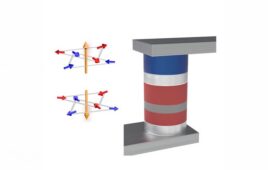
Illustration of an antiferromagnetic tunnel junction pillar beside the two spin configurations of platinum-manganese that store a bit.
Northwestern and Western Digital demonstrate a new way to write magnetic memory
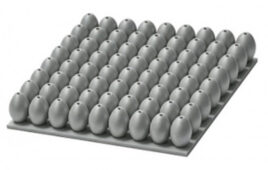
Eggshell-inspired shield cut projectile speed by 65% in simulation, but light-gas gun testing has not confirmed it 
rd newsletter
EXPAND YOUR KNOWLEDGE AND STAY CONNECTED
Get the latest info on technologies, trends, and strategies in Research & Development.

R&D World Digital Issues

Fall 2026 issue

Browse the most current issue of R&D World and back issues in an easy to use high quality format. Clip, share and download with the leading R&D magazine today.

R&D 100 Awards
Research & Development World
  • Subscribe to R&D World Magazine
  • Sign up for R&D World’s newsletter
  • Contact Us
  • About Us
  • Drug Discovery & Development
  • Pharmaceutical Processing
  • Global Funding Forecast

Copyright © 2026 Arrowfly LLC. All Rights Reserved. The material on this site may not be reproduced, distributed, transmitted, cached or otherwise used, except with the prior written permission of Arrowfly
Privacy Policy | Advertising | About Us

Search R&D World

  • R&D World Home
  • Topics
    • Aerospace
    • Automotive
    • Biotech
    • Careers
    • Chemistry
    • Environment
    • Energy
    • Life Science
    • Material Science
    • R&D Management
    • Physics
  • Technology
    • 3D Printing
    • A.I./Robotics
    • Software
    • Battery Technology
    • Controlled Environments
      • Cleanrooms
      • Graphene
      • Lasers
      • Regulations/Standards
      • Sensors
    • Imaging
    • Nanotechnology
    • Scientific Computing
      • Big Data
      • HPC/Supercomputing
      • Informatics
      • Security
    • Semiconductors
  • R&D Market Pulse
  • R&D 100
    • 2026 R&D 100 Award Winners
    • 2026 Professional Award Winners
    • 2026 Special Recognition Winners
    • R&D 100 Awards Event
    • R&D 100 Submissions
    • Winner Archive
  • Resources
    • Research Reports
    • Digital Issues
    • Educational Assets
    • Subscribe
    • Video
    • Webinars
    • PharmSci360
    • Content submission guidelines for R&D World
  • Global Funding Forecast
  • Top Labs
  • Advertisers
    • Advertise
    • PR Submissions
    • Eblast Submissions
  • SUBSCRIBE