Research & Development World

  • R&D World Home
  • Topics
    • Aerospace
    • Automotive
    • Biotech
    • Careers
    • Chemistry
    • Environment
    • Energy
    • Life Science
    • Material Science
    • R&D Management
    • Physics
  • Technology
    • 3D Printing
    • A.I./Robotics
    • Software
    • Battery Technology
    • Controlled Environments
      • Cleanrooms
      • Graphene
      • Lasers
      • Regulations/Standards
      • Sensors
    • Imaging
    • Nanotechnology
    • Scientific Computing
      • Big Data
      • HPC/Supercomputing
      • Informatics
      • Security
    • Semiconductors
  • R&D Market Pulse
  • R&D 100
    • 2026 R&D 100 Award Winners
    • 2026 Professional Award Winners
    • 2026 Special Recognition Winners
    • R&D 100 Awards Event
    • R&D 100 Submissions
    • Winner Archive
  • Resources
    • Research Reports
    • Digital Issues
    • Educational Assets
    • Subscribe
    • Video
    • Webinars
    • PharmSci360
    • Content submission guidelines for R&D World
  • Global Funding Forecast
  • Top Labs
  • Advertisers
    • Advertise
    • PR Submissions
    • Eblast Submissions
  • SUBSCRIBE

Water-shedding surfaces can be made to last

By R&D Editors | September 20, 2013

On typical hydrophobic coatings, seen here, droplets forming from high-temperature steam soon spread out to coat the surface (as is beginning to happen at the bottom), quickly degrading their performance. The new coating maintains its ability to foster droplet formation over long periods. Image courtesy of the researchersSteam condensation is key to the worldwide production of electricity and clean water: It is part of the power cycle that drives 85% of all electricity-generating plants and about half of all desalination plants globally, according to the United Nations and International Energy Agency. So anything that improves the efficiency of this process could have enormous impact on global energy use.

Now, a team of researchers at Massachusetts Institute of Technology (MIT) says they have found a way to do just that.

It has been known for years that making steam-condenser surfaces hydrophobic could improve the efficiency of condensation by causing the water to quickly form droplets. But most hydrophobic materials have limited durability, especially in steamy industrial settings. The new approach to coating condenser surfaces should overcome that problem, the MIT researchers say.

The findings are reported in Advanced Materials by MIT profs. Karen Gleason and Kripa Varanasi, graduate student Adam Paxson and postdoctoral researcher Jose Yagüe.

“Over the last several decades,” says Varanasi, the Doherty Assoc. Prof. of Mechanical Engineering, “people have always searched for a durable surface treatment” to make condensers hydrophobic. With the discovery of a way to make highly durable polymer coatings on metal surfaces, “the potential impact this can have has now become real.”

The covalent-bonding process the team developed is significantly more stable than previous coatings, he says, even under harsh conditions.

Tests of metal surfaces coated using the team’s process show “a stark difference,” Paxson says. In the tests, the material stood up well even when exposed to steam at 100 C in an accelerated endurance test. Typically, the steam in power-plant condensers would only be about 40 C, Varanasi says.

When materials currently used to make surfaces hydrophobic are exposed to 100 C steam, “after one minute, you start to see them degrade,” Paxson says: The condensing water becomes “a film that covers the surface. It kills the hydrophobic surface, and degrades heat transfer by a factor of seven.” By contrast, the new material shows no change in performance after prolonged endurance tests.

“There was really negligible degradation,” says Gleason, the Alexander and I. Michael Kasser Prof. of Chemical Engineering at MIT. According to degradation models, the material might be durable for much longer than these initial tests: “We’re thinking tens of years,” Gleason says.

Varanasi and Paxson were part of a team that published research earlier this year on a different kind of durable hydrophobic material, a rare-earth ceramic. Varanasi says that the two approaches will likely both find useful applications, but in different situations: The ceramic material can withstand even higher temperatures, while the new coating should be less expensive and appropriate for use in existing power plants, he says. “Before, we had nothing, and we have two possible systems now,” he says.

The new coating can easily be applied to conventional condenser materials—typically titanium, steel, copper or aluminum—in existing facilities, using a process called initiated chemical vapor deposition (iCVD).

Another advantage of the new coating is that it can be extremely thin—just one-thousandth of the thickness of conventional hydrophobic coatings. That means other properties of the underlying surface, such as its electrical or thermal conductivity, are hardly affected. “You can create ultrathin films, with no effect on thermal conductivity,” Varanasi says, “so you’re getting the best of all worlds here.”


Source: Massachusetts Institute of Technology

Related Articles Read More >

Inside the Lab: Can AI Solve the Critical Materials Challenge?
Two Science papers catch altermagnets by handedness
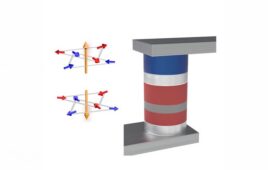
Illustration of an antiferromagnetic tunnel junction pillar beside the two spin configurations of platinum-manganese that store a bit.
Northwestern and Western Digital demonstrate a new way to write magnetic memory
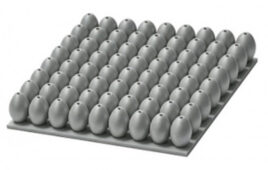
Eggshell-inspired shield cut projectile speed by 65% in simulation, but light-gas gun testing has not confirmed it 
rd newsletter
EXPAND YOUR KNOWLEDGE AND STAY CONNECTED
Get the latest info on technologies, trends, and strategies in Research & Development.

R&D World Digital Issues

Fall 2026 issue

Browse the most current issue of R&D World and back issues in an easy to use high quality format. Clip, share and download with the leading R&D magazine today.

R&D 100 Awards
Research & Development World
  • Subscribe to R&D World Magazine
  • Sign up for R&D World’s newsletter
  • Contact Us
  • About Us
  • Drug Discovery & Development
  • Pharmaceutical Processing
  • Global Funding Forecast

Copyright © 2026 Arrowfly LLC. All Rights Reserved. The material on this site may not be reproduced, distributed, transmitted, cached or otherwise used, except with the prior written permission of Arrowfly
Privacy Policy | Advertising | About Us

Search R&D World

  • R&D World Home
  • Topics
    • Aerospace
    • Automotive
    • Biotech
    • Careers
    • Chemistry
    • Environment
    • Energy
    • Life Science
    • Material Science
    • R&D Management
    • Physics
  • Technology
    • 3D Printing
    • A.I./Robotics
    • Software
    • Battery Technology
    • Controlled Environments
      • Cleanrooms
      • Graphene
      • Lasers
      • Regulations/Standards
      • Sensors
    • Imaging
    • Nanotechnology
    • Scientific Computing
      • Big Data
      • HPC/Supercomputing
      • Informatics
      • Security
    • Semiconductors
  • R&D Market Pulse
  • R&D 100
    • 2026 R&D 100 Award Winners
    • 2026 Professional Award Winners
    • 2026 Special Recognition Winners
    • R&D 100 Awards Event
    • R&D 100 Submissions
    • Winner Archive
  • Resources
    • Research Reports
    • Digital Issues
    • Educational Assets
    • Subscribe
    • Video
    • Webinars
    • PharmSci360
    • Content submission guidelines for R&D World
  • Global Funding Forecast
  • Top Labs
  • Advertisers
    • Advertise
    • PR Submissions
    • Eblast Submissions
  • SUBSCRIBE