Research & Development World

  • R&D World Home
  • Topics
    • Aerospace
    • Automotive
    • Biotech
    • Careers
    • Chemistry
    • Environment
    • Energy
    • Life Science
    • Material Science
    • R&D Management
    • Physics
  • Technology
    • 3D Printing
    • A.I./Robotics
    • Software
    • Battery Technology
    • Controlled Environments
      • Cleanrooms
      • Graphene
      • Lasers
      • Regulations/Standards
      • Sensors
    • Imaging
    • Nanotechnology
    • Scientific Computing
      • Big Data
      • HPC/Supercomputing
      • Informatics
      • Security
    • Semiconductors
  • R&D Market Pulse
  • R&D 100
    • 2026 R&D 100 Award Winners
    • 2026 Professional Award Winners
    • 2026 Special Recognition Winners
    • R&D 100 Awards Event
    • R&D 100 Submissions
    • Winner Archive
  • Resources
    • Research Reports
    • Digital Issues
    • Educational Assets
    • Subscribe
    • Video
    • Webinars
    • PharmSci360
    • Content submission guidelines for R&D World
  • Global Funding Forecast
  • Top Labs
  • Advertise
  • SUBSCRIBE

Researchers Create First Superconducting Graphene

By R&D Editors | September 10, 2015

Graphene, the ultra-thin, ultra-strong material made from a single layer of carbon atoms, just got a little more extreme. University of British Columbia physicists have been able to create the first ever superconducting graphene sample by coating it with lithium atoms.

Although superconductivity has already been observed in intercalated bulk graphite — three-dimensional crystals layered with alkali metal atoms, based on the graphite used in pencils — inducing superconductivity in single-layer graphene has until now eluded scientists.

“This first experimental realization of superconductivity in graphene promises to usher us in a new era of graphene electronics and nanoscale quantum devices,” says Andrea Damascelli, director of UBC’s Quantum Matter Institute and leading scientist of the Proceedings of the National Academy of Sciences study outlining the discovery.

Graphene, roughly 200 times stronger than steel by weight, is a single layer of carbon atoms arranged in a honeycomb pattern. Along with studying its extreme physical properties, scientists eventually hope to make very fast transistors, semiconductors, sensors, and transparent electrodes using graphene.

“This is an amazing material,’” says Bart Ludbrook, first author on the PNAS paper and a former PhD researcher in Damascelli’s group at UBC. “Decorating monolayer graphene with a layer of lithium atoms enhances the graphene’s electron-phonon coupling to the point where superconductivity can be stabilized.”

Given the massive scientific and technological interest, the ability to induce superconductivity in single-layer graphene promises to have significant cross-disciplinary impacts. According to financial reports, the global market for graphene reached $9 million in 2014 with most sales in the semiconductor, electronics, battery, energy, and composites industries.

The researchers, which include colleagues at the Max Planck Institute for Solid State Research through the joint Max-Planck-UBC Centre for Quantum Materials, prepared the lithium-decorated graphene in ultra-high vacuum conditions and at ultra-low temperatures (-267 degrees Celsius or 5 Kelvin), to achieve this breakthrough.

Release Date: September 8, 2015
Source: University of British Columbia 
Related Articles Read More >

Smart contact lenses move from glucose to stress and mood
ORNL plans to integrate an AI-enhanced algorithm into its radiation detection device 
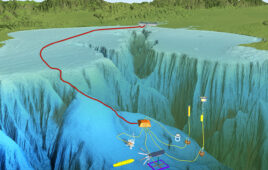
MBARI's Monterey Accelerated Research System (MARS) connects seafloor instruments to shore through a roughly 51-kilometer power and fiber-optic cable (red line) ending at a node about 891 meters down. The Geo-Sense system described in the new paper takes the opposite approach: a portable, battery-powered cable that records locally with no link to shore. Researchers used MARS's own fiber data to cross-check Geo-Sense's earthquake detections. Credit: MBARI
How lightweight AI startup Lightscline helped turn one to two years of seafloor data analysis into a two-month sprint
UC Riverside’s $5 fake drug detector uses toy robot sensors to catch counterfeit medications
rd newsletter
EXPAND YOUR KNOWLEDGE AND STAY CONNECTED
Get the latest info on technologies, trends, and strategies in Research & Development.

R&D World Digital Issues

Fall 2025 issue

Browse the most current issue of R&D World and back issues in an easy to use high quality format. Clip, share and download with the leading R&D magazine today.

R&D 100 Awards
Research & Development World
  • Subscribe to R&D World Magazine
  • Sign up for R&D World’s newsletter
  • Contact Us
  • About Us
  • Drug Discovery & Development
  • Pharmaceutical Processing
  • Global Funding Forecast

Copyright © 2026 Arrowfly LLC. All Rights Reserved. The material on this site may not be reproduced, distributed, transmitted, cached or otherwise used, except with the prior written permission of Arrowfly
Privacy Policy | Advertising | About Us

Search R&D World

  • R&D World Home
  • Topics
    • Aerospace
    • Automotive
    • Biotech
    • Careers
    • Chemistry
    • Environment
    • Energy
    • Life Science
    • Material Science
    • R&D Management
    • Physics
  • Technology
    • 3D Printing
    • A.I./Robotics
    • Software
    • Battery Technology
    • Controlled Environments
      • Cleanrooms
      • Graphene
      • Lasers
      • Regulations/Standards
      • Sensors
    • Imaging
    • Nanotechnology
    • Scientific Computing
      • Big Data
      • HPC/Supercomputing
      • Informatics
      • Security
    • Semiconductors
  • R&D Market Pulse
  • R&D 100
    • 2026 R&D 100 Award Winners
    • 2026 Professional Award Winners
    • 2026 Special Recognition Winners
    • R&D 100 Awards Event
    • R&D 100 Submissions
    • Winner Archive
  • Resources
    • Research Reports
    • Digital Issues
    • Educational Assets
    • Subscribe
    • Video
    • Webinars
    • PharmSci360
    • Content submission guidelines for R&D World
  • Global Funding Forecast
  • Top Labs
  • Advertise
  • SUBSCRIBE