Among the winners of the R&D 100 in 2025 is Abbott’s Liberta RC DBS System, a deep brain stimulation device for treating Parkinson’s disease, the second-most common neurodegenerative disorder in the U.S., with approximately 500,000 Americans suffering from the disease. Some experts estimate that, due to underdiagnosis, the number may be closer to one million. The number of Americans diagnosed with Parkinson’s is estimated to double by 2040, according to the NIH.
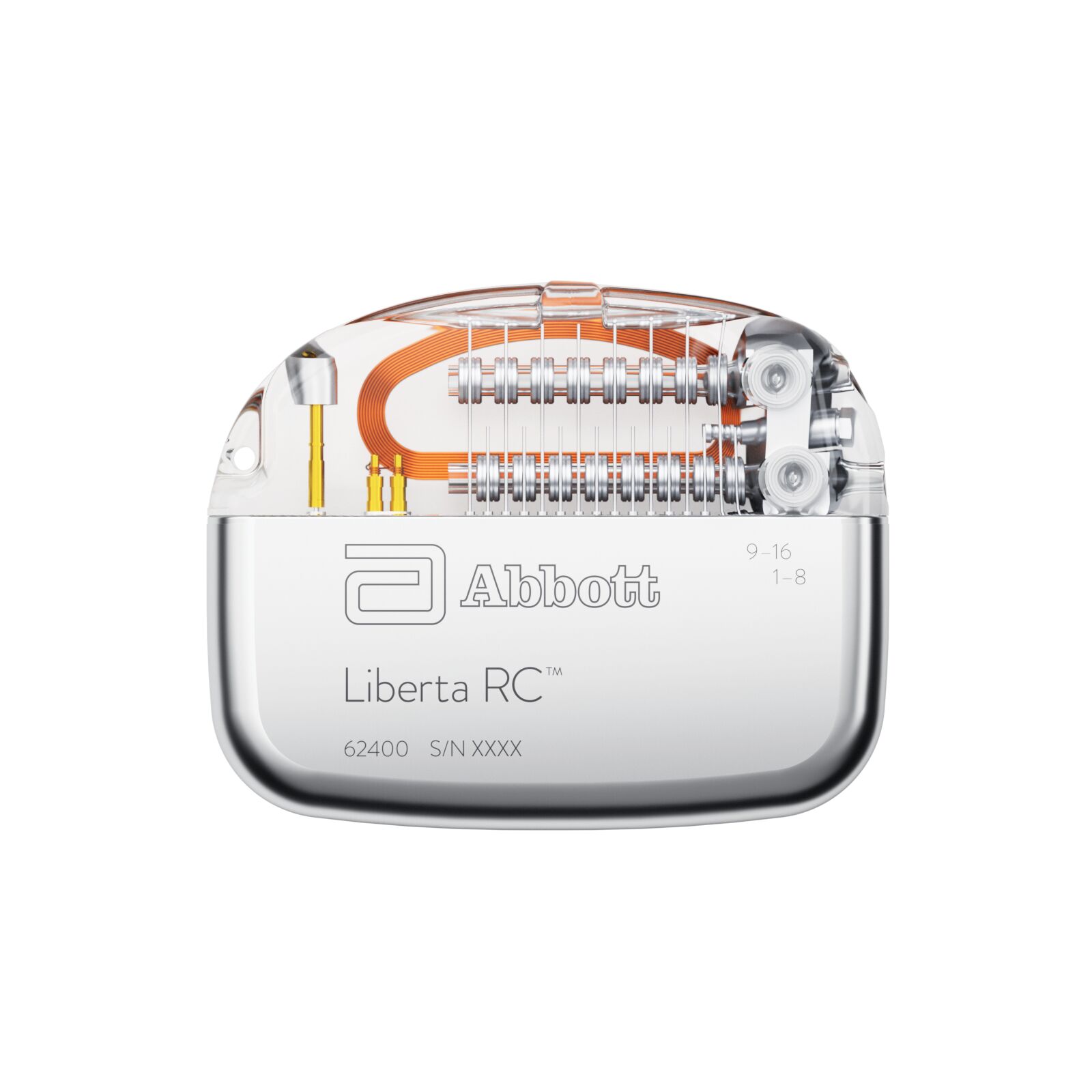
Abbott’s Liberta DBS system. Credit: Abbott
Symptoms of Parkinson’s include involuntary shaking, slowness of movement and reflexes, stiffness in limbs and impaired balance. When most people are diagnosed with Parkinson’s, they are already having trouble controlling their movements.
Deep brain stimulation
DBS is one alternative to medication, which helps treat the symptoms of movement disorders, including Parkinson’s. DBS uses a surgically implanted battery-operated device to send electrical signals to the brain regions that control movements. The electrical pulses regulate the signals sent to the muscles.
While DBS is a promising option for many, barriers remain, including the size of the battery pack, access to movement disorder specialists and the need for repeated surgeries to replace battery packs. Abbott is working toward solving these problems with its new Liberta RC DBS system.
The Liberta RC DBS system is the smallest DBS system on the market, about 32% smaller than other common rechargeable DBS systems, according to Abbott. It also has a rechargeable battery, reducing the need for replacement batteries. The company says it has the longest-lasting battery of any FDA-approved DBS system, with a charge lasting up to 37 days. The system comes with a wireless charger that has enough power for two full recharges.
The system is also connected to Abbott’s NeuroSphere Virtual Clinic, allowing physicians to monitor and adjust therapy remotely from anywhere with a cellular or Wi-Fi signal, said Rebecca Wilkins, division vice president of neuromodulation R&D at Abbott, in an email to R&D World. The ability for remote monitoring and alterations reduces the travel burden for patients with mobility-limiting conditions.
Possible treatment for depression
In 2024, Abbott announced the launch of the Abbott TRANSCEND study, a three-year double-blind clinical trial exploring the possibility of DBS for treatment-resistant depression. The first patient received their implant in March of this year.
“As Abbott’s connected care ecosystem evolves, the goal is to apply this technology across a broader range of conditions and disease states outside of chronic pain and movement disorders,” Wilkins wrote.
“Abbott’s work on the Liberta RC DBS system is the result of years of research, engineering and real-world feedback from physicians and patients. The system builds on more than a decade of Abbott innovation in neuromodulation,” Wilkins wrote.