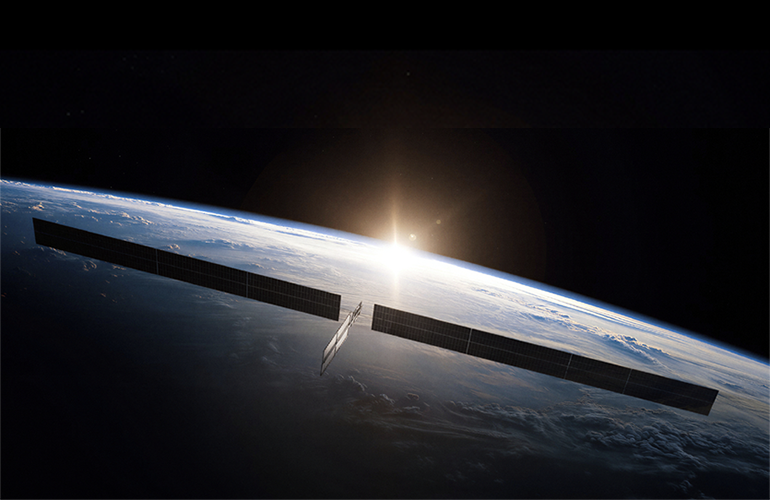
Image from SpaceX’s IPO filing
On Dwarkesh Patel’s podcast in February, Elon Musk said that within 30 to 36 months space would be “by far the cheapest” place to run AI. Pressed on whether that was really true, he doubled down. “It’s not even close,” he said.
Patel opened the podcast as a skeptic. Only 10 to 15% of a data center’s total cost of ownership is energy, he noted, and that is the part space is supposed to save. The processors are the rest, and in orbit they are harder to service and quicker to write off. “What’s the reason to put them in space?” he asked. Musk’s answer was power. Electricity output outside China is roughly flat while chip output climbs. He argued the only way to keep scaling is solar in orbit, where panels run about five times harder with no batteries, clouds, or night.
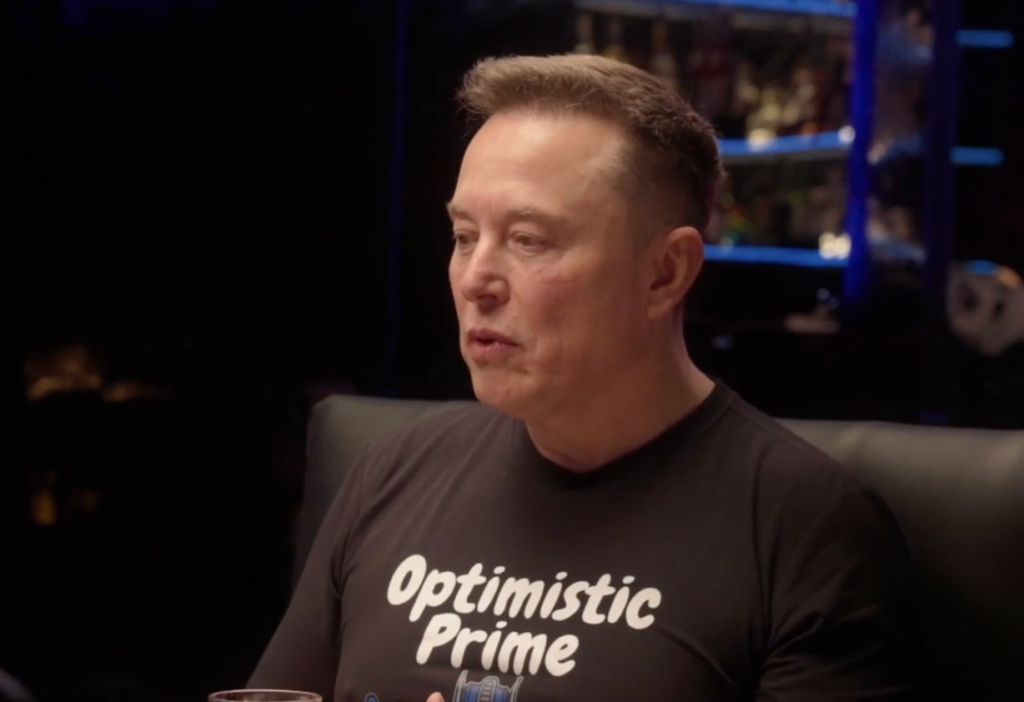
Musk on the Dwarkesh podcast
People who intent on scaling data centers on earth, Musk said, are about to get “a hard lesson in hardware.”
In May, SpaceX filed an S-1 describing the same orbital data centers as resting on “unproven technologies, or technologies that do not exist,” initiatives that “may not achieve commercial viability.” The filing adds that the timeline for putting 100 gigawatts of compute in orbit “may be difficult or impossible to determine.”
On the order of 10,000 Starship launches
Building AI data centers in space at scale will require copious rockets.
Reaching 100 gigawatts in orbit is “on the order of 10,000 Starship launches,” Patel said, referring to the two-stage, reusable SpaceX rockets. That works out to about one rocket every hour for a year. “Yes,” Musk replied. The cadence is “a lower rate compared to airlines.”
Incidentally, airlines’ operating expenses run close to $1 trillion annually. SpaceX’s recent Starship test flights are estimated to cost on the order of $100 million each. Musk’s standing target is $10 million a launch, and in the ultra-high-cadence case the orbital plan depends on, he has floated $1 to $2 million. SpaceX’s annual launch bill would land somewhere between roughly $20 billion at the aspirational floor and about $1 trillion at today’s cost, before a single GPU, solar array, or radiator. Morningstar reached a similar wall, estimating the targets require about 6,667 Starship flights a year, some 530 times current global launch mass, which it called “well beyond any near-term planning horizon.”
For what it’s worth, Musk has a habit of making bold proclamations that don’t always align with his projections. He promised the Grok 5 LLM with characteristic superlatives in late 2025. As of May, the model has not been launched, but pundits have speculated that it is in development currently and nearing potential release.
A mixed track record of delivering on technological goals
Tesla’s robotaxi rollout follows a similar arc. Musk launched the service in Austin in June 2025 and said it would reach half the U.S. population by year’s end. It closed 2025 confined to part of Austin, and by May 2026 it operated in three Texas cities.
Still, Musk helped build Colossus, the xAI training cluster in Memphis, a likely record-setting project. The data center scaled from nothing to 100,000 GPUs in 122 days against a 24-month estimate, and doubled to 200,000 in 92 more. By May 2026 the cluster was SpaceX’s to rent, and Anthropic, the rival Musk had branded “evil” months earlier, agreed to take its entire output, roughly 300 megawatts, at about $1.25 billion a month per the S-1.
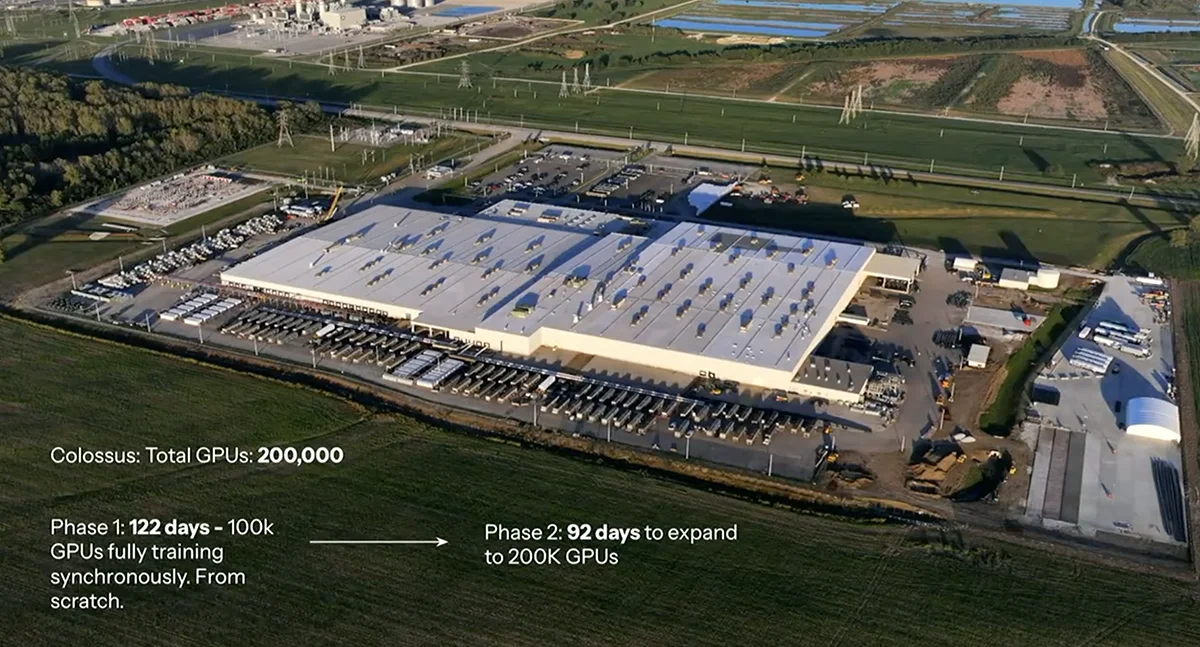
[xAI]
On the question of servicing GPUs in space
Assuming SpaceX has enough chips to launch data centers at scale into space, there is the question of how to service them. Musk told Patel he does not think servicing is an issue, since modern GPUs are reliable once they clear early failures. To catch those defects before launch, SpaceX “intend[s] to conduct intensive pre-deployment testing to reduce the rate of chip failure in space.” SpaceX does “not anticipate servicing or repairing processors in space.”
That leaves cooling, which the engineers closest to the problem single out as the hardest part. The S-1 treats radiative cooling as a cost advantage with “no operating costs compared to liquid or air cooling,” while conceding that heat must be shed “through radiation rather than convection and conduction,” which is why its compute satellites would need “substantially larger radiators” than Starlink flies today. Dylan Taylor, whose Voyager Technologies is building its own orbital compute, was noted on CNBC: thata two-year timeline is aggressive. That is because the thermal problem is unsolved. In orbit there is “no medium to transmit hot to cold,” so every watt leaves by radiation through a panel aimed away from the sun. The ISS sheds heat in the tens of kilowatts. An AI cluster has to shed megawatts.
Each of these problems, the chips, the servicing, the heat, sits in the prospectus as a risk SpaceX has yet to retire. For all the confidence on the podcast, the harshest verdict on the whole venture comes from SpaceX’s own lawyers. As the S-1 notes on page 42: “Our initiatives to develop orbital AI compute at scale, establish a lunar economy, develop human augmentation systems, and transport humans and cargo to the Moon and Mars are in early stages of conception, design and development and have not yet been proven at commercial scale, or at all, and may ultimately be unsuccessful.”