Research & Development World

  • R&D World Home
  • Topics
    • Aerospace
    • Automotive
    • Biotech
    • Careers
    • Chemistry
    • Environment
    • Energy
    • Life Science
    • Material Science
    • R&D Management
    • Physics
  • Technology
    • 3D Printing
    • A.I./Robotics
    • Software
    • Battery Technology
    • Controlled Environments
      • Cleanrooms
      • Graphene
      • Lasers
      • Regulations/Standards
      • Sensors
    • Imaging
    • Nanotechnology
    • Scientific Computing
      • Big Data
      • HPC/Supercomputing
      • Informatics
      • Security
    • Semiconductors
  • R&D Market Pulse
  • R&D 100
    • 2026 R&D 100 Award Winners
    • 2026 Professional Award Winners
    • 2026 Special Recognition Winners
    • R&D 100 Awards Event
    • R&D 100 Submissions
    • Winner Archive
  • Resources
    • Research Reports
    • Digital Issues
    • Educational Assets
    • Subscribe
    • Video
    • Webinars
    • PharmSci360
    • Content submission guidelines for R&D World
  • Global Funding Forecast
  • Top Labs
  • Advertise
  • SUBSCRIBE

Researchers demonstrate how direct fluid flow influences neuron growth

By R&D Editors | October 7, 2014

A Univ. of Texas at Arlington team exploring how neuron growth can be controlled in the lab and, possibly, in the human body has published a new paper in Nature Scientific Reports on how fluid flow could play a significant role.

In a new study co-authored by Samarendra Mohanty, leader of the Biophysics and Physiology Lab in the College of Science, the researchers were able to use microfluidic stimulations to change the path of an axon at an angle of up to 90 degrees. Axons are the shafts of neurons, on the tips of which connections are made with other neurons or cells.

The publication adds insight to the long accepted idea that chemical cues are primarily responsible for axonal pathfinding during human development and nervous system regeneration. Such knowledge could be essential for advances in spinal cord injuries, where fluid flow can guide regenerating axons, in addition to affecting the bio-chemicals in the injured site.

Finding a non-invasive, highly effective tool to guide neuron growth is important to neuroscientists hoping to determine how neural circuitry works and develop ways to test potentially life-changing therapeutic drugs on so-called lab-on-a-chip devices. Lab-on-a-chip devices incorporate several lab functions on a microchip.  

Co-authors on the new paper are Ling Gu, Bryan Black, Simon Ordonez and Argha Mondal, all researchers in Mohanty’s lab at the time of the research and Ankur Jain from the UT Arlington College of Engineering’s mechanical and aerospace engineering department.

“It is well known that fluid flow is involved in various processes during organ development. However, there was no evidence to confirm the influence of direct microfluidic flow on axonal migration,” said Mohanty. “Through this line of work, our lab is discovering that it’s not only chemical cues, but physical cues such as force, heat and flow that need to be looked at or used for understanding and control of neuronal guidance both in the lab and in the body.”

The latest publication grew from work that Mohanty and colleagues at University of California, Irvine, published as the cover article in Nature Photonics in January 2012. That paper demonstrated the team’s success directing axon growth using a particle rotated by a near-infrared laser beam so that it acted as a micromotor to create fluid flow. Gu, Black and Mohanty published research earlier this year in the journal PLOS One that described using near-infrared light generated heat to guide axon growth very efficiently, another advance the lab is working on.

To be sure that the flow—not heat or mechanical force generated by light—was the cause of axons’ direction change the new work used a direct flow from a microtube.

Mohanty and the research team used retinal ganglion cells from common goldfish to test their theory about direct flow. In the lab, 35% of the growth cones tested responded to the fluidic flow from the microtube, with 78% turning toward the flow direction.

“The work that Dr. Mohanty’s team is doing can translate basic science research into methods that could lead to great improvements in the area of health and the human condition,” said Jim Grover, interim dean of the UT Arlington College of Science. “The fact that he has received funding from the National Institutes of Health and the National Science Foundation to further his ideas confirms that his lab is doing work valued by others in the field and that his outcomes will continue to be noted.”

Black said the studies’ authors have more work to accomplish. First, they’ll try to establish parameters for the method.

“After we determine thresholds for effective axonal guidance versus damage or detachment, we can fabricate microfluidic platforms that will enable complex flow patterns and schedules,” Black said. “This will teach us whether the process is reversible, among other things, and potentially allow us to produce simple neuronal circuits.”

Microfluidic control of axonal guidance

Source: Univ. of Texas at Arlington
 

Related Articles Read More >

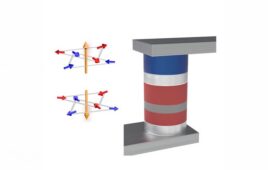
Illustration of an antiferromagnetic tunnel junction pillar beside the two spin configurations of platinum-manganese that store a bit.
Northwestern and Western Digital demonstrate a new way to write magnetic memory
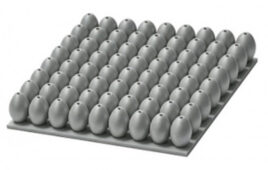
Eggshell-inspired shield cut projectile speed by 65% in simulation, but light-gas gun testing has not confirmed it 
The Space Systems Division (05)-developed Parallelogram Synchronized Truss Assembly (PaSTA), seen Aug. 12, 2025, is a mechanism that will be integrated into the Life-Extension In-orbit Servicer (LEXI) and Astroscale Prototype Servicer for Refueling (APS-R) spacecrafts.
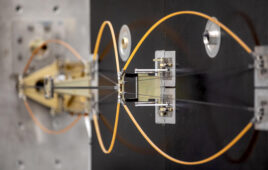
One SwRI R&D 100 winner turns buckled fiberglass into a spacecraft truss. The other models freight rail with 900 hours of BNSF field data
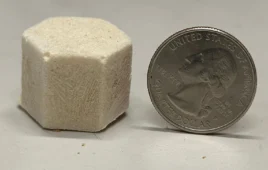
Researchers develop sawdust-based foam as polystyrene bans force industry to adapt
rd newsletter
EXPAND YOUR KNOWLEDGE AND STAY CONNECTED
Get the latest info on technologies, trends, and strategies in Research & Development.

R&D World Digital Issues

Fall 2026 issue

Browse the most current issue of R&D World and back issues in an easy to use high quality format. Clip, share and download with the leading R&D magazine today.

R&D 100 Awards
Research & Development World
  • Subscribe to R&D World Magazine
  • Sign up for R&D World’s newsletter
  • Contact Us
  • About Us
  • Drug Discovery & Development
  • Pharmaceutical Processing
  • Global Funding Forecast

Copyright © 2026 Arrowfly LLC. All Rights Reserved. The material on this site may not be reproduced, distributed, transmitted, cached or otherwise used, except with the prior written permission of Arrowfly
Privacy Policy | Advertising | About Us

Search R&D World

  • R&D World Home
  • Topics
    • Aerospace
    • Automotive
    • Biotech
    • Careers
    • Chemistry
    • Environment
    • Energy
    • Life Science
    • Material Science
    • R&D Management
    • Physics
  • Technology
    • 3D Printing
    • A.I./Robotics
    • Software
    • Battery Technology
    • Controlled Environments
      • Cleanrooms
      • Graphene
      • Lasers
      • Regulations/Standards
      • Sensors
    • Imaging
    • Nanotechnology
    • Scientific Computing
      • Big Data
      • HPC/Supercomputing
      • Informatics
      • Security
    • Semiconductors
  • R&D Market Pulse
  • R&D 100
    • 2026 R&D 100 Award Winners
    • 2026 Professional Award Winners
    • 2026 Special Recognition Winners
    • R&D 100 Awards Event
    • R&D 100 Submissions
    • Winner Archive
  • Resources
    • Research Reports
    • Digital Issues
    • Educational Assets
    • Subscribe
    • Video
    • Webinars
    • PharmSci360
    • Content submission guidelines for R&D World
  • Global Funding Forecast
  • Top Labs
  • Advertise
  • SUBSCRIBE