Research & Development World

  • R&D World Home
  • Topics
    • Aerospace
    • Automotive
    • Biotech
    • Careers
    • Chemistry
    • Environment
    • Energy
    • Life Science
    • Material Science
    • R&D Management
    • Physics
  • Technology
    • 3D Printing
    • A.I./Robotics
    • Software
    • Battery Technology
    • Controlled Environments
      • Cleanrooms
      • Graphene
      • Lasers
      • Regulations/Standards
      • Sensors
    • Imaging
    • Nanotechnology
    • Scientific Computing
      • Big Data
      • HPC/Supercomputing
      • Informatics
      • Security
    • Semiconductors
  • R&D Market Pulse
  • R&D 100
    • 2026 R&D 100 Award Winners
    • 2026 Professional Award Winners
    • 2026 Special Recognition Winners
    • R&D 100 Awards Event
    • R&D 100 Submissions
    • Winner Archive
  • Resources
    • Research Reports
    • Digital Issues
    • Educational Assets
    • Subscribe
    • Video
    • Webinars
    • PharmSci360
    • Content submission guidelines for R&D World
  • Global Funding Forecast
  • Top Labs
  • Advertisers
    • Advertise
    • PR Submissions
    • Eblast Submissions
  • SUBSCRIBE

“Smart windows” have potential to keep heat out, save energy

By R&D Editors | January 15, 2015

New smart window technology could help block heat from the sun and keep houses cool when it’s hot outside. Image: American Chemical Society

Windows allow brilliant natural light to stream into homes and buildings. Along with light comes heat that, in warm weather, we often counter with energy-consuming air conditioning. Now scientists are developing a new kind of “smart window” that can block out heat when the outside temperatures rise. The advance, reported in Industrial & Engineering Chemistry Research, could one day help consumers better conserve energy on hot days and reduce electric bills.

Xuhong Guo, Kaimin Chen, Yanfeng Gao and colleagues explain that researchers are pursuing smart windows that can respond to a variety of cues, including electricity, gas, light and heat. Those that are sensitive to heat are particularly useful for cutting down on energy use—when it gets hot outside, the windows turn an opaque white to block unwanted heat from entering a building while still allowing light to pass. They become transparent again as temperatures drop. But current methods for making these windows use jelly-like materials called hydrogels that swell in the heat, which hurts performance. Guo’s and Gao’s teams wanted to address this flaw.

Building on previous advances, the researchers made a version of the hydrogels, but in the form of microscopic soft beads suspended in a liquid. They sandwiched the solution between two pieces of glass and tested it using a model house. When they shined a lamp mimicking solar light on the smart window, it turned opaque and kept the inside of the house cool. The microgel, however, didn’t swell as much as its predecessor. The researchers conclude that their new microgel is a good candidate for use in future smart windows.

Source: American Chemical Society

Related Articles Read More >

Inside the Lab: Can AI Solve the Critical Materials Challenge?
Two Science papers catch altermagnets by handedness
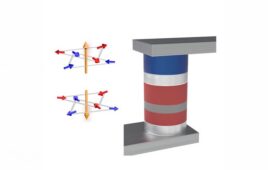
Illustration of an antiferromagnetic tunnel junction pillar beside the two spin configurations of platinum-manganese that store a bit.
Northwestern and Western Digital demonstrate a new way to write magnetic memory
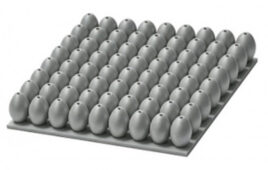
Eggshell-inspired shield cut projectile speed by 65% in simulation, but light-gas gun testing has not confirmed it 
rd newsletter
EXPAND YOUR KNOWLEDGE AND STAY CONNECTED
Get the latest info on technologies, trends, and strategies in Research & Development.

R&D World Digital Issues

Fall 2026 issue

Browse the most current issue of R&D World and back issues in an easy to use high quality format. Clip, share and download with the leading R&D magazine today.

R&D 100 Awards
Research & Development World
  • Subscribe to R&D World Magazine
  • Sign up for R&D World’s newsletter
  • Contact Us
  • About Us
  • Drug Discovery & Development
  • Pharmaceutical Processing
  • Global Funding Forecast

Copyright © 2026 Arrowfly LLC. All Rights Reserved. The material on this site may not be reproduced, distributed, transmitted, cached or otherwise used, except with the prior written permission of Arrowfly
Privacy Policy | Advertising | About Us

Search R&D World

  • R&D World Home
  • Topics
    • Aerospace
    • Automotive
    • Biotech
    • Careers
    • Chemistry
    • Environment
    • Energy
    • Life Science
    • Material Science
    • R&D Management
    • Physics
  • Technology
    • 3D Printing
    • A.I./Robotics
    • Software
    • Battery Technology
    • Controlled Environments
      • Cleanrooms
      • Graphene
      • Lasers
      • Regulations/Standards
      • Sensors
    • Imaging
    • Nanotechnology
    • Scientific Computing
      • Big Data
      • HPC/Supercomputing
      • Informatics
      • Security
    • Semiconductors
  • R&D Market Pulse
  • R&D 100
    • 2026 R&D 100 Award Winners
    • 2026 Professional Award Winners
    • 2026 Special Recognition Winners
    • R&D 100 Awards Event
    • R&D 100 Submissions
    • Winner Archive
  • Resources
    • Research Reports
    • Digital Issues
    • Educational Assets
    • Subscribe
    • Video
    • Webinars
    • PharmSci360
    • Content submission guidelines for R&D World
  • Global Funding Forecast
  • Top Labs
  • Advertisers
    • Advertise
    • PR Submissions
    • Eblast Submissions
  • SUBSCRIBE