Research & Development World

  • R&D World Home
  • Topics
    • Aerospace
    • Automotive
    • Biotech
    • Careers
    • Chemistry
    • Environment
    • Energy
    • Life Science
    • Material Science
    • R&D Management
    • Physics
  • Technology
    • 3D Printing
    • A.I./Robotics
    • Software
    • Battery Technology
    • Controlled Environments
      • Cleanrooms
      • Graphene
      • Lasers
      • Regulations/Standards
      • Sensors
    • Imaging
    • Nanotechnology
    • Scientific Computing
      • Big Data
      • HPC/Supercomputing
      • Informatics
      • Security
    • Semiconductors
  • R&D Market Pulse
  • R&D 100
    • 2025 R&D 100 Award Winners
    • 2025 Professional Award Winners
    • 2025 Special Recognition Winners
    • R&D 100 Awards Event
    • R&D 100 Submissions
    • Winner Archive
  • Resources
    • Research Reports
    • Digital Issues
    • Educational Assets
    • Subscribe
    • Video
    • Webinars
    • Content submission guidelines for R&D World
  • Global Funding Forecast
  • Top Labs
  • Advertise
  • SUBSCRIBE

Supercomputers for Quantum Computers

By Department of Energy, Office of Science | February 6, 2017

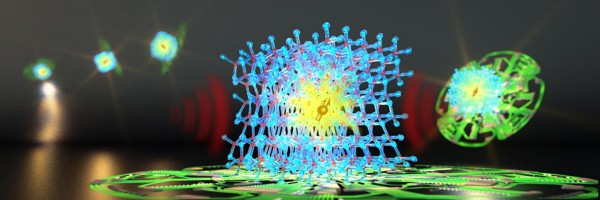
The figure illustrates the spin of a nitrogen vacancy (yellow) in aluminum nitride (cube) designed for qubit applications, such as quantum computers. Credit: H. Seo, M. Govoni, and G. Galli, University of Chicago

The Science

Quantum computers — a possible future technology that would revolutionize computing by harnessing the bizarre properties of quantum bits, or qubits. Qubits are the quantum analogue to the classical computer bits “0” and “1.” Engineering materials that can function as qubits is technically challenging. Using supercomputers, scientists from the University of Chicago and Argonne National Laboratory predicted possible new qubits built out of strained aluminum nitride. Moreover, the scientists showed that certain newly developed qubits in silicon carbide have unusually long lifetimes.

The Impact

Quantum computers could break common cryptography techniques, search huge datasets, and simulate quantum systems in a fraction of the time it would take today’s computers. However, engineers first need to harness the properties of quantum bits. Engineering new qubits with less difficult methods could lower one of the significant barriers to scaling quantum computers from small prototypes into larger-scale technologies.

Summary

One of the leading methods for creating qubits involves exploiting specific structural atomic defects in diamonds. Using diamonds is both technically challenging and expensive. Now researchers from the University of Chicago and Argonne National Laboratory have suggested an analogous defect in aluminum nitride, which could reduce the difficulty and ultimate cost of manufacturing materials for quantum computing applications. Using the Edison and Mira supercomputers at DOE’s National Energy Research Scientific Computing Center and Argonne National Laboratory respectively, the researchers found that by applying strain to aluminum nitride, they can create structural defects in the material that may be harnessed as qubits similar to those seen in diamonds. They performed their calculations using different levels of theory and the Quantum Espresso and WEST codes, the latter developed at the University of Chicago . The codes allowed them to accurately predict the position of the defect levels in the band-gap of semiconductors. The researchers also closely collaborated with experimentalists to understand and improve the performance of qubits in industrial materials. Recently, they showed that newly developed qubits in silicon carbide have much longer coherence times than that of the more well-established defect qubits in diamond. Their results pointed to industrially important polyatomic crystals as promising hosts for coherent qubits for scalable quantum devices.


Related Articles Read More >

Who has access to Claude Mythos-tier models (and beyond) will redefine cybersecurity, including in R&D
Abstract of modern high tech internet data center room with rows of racks with network and server hardware. 3d rendering
A startup says it found hidden memory behavior in NVIDIA GPUs and is building a security layer around it
NTT Research launches Scale Academy with SaltGrain, a zero-trust data security suite
LabWare advances SaaS LIMS strategy at Pittcon 2026, one year after ASSURE launch
rd newsletter
EXPAND YOUR KNOWLEDGE AND STAY CONNECTED
Get the latest info on technologies, trends, and strategies in Research & Development.

R&D World Digital Issues

Fall 2025 issue

Browse the most current issue of R&D World and back issues in an easy to use high quality format. Clip, share and download with the leading R&D magazine today.

R&D 100 Awards
Research & Development World
  • Subscribe to R&D World Magazine
  • Sign up for R&D World’s newsletter
  • Contact Us
  • About Us
  • Drug Discovery & Development
  • Pharmaceutical Processing
  • Global Funding Forecast

Copyright © 2026 WTWH Media LLC. All Rights Reserved. The material on this site may not be reproduced, distributed, transmitted, cached or otherwise used, except with the prior written permission of WTWH Media
Privacy Policy | Advertising | About Us

Search R&D World

  • R&D World Home
  • Topics
    • Aerospace
    • Automotive
    • Biotech
    • Careers
    • Chemistry
    • Environment
    • Energy
    • Life Science
    • Material Science
    • R&D Management
    • Physics
  • Technology
    • 3D Printing
    • A.I./Robotics
    • Software
    • Battery Technology
    • Controlled Environments
      • Cleanrooms
      • Graphene
      • Lasers
      • Regulations/Standards
      • Sensors
    • Imaging
    • Nanotechnology
    • Scientific Computing
      • Big Data
      • HPC/Supercomputing
      • Informatics
      • Security
    • Semiconductors
  • R&D Market Pulse
  • R&D 100
    • 2025 R&D 100 Award Winners
    • 2025 Professional Award Winners
    • 2025 Special Recognition Winners
    • R&D 100 Awards Event
    • R&D 100 Submissions
    • Winner Archive
  • Resources
    • Research Reports
    • Digital Issues
    • Educational Assets
    • Subscribe
    • Video
    • Webinars
    • Content submission guidelines for R&D World
  • Global Funding Forecast
  • Top Labs
  • Advertise
  • SUBSCRIBE