Research & Development World

  • R&D World Home
  • Topics
    • Aerospace
    • Automotive
    • Biotech
    • Careers
    • Chemistry
    • Environment
    • Energy
    • Life Science
    • Material Science
    • R&D Management
    • Physics
  • Technology
    • 3D Printing
    • A.I./Robotics
    • Software
    • Battery Technology
    • Controlled Environments
      • Cleanrooms
      • Graphene
      • Lasers
      • Regulations/Standards
      • Sensors
    • Imaging
    • Nanotechnology
    • Scientific Computing
      • Big Data
      • HPC/Supercomputing
      • Informatics
      • Security
    • Semiconductors
  • R&D Market Pulse
  • R&D 100
    • 2025 R&D 100 Award Winners
    • 2025 Professional Award Winners
    • 2025 Special Recognition Winners
    • R&D 100 Awards Event
    • R&D 100 Submissions
    • Winner Archive
  • Resources
    • Research Reports
    • Digital Issues
    • Educational Assets
    • Subscribe
    • Video
    • Webinars
    • PharmSci360
    • Content submission guidelines for R&D World
  • Global Funding Forecast
  • Top Labs
  • Advertise
  • SUBSCRIBE

Tiny Electric Sensor Detects Heart Attacks

By University of Manchester | September 7, 2016

An international collaboration of scientists involving a team of researchers at Manchester led by Dr. David J. Lewis has developed a tiny electric sensor, which could potentially improve patient survival rates by telling doctors if a person has had a heart attack.

Cardiovascular diseases account for around 30 percent of adult deaths in the 30 to 70-year age group, which is greater than the combined deaths from all types of cancer. The ability to diagnose cardiac disease is therefore of utmost concern to doctors. When someone has a heart attack, certain chemicals are released into their bloodstream in elevated amounts, and blood tests are therefore the key to diagnosis.

Lewis, from Manchester’s School of Materials, has worked with his colleagues and a team at India’s Institute of Nano Science and Technology (INST) since 2014 to develop a nanoscale sensor made from “few-layer black phosphorus,” a new 2D material, which was coated in DNA. The immobilized DNA binds to a chemical called myoglobin, which increases in blood plasma after a heart attack and can be detected and measured by a simple electrical test.

This could have a major impact, as it is potentially the most rapid, sensitive, selective and accurate method currently available to detect if someone has elevated levels of myoglobin — the measurement of which is one of the methods used in hospitals to check if someone has suffered a heart attack. The researchers predict that its eventual introduction into the clinic could improve patient survival rates after an attack.

This work is the first example of 2D few-layer black phosphorus being used as a biological sensing platform. The test could eventually be used at the patient bedside, and does not require the use of centralized laboratories that may slow down their diagnosis. As the DNA used is developed using chemical information imparted to it by the biological target, it is potentially a universal system that could be applied to other targets beyond myoglobin.

“I was really pleased to publish a paper that used all my skills and the areas of interest that I have developed so far in my career — nanoscience and materials science, and their biological applications,” says Lewis. “My dad suffered a heart scare in late 2013 and has been rehabilitating since, and I have lost good friends to heart disease, so I know full well the devastation that it can bring to individuals and families. The fact that it could potentially have societal impact beyond academia and could potentially improve patient survival and quality of life beyond a heart attack is, for me, amazing.”

Their work is described in detail in the American Chemical Society journal.

Source: University of Manchester
Related Articles Read More >

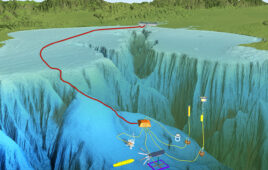
MBARI's Monterey Accelerated Research System (MARS) connects seafloor instruments to shore through a roughly 51-kilometer power and fiber-optic cable (red line) ending at a node about 891 meters down. The Geo-Sense system described in the new paper takes the opposite approach: a portable, battery-powered cable that records locally with no link to shore. Researchers used MARS's own fiber data to cross-check Geo-Sense's earthquake detections. Credit: MBARI
How lightweight AI startup Lightscline helped turn one to two years of seafloor data analysis into a two-month sprint
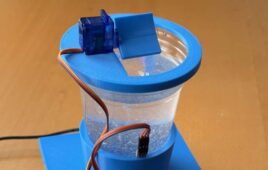
UC Riverside’s $5 fake drug detector uses toy robot sensors to catch counterfeit medications
R&D 100 winner flags even unknown fentanyl analogs
New nanopore sensor paves the way for fast, accurate, low-cost DNA sequencing
rd newsletter
EXPAND YOUR KNOWLEDGE AND STAY CONNECTED
Get the latest info on technologies, trends, and strategies in Research & Development.

R&D World Digital Issues

Fall 2025 issue

Browse the most current issue of R&D World and back issues in an easy to use high quality format. Clip, share and download with the leading R&D magazine today.

R&D 100 Awards
Research & Development World
  • Subscribe to R&D World Magazine
  • Sign up for R&D World’s newsletter
  • Contact Us
  • About Us
  • Drug Discovery & Development
  • Pharmaceutical Processing
  • Global Funding Forecast

Copyright © 2026 Arrowfly LLC. All Rights Reserved. The material on this site may not be reproduced, distributed, transmitted, cached or otherwise used, except with the prior written permission of Arrowfly
Privacy Policy | Advertising | About Us

Search R&D World

  • R&D World Home
  • Topics
    • Aerospace
    • Automotive
    • Biotech
    • Careers
    • Chemistry
    • Environment
    • Energy
    • Life Science
    • Material Science
    • R&D Management
    • Physics
  • Technology
    • 3D Printing
    • A.I./Robotics
    • Software
    • Battery Technology
    • Controlled Environments
      • Cleanrooms
      • Graphene
      • Lasers
      • Regulations/Standards
      • Sensors
    • Imaging
    • Nanotechnology
    • Scientific Computing
      • Big Data
      • HPC/Supercomputing
      • Informatics
      • Security
    • Semiconductors
  • R&D Market Pulse
  • R&D 100
    • 2025 R&D 100 Award Winners
    • 2025 Professional Award Winners
    • 2025 Special Recognition Winners
    • R&D 100 Awards Event
    • R&D 100 Submissions
    • Winner Archive
  • Resources
    • Research Reports
    • Digital Issues
    • Educational Assets
    • Subscribe
    • Video
    • Webinars
    • PharmSci360
    • Content submission guidelines for R&D World
  • Global Funding Forecast
  • Top Labs
  • Advertise
  • SUBSCRIBE