Research & Development World

  • R&D World Home
  • Topics
    • Aerospace
    • Automotive
    • Biotech
    • Careers
    • Chemistry
    • Environment
    • Energy
    • Life Science
    • Material Science
    • R&D Management
    • Physics
  • Technology
    • 3D Printing
    • A.I./Robotics
    • Software
    • Battery Technology
    • Controlled Environments
      • Cleanrooms
      • Graphene
      • Lasers
      • Regulations/Standards
      • Sensors
    • Imaging
    • Nanotechnology
    • Scientific Computing
      • Big Data
      • HPC/Supercomputing
      • Informatics
      • Security
    • Semiconductors
  • R&D Market Pulse
  • R&D 100
    • 2025 R&D 100 Award Winners
    • 2025 Professional Award Winners
    • 2025 Special Recognition Winners
    • R&D 100 Awards Event
    • R&D 100 Submissions
    • Winner Archive
  • Resources
    • Research Reports
    • Digital Issues
    • Educational Assets
    • Subscribe
    • Video
    • Webinars
    • PharmSci360
    • Content submission guidelines for R&D World
  • Global Funding Forecast
  • Top Labs
  • Advertise
  • SUBSCRIBE

Smartphone Sensor Performs the Smell Test

By American Chemical Society | June 27, 2018

When it comes to the “smell test,” the nose isn’t always the best judge of food quality. Now in a study appearing in the American Chemical Society journal Nano Letters, scientists report that they have developed a wireless tagging device that can send signals to smartphones warning consumers and food distributors when meat and other perishables have spoiled. They say this new sensor could improve the detection of rotten food so it is tossed before consumers eat it.
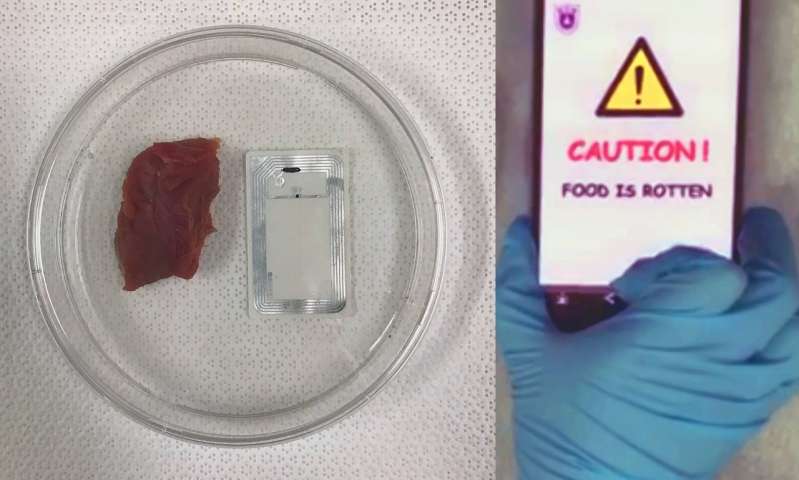
A new wireless sensing device that detects odors from ‘bad’ meat could help prevent food poisoning. Image: American Chemical Society

Every year, 48 million people in the U.S. get sick from foodborne illnesses, according to the U.S. Centers for Disease Control and Prevention. Of these, about 125,000 people are hospitalized and 3,000 die. Traditionally, many consumers just smell a food to detect spoilage, but this technique is only as reliable as the sniffer’s nose. At the other end of the spectrum, food inspectors often use bulky, expensive equipment to detect harmful microbes. Scientists are investigating other approaches, including near field communication (NFC) labeling, that are both portable and dependable. NFC devices wirelessly transmit information over short distances — usually less than 4 inches. They are similar to the radio frequency identification products retailers use to track inventory and shipments.

Building on this idea, Lijia Pan, Yi Shi, Guihua Yu and colleagues sought to incorporate a sensitive switch into NFC labeling tags to detect food spoilage using a smartphone. The scientists created a nanostructured, conductive, polymer-based gas sensor that can detect substances called biogenic amines (BAs), which give decomposing meat its bad odor. They embedded these sensors into NFCs placed next to meats. After the meats had been stored for 24 hours at 86 degrees Fahrenheit, the researchers found that the sensors successfully detected significant amounts of BAs. The sensors then switched on the NFCs so they could transmit this information to a nearby smartphone.

The authors acknowledge funding from the National Key Research and Development Program of China, the National Natural Science Foundation of China, the Alfred P. Sloan Fellowship, and Camille Dreyfus Teacher-Scholar Award.

Source: American Chemical Society
Related Articles Read More >

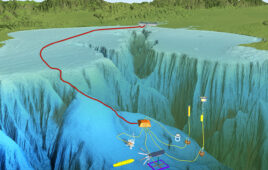
MBARI's Monterey Accelerated Research System (MARS) connects seafloor instruments to shore through a roughly 51-kilometer power and fiber-optic cable (red line) ending at a node about 891 meters down. The Geo-Sense system described in the new paper takes the opposite approach: a portable, battery-powered cable that records locally with no link to shore. Researchers used MARS's own fiber data to cross-check Geo-Sense's earthquake detections. Credit: MBARI
How lightweight AI startup Lightscline helped turn one to two years of seafloor data analysis into a two-month sprint
UC Riverside’s $5 fake drug detector uses toy robot sensors to catch counterfeit medications
R&D 100 winner flags even unknown fentanyl analogs
New nanopore sensor paves the way for fast, accurate, low-cost DNA sequencing
rd newsletter
EXPAND YOUR KNOWLEDGE AND STAY CONNECTED
Get the latest info on technologies, trends, and strategies in Research & Development.

R&D World Digital Issues

Fall 2025 issue

Browse the most current issue of R&D World and back issues in an easy to use high quality format. Clip, share and download with the leading R&D magazine today.

R&D 100 Awards
Research & Development World
  • Subscribe to R&D World Magazine
  • Sign up for R&D World’s newsletter
  • Contact Us
  • About Us
  • Drug Discovery & Development
  • Pharmaceutical Processing
  • Global Funding Forecast

Copyright © 2026 Arrowfly LLC. All Rights Reserved. The material on this site may not be reproduced, distributed, transmitted, cached or otherwise used, except with the prior written permission of Arrowfly
Privacy Policy | Advertising | About Us

Search R&D World

  • R&D World Home
  • Topics
    • Aerospace
    • Automotive
    • Biotech
    • Careers
    • Chemistry
    • Environment
    • Energy
    • Life Science
    • Material Science
    • R&D Management
    • Physics
  • Technology
    • 3D Printing
    • A.I./Robotics
    • Software
    • Battery Technology
    • Controlled Environments
      • Cleanrooms
      • Graphene
      • Lasers
      • Regulations/Standards
      • Sensors
    • Imaging
    • Nanotechnology
    • Scientific Computing
      • Big Data
      • HPC/Supercomputing
      • Informatics
      • Security
    • Semiconductors
  • R&D Market Pulse
  • R&D 100
    • 2025 R&D 100 Award Winners
    • 2025 Professional Award Winners
    • 2025 Special Recognition Winners
    • R&D 100 Awards Event
    • R&D 100 Submissions
    • Winner Archive
  • Resources
    • Research Reports
    • Digital Issues
    • Educational Assets
    • Subscribe
    • Video
    • Webinars
    • PharmSci360
    • Content submission guidelines for R&D World
  • Global Funding Forecast
  • Top Labs
  • Advertise
  • SUBSCRIBE