Research & Development World

  • R&D World Home
  • Topics
    • Aerospace
    • Automotive
    • Biotech
    • Careers
    • Chemistry
    • Environment
    • Energy
    • Life Science
    • Material Science
    • R&D Management
    • Physics
  • Technology
    • 3D Printing
    • A.I./Robotics
    • Software
    • Battery Technology
    • Controlled Environments
      • Cleanrooms
      • Graphene
      • Lasers
      • Regulations/Standards
      • Sensors
    • Imaging
    • Nanotechnology
    • Scientific Computing
      • Big Data
      • HPC/Supercomputing
      • Informatics
      • Security
    • Semiconductors
  • R&D Market Pulse
  • R&D 100
    • 2026 R&D 100 Award Winners
    • 2026 Professional Award Winners
    • 2026 Special Recognition Winners
    • R&D 100 Awards Event
    • R&D 100 Submissions
    • Winner Archive
  • Resources
    • Research Reports
    • Digital Issues
    • Educational Assets
    • Subscribe
    • Video
    • Webinars
    • PharmSci360
    • Content submission guidelines for R&D World
  • Global Funding Forecast
  • Top Labs
  • Advertise
  • SUBSCRIBE

Nanoparticles Used to Help Treat Spinal Cord Injuries

By Kenny Walter | October 20, 2017

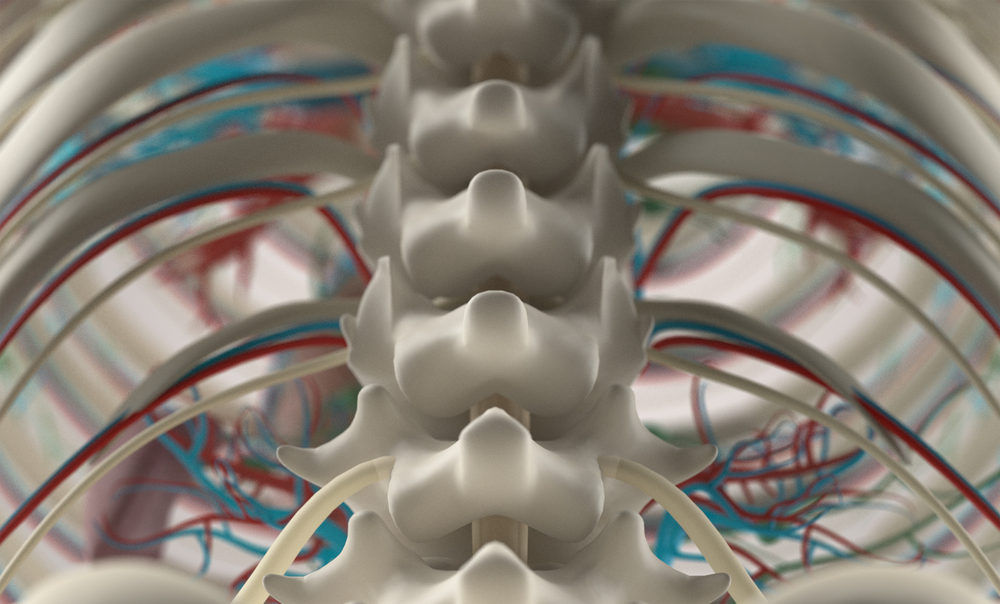
Caption: A new nanoparticle treatment may help those suffering from spinal cord injuries avoid secondary nerve damage.

A new nanoparticle treatment could help those suffering from spinal cord injuries walk better after their injury, while also reducing secondary nerve damage caused by inflammation and internal scarring.

A research team from Northwestern University has created a biodegradable nanoparticle that can be injected after spinal cord trauma to prevent inflammation and internal scarring that inhibits the repair process.

The nanoparticles are made of poly(lactic-co-glycolic) acid—a biocompatible substance used in re-absorbable sutures.

They bind to the cells that cause the inflammation—inflammatory monocytes—and diverting them to the spleen.

The researchers tested the nanoparticles in mice and found that the mice with spinal cord injuries were able to walk better post-injury after being injected with the nanoparticle compared to those that didn’t receive it.

Stephen Miller, a Northwestern scientist, said in an exclusive interview with R&D Magazine, that the treatment is promising to help mitigate the damage for those suffering from spinal cord injuries.

“We induced a spinal cord injury and then infused the same nanoparticles that we have used in the other indications,” Miller said. “In this case I think the initial infusion was within two to three hours after the crash injury on the spinal cord.

“There’s really nothing you can do for a spinal cord injury, there’s really nothing they can do for these people, so we are fairly excited for the results,” he added.

The treatment is not considered a cure and the original damage will still exist. However, if administered shortly after an injury it can prevent secondary damage from occurring.

Miller developed the nanoparticles along with co-senior author Jack Kessler, Ph.D., a professor of neurology at Northwestern University Feinberg School of Medicine and a Northwestern Medicine neurologist.

Following a spinal cord injury, blood cells that normally couldn’t enter the nervous system breech the protective blood brain barrier and flood the injured site.

They release noxious chemicals called inflammatory cytokines that call in additional inflammatory blood cells that further damage the central nervous system by causing neuronal cell death and scar formation that blocks recovery from paralysis.

Myelin neurons surround the nerve fibers and allow them to carry signals through the nervous system but if the myelin sheath is lost, the cells no longer conduct signals.

Axons, the long fibers extending from the neurons that carry signals from neuron to neuron, also die. 

The researchers plan on continuing studies and possibly clinical trials to confirm the safety of the injected nanoparticle. Kessler said the scientists have not seen any signs of toxicity thus far.

A clinical trial has also been approved by the U.S. Food and Drug Administration (FDA) for use to treat celiac disease.

“If we take the exact same carboxylate PLG nanoparticles and we encapsulate protein or peptide antigens inside of these particles they are extremely efficient for inducing immune tolerance for the treatment of autoimmune diseases, allergic diseases and even certain models of tissue transplantation that we employ in the lab,” Miller said.   

Kessler and Miller created the Cour Pharmaceuticals Development Co. to commercially develop the nanoparticle technology.
Related Articles Read More >

Researchers developed quantum nanosensors that can measure the temperature of a single cell
Overcoming the 100-nanometer barrier: New microbottle resonators scale up optical trapping
R&D 100 winner LLNL achieves 1,000x speed boost in 3D nanofabrication
CEA-Leti achieves 400°C CMOS fabrication milestone for 3D chip stacking
rd newsletter
EXPAND YOUR KNOWLEDGE AND STAY CONNECTED
Get the latest info on technologies, trends, and strategies in Research & Development.

R&D World Digital Issues

Fall 2025 issue

Browse the most current issue of R&D World and back issues in an easy to use high quality format. Clip, share and download with the leading R&D magazine today.

R&D 100 Awards
Research & Development World
  • Subscribe to R&D World Magazine
  • Sign up for R&D World’s newsletter
  • Contact Us
  • About Us
  • Drug Discovery & Development
  • Pharmaceutical Processing
  • Global Funding Forecast

Copyright © 2026 Arrowfly LLC. All Rights Reserved. The material on this site may not be reproduced, distributed, transmitted, cached or otherwise used, except with the prior written permission of Arrowfly
Privacy Policy | Advertising | About Us

Search R&D World

  • R&D World Home
  • Topics
    • Aerospace
    • Automotive
    • Biotech
    • Careers
    • Chemistry
    • Environment
    • Energy
    • Life Science
    • Material Science
    • R&D Management
    • Physics
  • Technology
    • 3D Printing
    • A.I./Robotics
    • Software
    • Battery Technology
    • Controlled Environments
      • Cleanrooms
      • Graphene
      • Lasers
      • Regulations/Standards
      • Sensors
    • Imaging
    • Nanotechnology
    • Scientific Computing
      • Big Data
      • HPC/Supercomputing
      • Informatics
      • Security
    • Semiconductors
  • R&D Market Pulse
  • R&D 100
    • 2026 R&D 100 Award Winners
    • 2026 Professional Award Winners
    • 2026 Special Recognition Winners
    • R&D 100 Awards Event
    • R&D 100 Submissions
    • Winner Archive
  • Resources
    • Research Reports
    • Digital Issues
    • Educational Assets
    • Subscribe
    • Video
    • Webinars
    • PharmSci360
    • Content submission guidelines for R&D World
  • Global Funding Forecast
  • Top Labs
  • Advertise
  • SUBSCRIBE