Research & Development World

  • R&D World Home
  • Topics
    • Aerospace
    • Automotive
    • Biotech
    • Careers
    • Chemistry
    • Environment
    • Energy
    • Life Science
    • Material Science
    • R&D Management
    • Physics
  • Technology
    • 3D Printing
    • A.I./Robotics
    • Software
    • Battery Technology
    • Controlled Environments
      • Cleanrooms
      • Graphene
      • Lasers
      • Regulations/Standards
      • Sensors
    • Imaging
    • Nanotechnology
    • Scientific Computing
      • Big Data
      • HPC/Supercomputing
      • Informatics
      • Security
    • Semiconductors
  • R&D Market Pulse
  • R&D 100
    • 2025 R&D 100 Award Winners
    • 2025 Professional Award Winners
    • 2025 Special Recognition Winners
    • R&D 100 Awards Event
    • R&D 100 Submissions
    • Winner Archive
  • Resources
    • Research Reports
    • Digital Issues
    • Educational Assets
    • R&D Index
    • Subscribe
    • Video
    • Webinars
    • Content submission guidelines for R&D World
  • Global Funding Forecast
  • Top Labs
  • Advertise
  • SUBSCRIBE

New antiviral, antibacterial surface could reduce spread of infections in hospitals

By Heather Hall | May 29, 2020

Researchers have developed a new antiviral, antibacterial surface that could reduce the spread of infections in hospitals.

The novel coronavirus pandemic has caused an increased demand for antimicrobial treatments that can keep surfaces clean, particularly in health care settings. Although some surfaces have been developed that can combat bacteria, what’s been lacking is a surface that can also kill off viruses. Now, researchers have found a way to impart durable antiviral and antibacterial properties to an aluminum alloy used in hospitals, according to a report in ACS Biomaterials Science & Engineering.

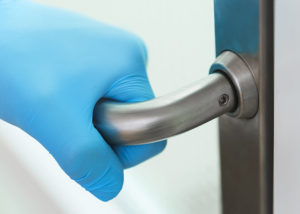
Among other mechanisms, viruses and bacteria can spread when a person touches a site where germs have settled, such as a doorframe, handrail or medical device. A healthy person can often fight off these bugs, but hospital patients can be more vulnerable to infection. The number of hospital-acquired infections has been on the decline in the U.S., but they still cause tens of thousands of deaths every year, according to the U.S. Department of Health and Human Services. Chemical disinfectants or coatings containing hydrophobic compounds, silver ions or copper can reduce infectious contaminants on surfaces, but these treatments don’t last. However, nature has developed its own solutions for battling microorganisms, including microscopic structural features that render some insect wings lethal to bacteria. Scientists have replicated this effect by forming surfaces covered with minute pillars and other shapes that distort and kill bacterial cells. But Prasad Yarlagadda and colleagues wanted to inactivate viruses as well as bacteria, so they set out to generate a novel nanoscale topography on long-lasting, industrially relevant materials.

The team experimented with disks of aluminum 6063, which is used in doorframes, window panels and hospital and medical equipment. Etching the disks with sodium hydroxide for up to 3 hours changed the initially smooth, hydrophobic surface into a ridged, hydrophilic surface. Bacteria or viruses were then applied to the etched disks. Most of the Pseudomonas aeruginosa and Staphylococcus aureus bacteria were inactivated after 3 hours on the surface, while viability of common respiratory viruses dropped within 2 hours; both results were better than with plastic or smooth aluminum surfaces. The disks retained their effectiveness even after tests designed to mimic hospital wear and tear. The researchers note this is the first report to show combined antibacterial and antiviral properties of a durable, nanostructured surface that has the potential to stop the spread of infections arising from physical surfaces in hospitals. This strategy could be extended to surfaces in other public areas, such as cruise ships, planes and airports. The team is now studying the effects of their nano-textured aluminum surfaces on the novel coronavirus.

The authors acknowledge funding from the Australian Research Council.

 

Related Articles Read More >

Sandia National Laboratories designs porous liquids to selectively capture methane
New material captures and releases CO2 in response to visible light
R&D 100 red carpet recap: NETL team turns plastic waste into battery-grade graphite
R&D 100 Spotlight: Looping nylon recycles fishnets into medical grade nylon
rd newsletter
EXPAND YOUR KNOWLEDGE AND STAY CONNECTED
Get the latest info on technologies, trends, and strategies in Research & Development.
RD 25 Power Index

R&D World Digital Issues

Fall 2025 issue

Browse the most current issue of R&D World and back issues in an easy to use high quality format. Clip, share and download with the leading R&D magazine today.

R&D 100 Awards
Research & Development World
  • Subscribe to R&D World Magazine
  • Sign up for R&D World’s newsletter
  • Contact Us
  • About Us
  • Drug Discovery & Development
  • Pharmaceutical Processing
  • Global Funding Forecast

Copyright © 2026 WTWH Media LLC. All Rights Reserved. The material on this site may not be reproduced, distributed, transmitted, cached or otherwise used, except with the prior written permission of WTWH Media
Privacy Policy | Advertising | About Us

Search R&D World

  • R&D World Home
  • Topics
    • Aerospace
    • Automotive
    • Biotech
    • Careers
    • Chemistry
    • Environment
    • Energy
    • Life Science
    • Material Science
    • R&D Management
    • Physics
  • Technology
    • 3D Printing
    • A.I./Robotics
    • Software
    • Battery Technology
    • Controlled Environments
      • Cleanrooms
      • Graphene
      • Lasers
      • Regulations/Standards
      • Sensors
    • Imaging
    • Nanotechnology
    • Scientific Computing
      • Big Data
      • HPC/Supercomputing
      • Informatics
      • Security
    • Semiconductors
  • R&D Market Pulse
  • R&D 100
    • 2025 R&D 100 Award Winners
    • 2025 Professional Award Winners
    • 2025 Special Recognition Winners
    • R&D 100 Awards Event
    • R&D 100 Submissions
    • Winner Archive
  • Resources
    • Research Reports
    • Digital Issues
    • Educational Assets
    • R&D Index
    • Subscribe
    • Video
    • Webinars
    • Content submission guidelines for R&D World
  • Global Funding Forecast
  • Top Labs
  • Advertise
  • SUBSCRIBE