Research & Development World

  • R&D World Home
  • Topics
    • Aerospace
    • Automotive
    • Biotech
    • Careers
    • Chemistry
    • Environment
    • Energy
    • Life Science
    • Material Science
    • R&D Management
    • Physics
  • Technology
    • 3D Printing
    • A.I./Robotics
    • Software
    • Battery Technology
    • Controlled Environments
      • Cleanrooms
      • Graphene
      • Lasers
      • Regulations/Standards
      • Sensors
    • Imaging
    • Nanotechnology
    • Scientific Computing
      • Big Data
      • HPC/Supercomputing
      • Informatics
      • Security
    • Semiconductors
  • R&D Market Pulse
  • R&D 100
    • 2026 R&D 100 Award Winners
    • 2026 Professional Award Winners
    • 2026 Special Recognition Winners
    • R&D 100 Awards Event
    • R&D 100 Submissions
    • Winner Archive
  • Resources
    • Research Reports
    • Digital Issues
    • Educational Assets
    • Subscribe
    • Video
    • Webinars
    • PharmSci360
    • Content submission guidelines for R&D World
  • Global Funding Forecast
  • Top Labs
  • Advertise
  • SUBSCRIBE

Tweaking Quantum Dots Powers-Up Double-Pane Solar Windows

By DOE/Los Alamos National Laboratory | January 2, 2018

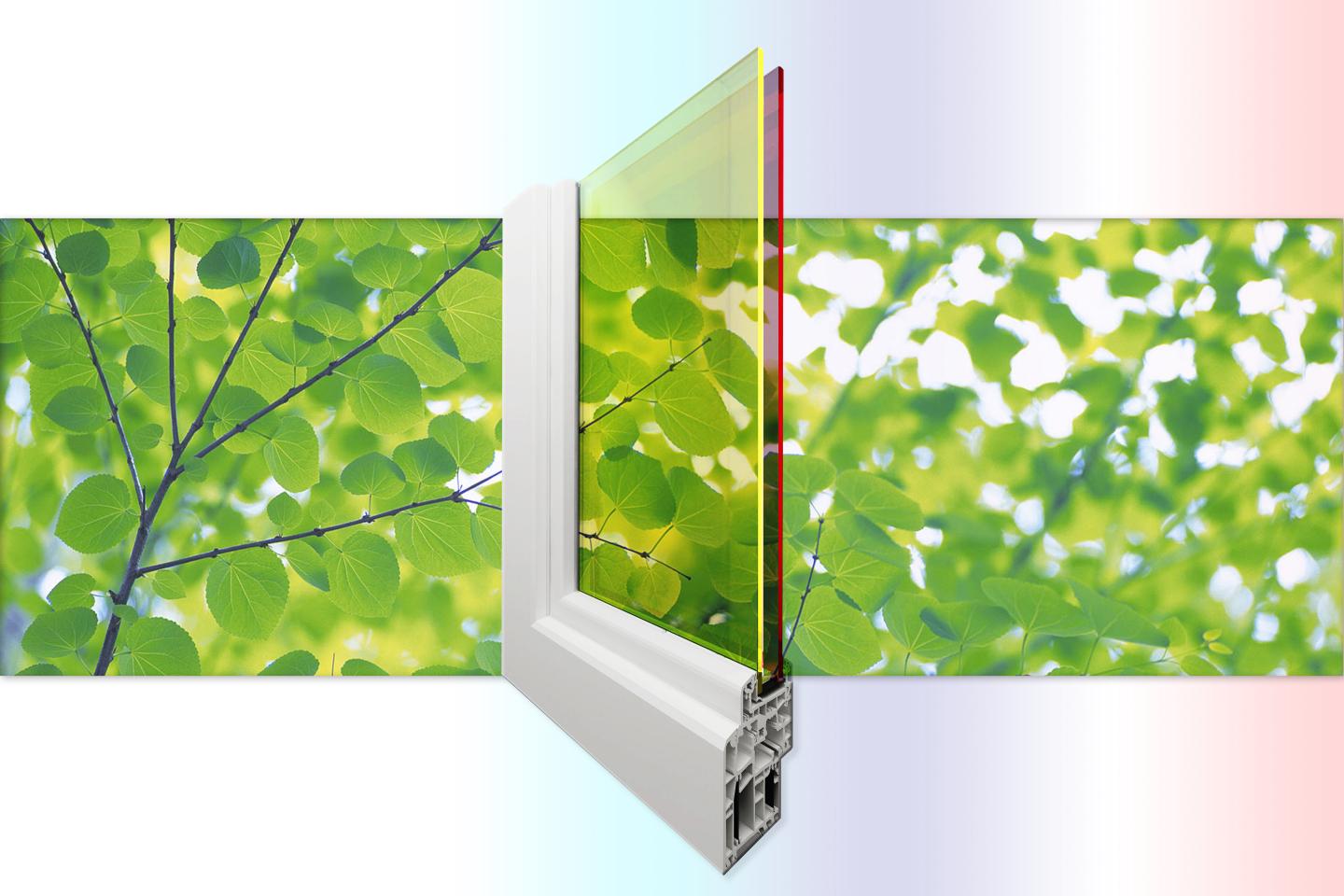
Researchers at Los Alamos National Laboraotry are creating double-pane solar windows that generate electricity with greater efficiency and also create shading and insulation. It’s all made possible by a new window architecture which utilizes two different layers of low-cost quantum dots tuned to absorb different parts of the solar spectrum. The approach complements existing photovoltaic technology by adding high-efficiency sunlight collectors to existing solar panels or integrating them as semitransparent windows into a building’s architecture.

Using two types of “designer” quantum dots, researchers are creating double-pane solar windows that generate electricity with greater efficiency and create shading and insulation for good measure. It’s all made possible by a new window architecture which utilizes two different layers of low-cost quantum dots tuned to absorb different parts of the solar spectrum.

“Because of the the strong performance we can achieve with low-cost, solution-processable materials, these quantum-dot-based double-pane windows and even more complex luminescent solar concentrators offer a new way to bring down the cost of solar electricity,” said lead researcher Victor Klimov. “The approach complements existing photovoltaic technology by adding high-efficiency sunlight collectors to existing solar panels or integrating them as semitransparent windows into a building’s architecture.”

The key to this advance is “solar-spectrum splitting,” which allows one to process separately higher- and lower-energy solar photons. The higher-energy photons can generate a higher photovoltage, which could boost the overall power output. This approach also improves the photocurrent as the dots used in the front layer are virtually “reabsorption free.”

To achieve this, the Los Alamos team incorporates into quantum dots ions of manganese that serve as highly emissive impurities. Light absorbed by the quantum dots activates these impurities. Following activation, the manganese ions emit light at energies below the quantum-dot absorption onset. This trick allows for almost complete elimination of losses due to self-absorption by the quantum dots.

To transform a window into a tandem luminescent sunlight collector, the Los Alamos team deposits a layer of highly emissive manganese-doped quantum dots onto the surface of the front glass pane and a layer of copper indium selenide quantum dots onto the surface of the back pane. The front layer absorbs the blue and ultraviolet portions of the solar spectrum, while the rest of the spectrum is picked up by the bottom layer.

Following absorption, the dot re-emits a photon at a longer wavelength, and then the re-emitted light is guided by total internal reflection to the glass edges of the window. There, solar cells integrated into the window frame collect the light and convert it to electricty.
Related Articles Read More >

The Space Systems Division (05)-developed Parallelogram Synchronized Truss Assembly (PaSTA), seen Aug. 12, 2025, is a mechanism that will be integrated into the Life-Extension In-orbit Servicer (LEXI) and Astroscale Prototype Servicer for Refueling (APS-R) spacecrafts.
One SwRI R&D 100 winner turns buckled fiberglass into a spacecraft truss. The other models freight rail with 900 hours of BNSF field data
Inside the Lab: NETL’s Oil and Gas Center of Excellence focuses on technologies to enhance production   
Inside S&C Electric’s and Argonne National Lab’s CRADA partnership
As U.S. power demand surges, Brookhaven taps AWS in aim to drive 20-100x faster power grid decision-making with GridSearch AI
rd newsletter
EXPAND YOUR KNOWLEDGE AND STAY CONNECTED
Get the latest info on technologies, trends, and strategies in Research & Development.

R&D World Digital Issues

Fall 2025 issue

Browse the most current issue of R&D World and back issues in an easy to use high quality format. Clip, share and download with the leading R&D magazine today.

R&D 100 Awards
Research & Development World
  • Subscribe to R&D World Magazine
  • Sign up for R&D World’s newsletter
  • Contact Us
  • About Us
  • Drug Discovery & Development
  • Pharmaceutical Processing
  • Global Funding Forecast

Copyright © 2026 Arrowfly LLC. All Rights Reserved. The material on this site may not be reproduced, distributed, transmitted, cached or otherwise used, except with the prior written permission of Arrowfly
Privacy Policy | Advertising | About Us

Search R&D World

  • R&D World Home
  • Topics
    • Aerospace
    • Automotive
    • Biotech
    • Careers
    • Chemistry
    • Environment
    • Energy
    • Life Science
    • Material Science
    • R&D Management
    • Physics
  • Technology
    • 3D Printing
    • A.I./Robotics
    • Software
    • Battery Technology
    • Controlled Environments
      • Cleanrooms
      • Graphene
      • Lasers
      • Regulations/Standards
      • Sensors
    • Imaging
    • Nanotechnology
    • Scientific Computing
      • Big Data
      • HPC/Supercomputing
      • Informatics
      • Security
    • Semiconductors
  • R&D Market Pulse
  • R&D 100
    • 2026 R&D 100 Award Winners
    • 2026 Professional Award Winners
    • 2026 Special Recognition Winners
    • R&D 100 Awards Event
    • R&D 100 Submissions
    • Winner Archive
  • Resources
    • Research Reports
    • Digital Issues
    • Educational Assets
    • Subscribe
    • Video
    • Webinars
    • PharmSci360
    • Content submission guidelines for R&D World
  • Global Funding Forecast
  • Top Labs
  • Advertise
  • SUBSCRIBE