 Isomorphic Labs, the Alphabet-backed AI drug design company led by Sir Demis Hassabis, who shared the 2024 Nobel Prize in Chemistry with John Jumper for their work on the protein structure prediction platform AlphaFold, announced a $2.1 billion Series B on May 12. The total outside capital raised to date is about $2.6 billion. Thrive Capital led the round for the second consecutive time, with participation from Alphabet, GV, and new investors including Abu Dhabi’s MGX, Singapore’s Temasek, Alphabet growth fund CapitalG, and the UK Sovereign AI Fund.
The round is among the largest private financings in AI drug discovery history, and the investor roster signals a geographic broadening of the company’s capital base across the U.S., Middle East, Southeast Asia, and Europe.
A proprietary engine with a public pedigree
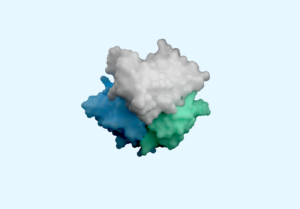
The funding arrives three months after Isomorphic published a technical report detailing the capabilities of its AI drug design engine, Isomorphic Labs Drug Design Engine (IsoDDE), a system that scientists have informally described as an “AlphaFold 4.” On the Runs N’ Poses benchmark, designed to test generalization to novel protein pockets and ligands, IsoDDE more than doubled AlphaFold 3’s accuracy on the hardest cases. On antibody-antigen interfaces, a notoriously thorny prediction category, IsoDDE achieved roughly 76% accuracy on the FoldBench dataset compared to AlphaFold 3’s 48%.
AlphaFold 1 and AlphaFold 2 were published openly. AlphaFold 3 was published in Nature but with restricted code access. Meanwhile, IsoDDE is fully proprietary. Its website describes IsoDDE as “unlock[ing] a new frontier beyond AlphaFold.”
The shift mirrors the broader generative AI landscape, where the open-versus-closed debate has defined the competitive map. Anthropic and OpenAI keep their frontier models proprietary. Meta releases Llama weights openly. Alphabet’s own Gemini, built by Google DeepMind (Isomorphic’s sibling under the Alphabet umbrella, with Hassabis leading both), is closed. As AI models approach direct commercial value, whether in chatbots or drug design, the openness tends to disappear. For Isomorphic, that creates a moat. For the open-source research community, it means working from published benchmarks and restricted-access tools. Open-source alternatives have proliferated: Boltz-2 (from MIT and Recursion), Chai-1, OpenFold3, and RoseTTAFold All-Atom now roughly match or rival AlphaFold 3 on standard protein-ligand benchmarks. But AlphaFold 3 is a generation behind IsoDDE, which means the open-source community has been racing to catch a target that already moved. Nature reported that scientists developing these alternatives are “left guessing” how to replicate IsoDDE’s results.
What the cash will fund
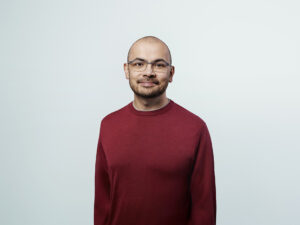
Sir Demis Hassabis
Isomorphic says the capital will fund continued development of IsoDDE and accelerate internal therapeutic programs toward the clinic. The company also plans to expand hiring across AI, engineering, drug design and clinical development at its three sites: London (headquarters), Cambridge, Massachusetts, and Lausanne, Switzerland.
The company manages 17 active drug development programs spanning oncology, immunology, and cardiovascular disease, alongside partnerships with Novartis, Eli Lilly and Johnson & Johnson that serve as both validation and revenue sources while internal programs mature.
The quest to ‘solve all disease’
The scale of the raise is notable in part because of what Isomorphic has not yet done. At the World Economic Forum in Davos in January, Hassabis pushed the company’s first clinical trial timeline from the end of 2025 to the end of 2026. No human patient has been dosed with an Isomorphic-designed compound to date.
“Now that we have shown our approach is fundamentally sound, our focus is on scaling our technology to its full potential,” Hassabis said in the announcement.
Hassabis continues to frame Isomorphic’s mission in maximalist terms. At the World Economic Forum 2026, he described the goal as using “AlphaFold and our science work and Isomorphic, our spinout company, [to] solve all disease, cure diseases.” Today’s press release uses nearly identical language: “our mission to solve all disease.” Among frontier AI executives, that level of specificity is unusual. OpenAI’s Sam Altman used similar “cure all diseases” framing in early 2025 but has since moderated to “cures for diseases.”