Research & Development World

  • R&D World Home
  • Topics
    • Aerospace
    • Automotive
    • Biotech
    • Careers
    • Chemistry
    • Environment
    • Energy
    • Life Science
    • Material Science
    • R&D Management
    • Physics
  • Technology
    • 3D Printing
    • A.I./Robotics
    • Software
    • Battery Technology
    • Controlled Environments
      • Cleanrooms
      • Graphene
      • Lasers
      • Regulations/Standards
      • Sensors
    • Imaging
    • Nanotechnology
    • Scientific Computing
      • Big Data
      • HPC/Supercomputing
      • Informatics
      • Security
    • Semiconductors
  • R&D Market Pulse
  • R&D 100
    • 2025 R&D 100 Award Winners
    • 2025 Professional Award Winners
    • 2025 Special Recognition Winners
    • R&D 100 Awards Event
    • R&D 100 Submissions
    • Winner Archive
  • Resources
    • Research Reports
    • Digital Issues
    • Educational Assets
    • R&D Index
    • Subscribe
    • Video
    • Webinars
    • Content submission guidelines for R&D World
  • Global Funding Forecast
  • Top Labs
  • Advertise
  • SUBSCRIBE

An Engineering Team Unlocks the Molecular Secrets to a Popular Polymer

By University of Pittsburgh | August 24, 2018

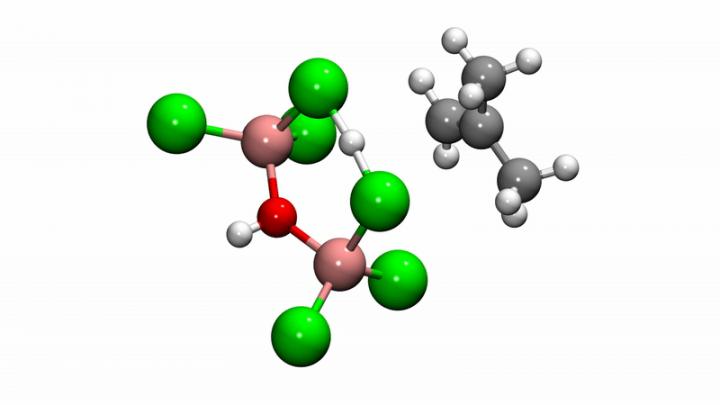
Reaction mechanism showing a proton transfer from the superacid catalyst to isobutylene. This is the first step in the PIB polymerization process.

Polyisobutylene (PIB) is a workhorse polymer that is found in a multitude of products, ranging from chewing gum, to tires, to engine oil and gasoline additives. Although commercially produced in large quantities since the 1940s, PIB chemistry was a mystery – scientists weren’t sure how the reaction mechanism that creates the polymer happens at the molecular level, which limited further potential.

However, a collaboration between the University of Pittsburgh’s Swanson School of Engineering and Wickliffe, Ohio-based Lubrizol Corporation has unlocked the secrets of PIB’s reaction mechanism. The group’s findings were published this month in the journal ACS Catalysis (DOI: 10.1021/acscatal.8b01494).

Principal investigator is Karl Johnson, the William Kepler Whiteford Professor in the Swanson School’s Department of Chemical & Petroleum Engineering. Funding for the research was provided by Lubrizol, which in 2014 established a $1.2 million strategic partnership with the Department and Swanson School to jumpstart research innovation that also offers opportunities for undergraduates to participate.

“PIB is an incredibly versatile polymer. It can have many different properties depending on how it is made. There are many different ‘recipes’ for making PIB, each employing different catalysts and reaction conditions, but it turns out that no one really knows what is happening at the molecular level. Finding out what is going on is important because it is harder to control a process that you don’t understand.”

Solving this catalytic puzzle is of interest to Lubrizol, which specializes in ingredients and additives for polymer-based products. Utilizing the University’s Center for Research Computing to analyze the molecular processes, the Pitt/Lubrizol group found that the assumed reaction mechanism was not correct and that initiation of the reaction requires a “superacid” catalyst.

“These findings provide fundamental insight into the PIB reaction mechanism that could potentially be used to design different catalysts and to control the reaction – and hence, the potential range of products – in ways that are currently not possible.” Dr. Johnson said. “This project shows the value of creating academic/industrial partnerships to pursue research that might not be possible if pursued independently.”

Related Articles Read More >

New engineered proteins could make disease tracking portable and precise
New method achieves 89% defluorination of PFOA in lab tests
MIT team uses mysterious cell structure to record genetic activity
Detail of cola drink with ice cubes, fresh beverages background.
If a YouTuber can reverse-engineer Coke, is your trade secret safe?
rd newsletter
EXPAND YOUR KNOWLEDGE AND STAY CONNECTED
Get the latest info on technologies, trends, and strategies in Research & Development.
RD 25 Power Index

R&D World Digital Issues

Fall 2025 issue

Browse the most current issue of R&D World and back issues in an easy to use high quality format. Clip, share and download with the leading R&D magazine today.

R&D 100 Awards
Research & Development World
  • Subscribe to R&D World Magazine
  • Sign up for R&D World’s newsletter
  • Contact Us
  • About Us
  • Drug Discovery & Development
  • Pharmaceutical Processing
  • Global Funding Forecast

Copyright © 2026 WTWH Media LLC. All Rights Reserved. The material on this site may not be reproduced, distributed, transmitted, cached or otherwise used, except with the prior written permission of WTWH Media
Privacy Policy | Advertising | About Us

Search R&D World

  • R&D World Home
  • Topics
    • Aerospace
    • Automotive
    • Biotech
    • Careers
    • Chemistry
    • Environment
    • Energy
    • Life Science
    • Material Science
    • R&D Management
    • Physics
  • Technology
    • 3D Printing
    • A.I./Robotics
    • Software
    • Battery Technology
    • Controlled Environments
      • Cleanrooms
      • Graphene
      • Lasers
      • Regulations/Standards
      • Sensors
    • Imaging
    • Nanotechnology
    • Scientific Computing
      • Big Data
      • HPC/Supercomputing
      • Informatics
      • Security
    • Semiconductors
  • R&D Market Pulse
  • R&D 100
    • 2025 R&D 100 Award Winners
    • 2025 Professional Award Winners
    • 2025 Special Recognition Winners
    • R&D 100 Awards Event
    • R&D 100 Submissions
    • Winner Archive
  • Resources
    • Research Reports
    • Digital Issues
    • Educational Assets
    • R&D Index
    • Subscribe
    • Video
    • Webinars
    • Content submission guidelines for R&D World
  • Global Funding Forecast
  • Top Labs
  • Advertise
  • SUBSCRIBE