Image credit: Anthropic via YouTube
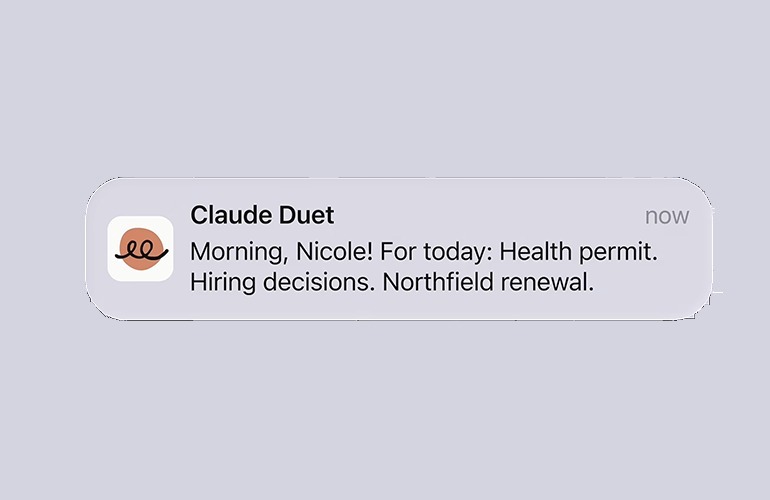
Anthropic on Oct. 21 opened a waitlist for Claude Duet, a personal AI agent for professionals and small-business owners that runs on its own cloud computer and keeps working after users step away. Duet checks connected apps for items that need attention and continues assigned tasks. It asks for approval before sending messages, making payments, signing or deleting anything.
Duet arrives late in a crowded season. SpaceXAI, the AI arm SpaceX formed by acquiring xAI, introduced Grok Bot on Aug. 11. Meta followed with Muse on Sept. 8, an agent with its own cloud computer and browser that is reachable through WhatsApp, and extended it to small-business workflows on Sept. 29. Microsoft said on Sept. 25 that Autopilot, previously called Scout, would expand to a private preview at the end of the month, and OpenAI introduced dots four days later. Dots are always-on agents that maintain software, revise projects and update scientific analyses as new data arrives.
Much of this category traces back to OpenClaw, the open-source personal agent built by Peter Steinberger, who founded PDF software company PSPDFKit. Steinberger joined OpenAI in February with the stated goal of building an agent “that even my mum can use,” while OpenClaw moved to an independent foundation. Microsoft’s Autopilot builds on the project, and the OpenClaw Foundation says Microsoft contributes code back to it. Meta says it built Muse from scratch.
Duet starts with whatever a user has already set up in Claude. It carries over memory of past conversations, saved skills and connectors to work apps such as Gmail, Google Calendar and Slack, so the agent knows the user’s accounts and preferences before it takes on its first task. From there it prepares morning briefings and checks those accounts every few hours. Suggested jobs include finding unpaid invoices, preparing agreements and building dashboards or web apps. The research preview is open by waitlist to U.S. Pro and Max subscribers, and background checks and larger tasks count against their existing usage limits, according to Anthropic.
The same pattern of agents working unattended is spreading into research. On Oct. 21, OpenAI, PerturbAI and Scripps Research described deploying nearly 2,000 GPT-Rosalind agents that analyzed a mouse brain CRISPR atlas and generated research leads in 32 minutes. Personal agents and research-agent swarms serve different users, but both move AI from answering a single prompt toward carrying a task forward on its own, with a human approving the result.


Tell Us What You Think!
You must be logged in to post a comment.