Research & Development World

  • R&D World Home
  • Topics
    • Aerospace
    • Automotive
    • Biotech
    • Careers
    • Chemistry
    • Environment
    • Energy
    • Life Science
    • Material Science
    • R&D Management
    • Physics
  • Technology
    • 3D Printing
    • A.I./Robotics
    • Software
    • Battery Technology
    • Controlled Environments
      • Cleanrooms
      • Graphene
      • Lasers
      • Regulations/Standards
      • Sensors
    • Imaging
    • Nanotechnology
    • Scientific Computing
      • Big Data
      • HPC/Supercomputing
      • Informatics
      • Security
    • Semiconductors
  • R&D Market Pulse
  • R&D 100
    • 2026 R&D 100 Award Winners
    • 2026 Professional Award Winners
    • 2026 Special Recognition Winners
    • R&D 100 Awards Event
    • R&D 100 Submissions
    • Winner Archive
  • Resources
    • Research Reports
    • Digital Issues
    • Educational Assets
    • Subscribe
    • Video
    • Webinars
    • PharmSci360
    • Content submission guidelines for R&D World
  • Global Funding Forecast
  • Top Labs
  • Advertise
  • SUBSCRIBE

New Process Could Make Aluminum as Strong as Titanium

By Kenny Walter | October 9, 2018

3D-printed detail prototype. Credit: Sergey Gnuskov/NUST MISIS

New research suggests that aluminum composites could be enhanced to the quality of titanium alloys and used in the aerospace industry.

A team from the National University of Science and Technology MISiS may have found a way to double the strength of composites obtained by 3D printing from aluminum powder.

Titanium is about six times stronger than aluminum, which is why it is commonly used in manufacturing heavy-duty metal-based materials. Researchers have long sought a way to replace titanium with aluminum because it is about 1.7 times less dense.

Aluminum is considered an alternative because it is lightweight with a density of 2700 kg/m3 and moldable with an elasticity modulus of about 70 MPa, making it suitable for 3D printing.

To strengthen aluminum researchers have developed a new composite that maintains it is lightweight while significantly improving its strength. The did this by developing new modifying-precursors for 3D printing based on nitrides and aluminum oxides that were obtained through combustion

“We have developed a technology to strengthen the aluminum-matrix composites obtained by 3D printing, and we have obtained innovative precursor-modifiers by burning aluminum powders,” Alexander Gromov, head of the research group, said in a statement. “Combustion products – nitrides and aluminum oxides – are specifically prepared for sintering branched surfaces with transition nanolayers formed between the particles.

“It is the special properties and structure of the surface that allows the particles to be firmly attached to the aluminum matrix and, as a result, [doubles] the strength of the obtained composites,” he added.

For the last two decades, molding was considered the only cost-effective way to manufacture bulk products. However, researchers believe that 3D printing technology could be even more effective at producing metals. Additive technologies could allow 3D printers to create more difficult forms and designs at a cheaper cost with a theoretical edge.

The main technologies currently used for printing metal are Selective Laser Melting (SLM) and Selective Laser Sintering, which both involve the gradual layering of metal powder inks, layer by layer, to build a given volume figure. Both techniques are additive manufacturing technologies based on the layer-by-layer sintering of powder materials using a laser beam that is up to 500 Watts.

The researchers are currently testing prototypes.

The study was published in Sustainable Materials and Technologies.

Related Articles Read More >

Inside the Lab: Can AI Solve the Critical Materials Challenge?
Two Science papers catch altermagnets by handedness
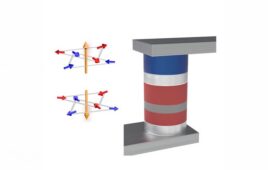
Illustration of an antiferromagnetic tunnel junction pillar beside the two spin configurations of platinum-manganese that store a bit.
Northwestern and Western Digital demonstrate a new way to write magnetic memory
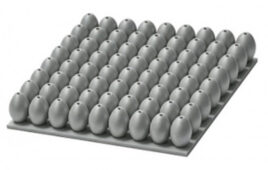
Eggshell-inspired shield cut projectile speed by 65% in simulation, but light-gas gun testing has not confirmed it 
rd newsletter
EXPAND YOUR KNOWLEDGE AND STAY CONNECTED
Get the latest info on technologies, trends, and strategies in Research & Development.

R&D World Digital Issues

Fall 2026 issue

Browse the most current issue of R&D World and back issues in an easy to use high quality format. Clip, share and download with the leading R&D magazine today.

R&D 100 Awards
Research & Development World
  • Subscribe to R&D World Magazine
  • Sign up for R&D World’s newsletter
  • Contact Us
  • About Us
  • Drug Discovery & Development
  • Pharmaceutical Processing
  • Global Funding Forecast

Copyright © 2026 Arrowfly LLC. All Rights Reserved. The material on this site may not be reproduced, distributed, transmitted, cached or otherwise used, except with the prior written permission of Arrowfly
Privacy Policy | Advertising | About Us

Search R&D World

  • R&D World Home
  • Topics
    • Aerospace
    • Automotive
    • Biotech
    • Careers
    • Chemistry
    • Environment
    • Energy
    • Life Science
    • Material Science
    • R&D Management
    • Physics
  • Technology
    • 3D Printing
    • A.I./Robotics
    • Software
    • Battery Technology
    • Controlled Environments
      • Cleanrooms
      • Graphene
      • Lasers
      • Regulations/Standards
      • Sensors
    • Imaging
    • Nanotechnology
    • Scientific Computing
      • Big Data
      • HPC/Supercomputing
      • Informatics
      • Security
    • Semiconductors
  • R&D Market Pulse
  • R&D 100
    • 2026 R&D 100 Award Winners
    • 2026 Professional Award Winners
    • 2026 Special Recognition Winners
    • R&D 100 Awards Event
    • R&D 100 Submissions
    • Winner Archive
  • Resources
    • Research Reports
    • Digital Issues
    • Educational Assets
    • Subscribe
    • Video
    • Webinars
    • PharmSci360
    • Content submission guidelines for R&D World
  • Global Funding Forecast
  • Top Labs
  • Advertise
  • SUBSCRIBE