
Research & Development World

  • R&D World Home
  • Topics
    • Aerospace
    • Automotive
    • Biotech
    • Careers
    • Chemistry
    • Environment
    • Energy
    • Life Science
    • Material Science
    • R&D Management
    • Physics
  • Technology
    • 3D Printing
    • A.I./Robotics
    • Software
    • Battery Technology
    • Controlled Environments
      • Cleanrooms
      • Graphene
      • Lasers
      • Regulations/Standards
      • Sensors
    • Imaging
    • Nanotechnology
    • Scientific Computing
      • Big Data
      • HPC/Supercomputing
      • Informatics
      • Security
    • Semiconductors
  • R&D Market Pulse
  • R&D 100
    • 2026 R&D 100 Award Winners
    • 2026 Professional Award Winners
    • 2026 Special Recognition Winners
    • R&D 100 Awards Event
    • R&D 100 Submissions
    • Winner Archive
  • Resources
    • Research Reports
    • Digital Issues
    • Educational Assets
    • Subscribe
    • Video
    • Webinars
    • PharmSci360
    • Content submission guidelines for R&D World
  • Global Funding Forecast
  • Top Labs
  • Advertisers
    • Advertise
    • PR Submissions
    • Eblast Submissions
  • SUBSCRIBE

As AI bubble talk grows, Dwarkesh Patel predicts recursive self-improvement will set off an AI research explosion

By Brian Buntz | November 14, 2026

[Adobe Stock]

The week Jensen Huang stepped down as NVIDIA’s CEO, one of the AI industry’s most closely followed interviewers argued that AI progress is about to speed up sharply. Dwarkesh Patel thinks AI systems will soon be doing the research that produces the next generation of AI, and that the process has already begun. “We’re only a couple of years away, and possibly only a couple of months away, from AIs that are as good as the best humans at AI research,” Patel said in a video essay posted Nov. 13.

The idea is called recursive self-improvement: each generation of AI helps build a more capable successor, which can then accelerate the next round of research. Even in his slower scenario, Patel expects three to six years of AI progress compressed into one year. His forecast turns on how reliably machines can test their ideas and how much computing power labs can supply to keep the experiments running.

Patel, 26, built his reputation as host of the Dwarkesh Podcast, a show of long-form, heavily researched interviews. His guests have included Anthropic CEO Dario Amodei, OpenAI co-founder Ilya Sutskever, Microsoft CEO Satya Nadella, Mark Zuckerberg and, in April, Huang himself. TIME named him to its list of the 100 most influential people in AI in 2024, and The Economist called him Silicon Valley’s favorite podcaster in 2025. He also co-wrote The Scaling Era: An Oral History of AI, 2019-2025 with Gavin Leech.

Earlier this year, Patel said, he would have put superintelligence “at least the better part of a decade” away. Three months of debates on and off his podcast changed his view, along with AI’s rapid gains in math and signs that AI is already speeding up AI research. METR, an independent evaluation group, estimated on Nov. 5 that Anthropic is likely improving its models on well-specified tasks at about twice the rate it did between March 2024 and October 2025, a figure METR said could be closer to 1.3 or 3 times, and that a majority of the acceleration is likely attributable to Anthropic’s use of AI for R&D. Anthropic reported that Claude “leads” 26% of its AI R&D work as of August, and OpenAI said in September that the 90th-percentile user in its research organization runs more than $7,000 of tokens a day. Patel’s median year for AI that matches the best human AI researchers is 2028, assuming AI labs “go full steam ahead,” and he gives “at least a 25% chance that it doesn’t happen until after 2032.”

Patel also takes up how a system trained inside a data center could outperform people whose expertise comes from years on the job. He expects such systems to learn quickly once deployed, citing Napoleon and John D. Rockefeller, who he said “needed experience, yes, but only a couple years’ worth, not decades.” He asks viewers to imagine an AI that shadows the CEO of a Fortune 500 company in order to run it better.

If you let [a future AI model] shadow that CEO, on its first morning, it could read every email and Slack message and document that the company’s ever produced. By the end of its first day, copies of it have interviewed every employee and major client in parallel. —Dwarkesh Patel

Feedback that arrives over months, such as the next quarterly earnings, would still take months, Patel said. He expects the AI systems that follow that compressed year of progress to reach “top human performance in all domains within months of being developed,” which he places in 2028 or 2029 in his median scenario.
Tell Us What You Think! Cancel reply

You must be logged in to post a comment.

Related Articles Read More >

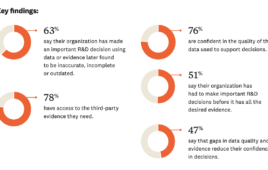
Elsevier survey: 63% of corporate R&D staff say a key decision rested on flawed data
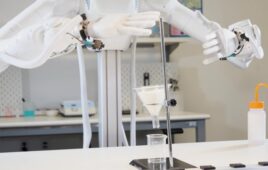
A two-armed white robot with dexterous hands above a lab bench holding a glass funnel on a ring stand, a beaker and a wash bottle
NVIDIA’s GR00T 2 reaches 95% on selected robot tasks after five demonstrations
Female doctor using medical AI assistant on laptop computer in clinic office. modern medicine
Google is teaching healthcare professionals to incorporate AI into the everyday practice of medicine
Anthropic says Fable 5.2 nearly doubles its predecessor’s hardware-design score. Token prices fell 20%, but the cost per task doubled at full effort.
rd newsletter
EXPAND YOUR KNOWLEDGE AND STAY CONNECTED
Get the latest info on technologies, trends, and strategies in Research & Development.

R&D World Digital Issues

Fall 2026 issue

Browse the most current issue of R&D World and back issues in an easy to use high quality format. Clip, share and download with the leading R&D magazine today.

R&D 100 Awards
Research & Development World
  • Subscribe to R&D World Magazine
  • Sign up for R&D World’s newsletter
  • Contact Us
  • About Us
  • Drug Discovery & Development
  • Pharmaceutical Processing
  • Global Funding Forecast

Copyright © 2026 Arrowfly LLC. All Rights Reserved. The material on this site may not be reproduced, distributed, transmitted, cached or otherwise used, except with the prior written permission of Arrowfly
Privacy Policy | Advertising | About Us

Search R&D World

  • R&D World Home
  • Topics
    • Aerospace
    • Automotive
    • Biotech
    • Careers
    • Chemistry
    • Environment
    • Energy
    • Life Science
    • Material Science
    • R&D Management
    • Physics
  • Technology
    • 3D Printing
    • A.I./Robotics
    • Software
    • Battery Technology
    • Controlled Environments
      • Cleanrooms
      • Graphene
      • Lasers
      • Regulations/Standards
      • Sensors
    • Imaging
    • Nanotechnology
    • Scientific Computing
      • Big Data
      • HPC/Supercomputing
      • Informatics
      • Security
    • Semiconductors
  • R&D Market Pulse
  • R&D 100
    • 2026 R&D 100 Award Winners
    • 2026 Professional Award Winners
    • 2026 Special Recognition Winners
    • R&D 100 Awards Event
    • R&D 100 Submissions
    • Winner Archive
  • Resources
    • Research Reports
    • Digital Issues
    • Educational Assets
    • Subscribe
    • Video
    • Webinars
    • PharmSci360
    • Content submission guidelines for R&D World
  • Global Funding Forecast
  • Top Labs
  • Advertisers
    • Advertise
    • PR Submissions
    • Eblast Submissions
  • SUBSCRIBE