
The supermassive black holes in the centres of many galaxies seem to have a basic influence on their evolution. This happens during a phase in which the black hole is consuming the material of the galaxy in which it resides at a very high rate, growing in mass as it does so. During this phase…
Carbon Nanotubes Grown with the Help of Pantry Staples

Baking soda, table salt, and detergent are surprisingly effective ingredients for cooking up carbon nanotubes, researchers at MIT have found. In a study published in the journal Angewandte Chemie, the team reports that sodium-containing compounds found in common household ingredients are able to catalyze the growth of carbon nanotubes, or CNTs, at much lower temperatures…
Polymers Jump Through Hoops on Pathway to Sustainable Materials
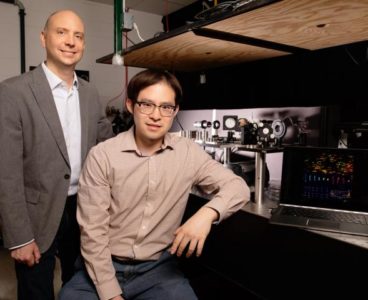
Recyclable plastics that contain ring-shaped polymers may be a key to developing sustainable synthetic materials. Despite some promising advances, researchers said, a full understanding of how to processes ring polymers into practical materials remains elusive. In a new study, researchers identified a mechanism called “threading” that takes place when a polymer is stretched – a…
Breakthrough Technique For Studying Gene Expression Takes Root in Plants
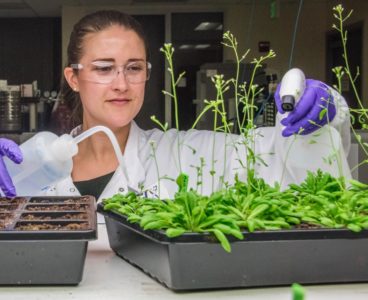
An open-source RNA analysis platform has been successfully used on plant cells for the first time – a breakthrough that could herald a new era of fundamental research and bolster efforts to engineer more efficient food and biofuel crop plants. The technology, called Drop-seq, is a method for measuring the RNA present in individual cells,…
Artificial Intelligence Tool Vastly Scales Up Alzheimer’s Research

A New Filter to Better Map the Dark Universe
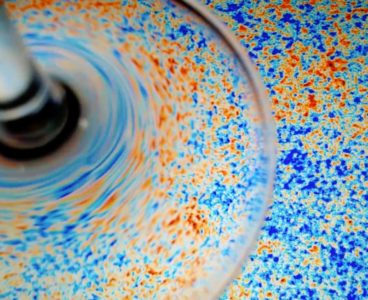
The earliest known light in our universe, known as the cosmic microwave background, was emitted about 380,000 years after the Big Bang. The patterning of this relic light holds many important clues to the development and distribution of large-scale structures such as galaxies and galaxy clusters. Distortions in the cosmic microwave background (CMB), caused by…
Development of ‘Transparent and Flexible Battery’ For Power Generation and Storage at Once
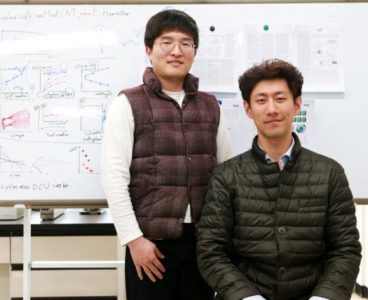
Various use of electronics and skin-attachable devices are expected with the development of transparent battery that can both generate and store power. DGIST announced on Tuesday, April 23 that Senior Researcher Changsoon Choi’s team in the Smart Textile Research Group developed film-type graphene based multifunctional transparent energy devices. Senior Researcher Changsoon Choi’s team actively used…
Integrated Sensors for Direct Control
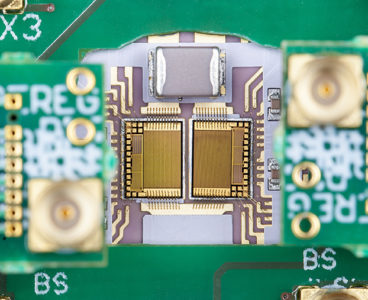
A team of Fraunhofer researchers has succeeded in significantly enhancing the functionality of GaN power ICs for voltage converters: the researchers at Fraunhofer IAF integrated current and temperature sensors onto a GaN-based semiconductor chip, along with power transistors, freewheeling diodes and gate drivers. This development paves the way for more compact and efficient on-board chargers…
Stretchy, Protective Artificial Tissue Made from ‘Nanofiber Yarn’
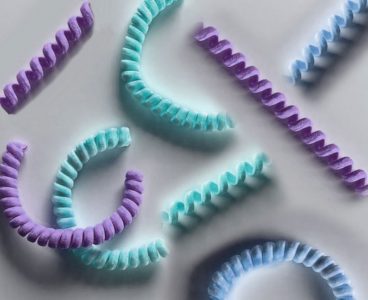
The human body is held together by an intricate cable system of tendons and muscles, engineered by nature to be tough and highly stretchable. An injury to any of these tissues, particularly in a major joint like the shoulder or knee, can require surgical repairs and weeks of limited mobility to fully heal. Now MIT…
Slippery Surfaces Permit Sticky Pastes and Gels to Slide
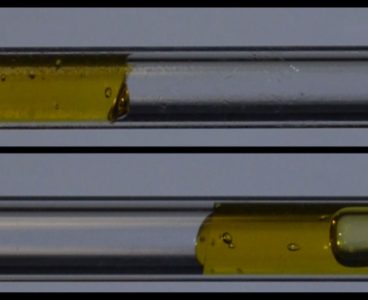
An MIT research team that has already conquered the problem of getting ketchup out of its bottle has now tackled a new category of consumer and manufacturing woe: how to get much thicker materials to slide without sticking or deforming. The slippery coatings the team has developed, called liquid-impregnated surfaces, could have numerous advantages, including…
Marine Skin Dives Deeper For Better Monitoring

A new and greatly improved version of an electronic tag, called Marine Skin, used for monitoring marine animals could revolutionize our ability to study sea life and its natural environment, say KAUST researchers. Marine Skin is a thin, flexible, lightweight polymer-based material with integrated electronics which can track an animal’s movement and diving behavior and…
Observing a Molecule Stretch and Bend in Real-Time
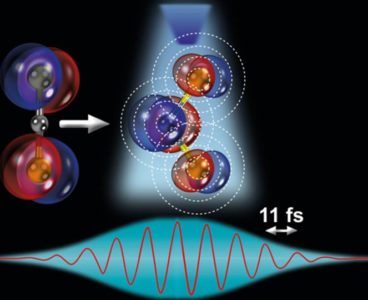
Being able to watch how molecules bend, stretch, break, or transform, during chemical reactions requires, to an extent, state-of-the-art instruments and techniques that can observe and track, with sub-atomic spatial and few-femtoseconds temporal resolution, all the atoms within a molecule and how they behave during such a change. About 20 years ago, scientists came up…
What Happened Before the Big Bang?
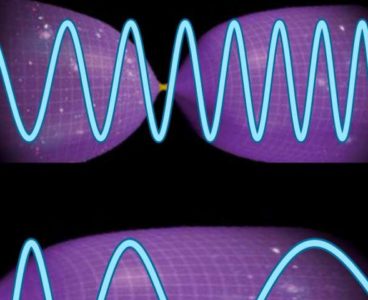
A team of scientists has proposed a powerful new test for inflation, the theory that the universe dramatically expanded in size in a fleeting fraction of a second right after the Big Bang. Their goal is to give insight into a long-standing question: what was the universe like before the Big Bang? Although cosmic inflation…
Icy Giant Planets in the Laboratory
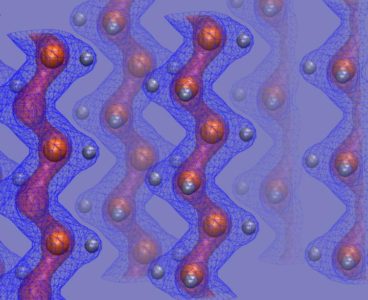
Giant planets like Uranus and Neptune may contain much less free hydrogen than previously assumed. Researchers from the German Helmholtz-Zentrum Dresden-Rossendorf (HZDR) drove shock waves through two different types of plastic to reach the same temperatures and pressures present inside such planets, and observed the behavior using ultra-strong X-ray laser pulses. Unexpectedly, one of these…
UBC Researchers Develop New Heart Valve Aimed at High-Risk Patients
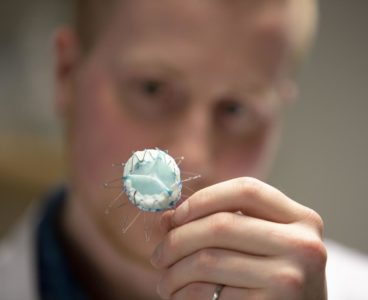
Researchers at UBC have created the first-ever nanocomposite biomaterial heart-valve developed to reduce or eliminate complications related to heart transplants. By using a newly developed technique, the researchers were able to build a more durable valve that enables the heart to adapt faster and more seamlessly. Assistant Professor Hadi Mohammadi runs the Heart Valve Performance…
Ultrathin Graphene-based Film Offers New Concept for Solar Energy
Researchers at the University of Sydney, Swinburne University of Technology and the Australian National University have collaborated to develop a solar absorbing, ultrathin film with unique properties that has great potential for use in solar thermal energy harvesting. The 90-nanometer material is 1,000 times finer than a human hair and can be rapidly heated up…
Almost Perfect Performance Recorded in Low-cost Semiconductors
Tiny, easy-to-produce particles, called quantum dots, may soon take the place of more expensive single crystal semiconductors in advanced electronics found in solar panels, camera sensors and medical imaging tools. Although quantum dots have begun to break into the consumer market—in the form of quantum dot TVs—they have been hampered by long-standing uncertainties about their…
Machine Learning Tracks Moving Cells
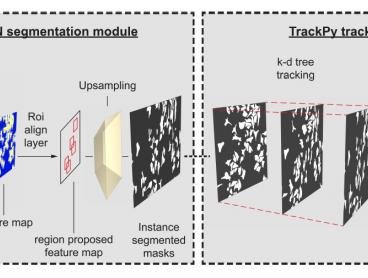
Both developing babies and elderly adults share a common characteristic: the many cells making up their bodies are always on the move. As we humans commute to work, cells migrate through the body to get their jobs done. Biologists have long struggled to quantify the movement and changing morphology of cells through time, but now,…
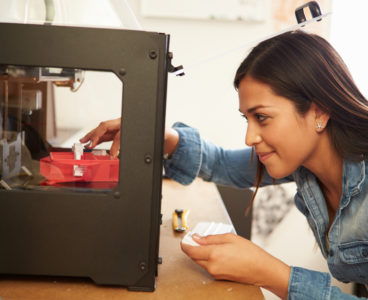
Light Provides Control for 3D Printing With Multiple Materials
Nanochannels Function as Highways for Water Molecules
Removing water vapor from air and other gas mixtures, which is crucial for many industrial processes and air conditioning, could become cheaper and more effective through polymer membrane technology now developed at King Abdullah University of Science and Technology (KAUST). “We have made a polymer film with extremely high permeability for water vapor while presenting…
Scientists Develop Printable Water Sensor
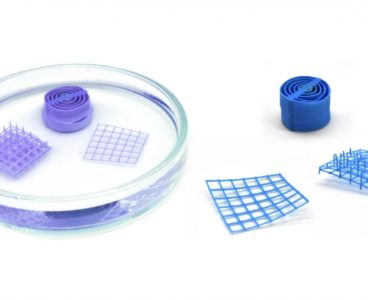
A new, versatile plastic-composite sensor can detect tiny amounts of water. The 3d printable material, developed by a Spanish-Israeli team of scientists, is cheap, flexible and non-toxic and changes its colour from purple to blue in wet conditions. The researchers lead by Pilar Amo-Ochoa from the Autonomous University of Madrid (UAM) used DESY’s X-ray light…
Asteroids are Stronger, Harder to Destroy Than Previously Thought

A popular theme in the movies is that of an incoming asteroid that could extinguish life on the planet, and our heroes are launched into space to blow it up. But incoming asteroids may be harder to break than scientists previously thought, finds a Johns Hopkins study that used a new understanding of rock fracture…
Fast, Flexible Ionic Transistors for Bioelectronic Devices
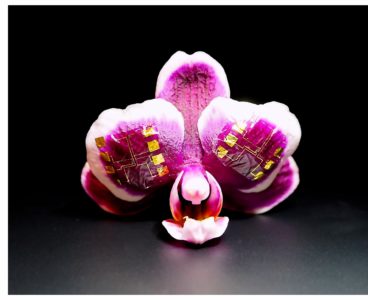
Many major advances in medicine, especially in neurology, have been sparked by recent advances in electronic systems that can acquire, process, and interact with biological substrates. These bioelectronic systems, which are increasingly used to understand dynamic living organisms and to treat human disease, require devices that can record body signals, process them, detect patterns, and…
How Power-to-Gas Technology can be Green and Profitable

Nanopores Allow Neurons to Fire
Since the discovery of biological ion channels and their role in physiology, scientists have attempted to create man-made structures that mimic their biological counterparts. New research by Lawrence Livermore National Laboratory (LLNL) scientists and collaborators at the University of California, Irvine shows that synthetic solid-state nanopores can have finely tuned transport behaviors much like the…