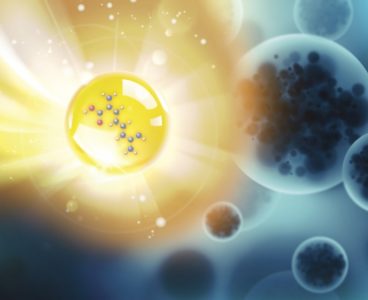
Antibiotic resistance is a growing problem, especially among a type of bacteria that are classified as “Gram-negative.” These bacteria have two cell membranes, making it more difficult for drugs to penetrate and kill the cells. Researchers from MIT and other institutions are hoping to use nanotechnology to develop more targeted treatments for these drug-resistant bugs.…
Practical Parallelism

The chips in most modern desktop computers have four “cores,” or processing units, which can run different computational tasks in parallel. But the chips of the future could have dozens or even hundreds of cores, and taking advantage of all that parallelism is a stiff challenge. Researchers from MIT’s Computer Science and Artificial Intelligence Laboratory…
Rising Temperatures Are Curbing Ocean’s Capacity to Store Carbon

If there is anywhere for carbon dioxide to disappear in large quantities from the atmosphere, it is into the Earth’s oceans. There, huge populations of plankton can soak up carbon dioxide from surface waters and gobble it up as a part of photosynthesis, generating energy for their livelihood. When plankton die, they sink thousands of…
Peering Into Neural Networks

Neural networks, which learn to perform computational tasks by analyzing large sets of training data, are responsible for today’s best-performing artificial intelligence systems, from speech recognition systems, to automatic translators, to self-driving cars. But neural nets are black boxes. Once they’ve been trained, even their designers rarely have any idea what they’re doing — what…
Scientists Produce Dialysis Membrane Made from Graphene
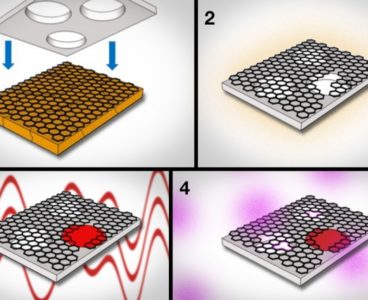
Dialysis, in the most general sense, is the process by which molecules filter out of one solution, by diffusing through a membrane, into a more dilute solution. Outside of hemodialysis, which removes waste from blood, scientists use dialysis to purify drugs, remove residue from chemical solutions, and isolate molecules for medical diagnosis, typically by allowing…
Scientists Create Dialysis Membrane Derived from Graphene
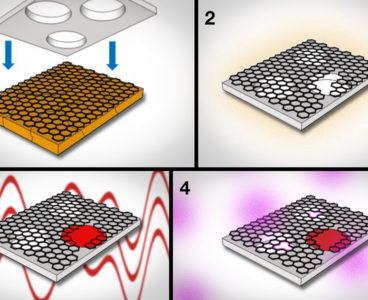
Dialysis, in the most general sense, is the process by which molecules filter out of one solution, by diffusing through a membrane, into a more dilute solution. Outside of hemodialysis, which removes waste from blood, scientists use dialysis to purify drugs, remove residue from chemical solutions, and isolate molecules for medical diagnosis, typically by allowing…
Computer System Predicts Products of Chemical Reactions
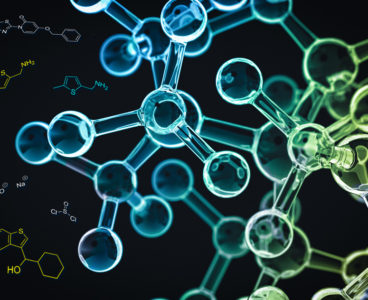
When organic chemists identify a useful chemical compound — a new drug, for instance — it’s up to chemical engineers to determine how to mass-produce it. There could be 100 different sequences of reactions that yield the same end product. But some of them use cheaper reagents and lower temperatures than others, and perhaps most…
New Laser Technique Identifies Makeup of Space Debris

Hundreds of millions of pieces of space junk orbit the Earth daily, from chips of old rocket paint, to shards of solar panels, and entire dead satellites. This cloud of high-tech detritus whirls around the planet at about 17,500 miles per hour. At these speeds, even trash as small as a pebble can torpedo a…
Shrinking Data for Surgical Training

Laparoscopy is a surgical technique in which a fiber-optic camera is inserted into a patient’s abdominal cavity to provide a video feed that guides the surgeon through a minimally invasive procedure. Laparoscopic surgeries can take hours, and the video generated by the camera — the laparoscope — is often recorded. Those recordings contain a wealth…
Toward Optical Quantum Computing
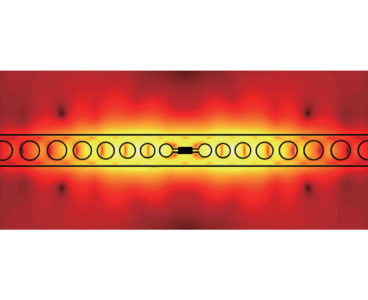
Ordinarily, light particles — photons — don’t interact. If two photons collide in a vacuum, they simply pass through each other. An efficient way to make photons interact could open new prospects for both classical optics and quantum computing, an experimental technology that promises large speedups on some types of calculations. In recent years, physicists…
LIGO Detects Merging Black Holes for Third Time
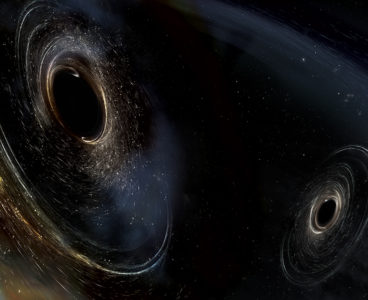
The collision of a pair of colossal, stellar-mass black holes has made itself heard, nearly 3 billion light years away, through a cosmic microphone on Earth. On Jan. 4, the Laser Interferometry Gravitational-wave Observatory (LIGO) picked up a barely perceptible signal that scientists quickly determined to be a gravitational wave — a ripple of energy…
Toward Mass-Producible Quantum Computers

Quantum computers are experimental devices that offer large speedups on some computational problems. One promising approach to building them involves harnessing nanometer-scale atomic defects in diamond materials. But practical, diamond-based quantum computing devices will require the ability to position those defects at precise locations in complex diamond structures, where the defects can function as qubits,…
New Method Enables Real-Time Monitoring of Materials During Irradiation
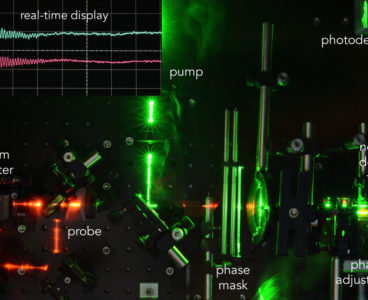
A new advance on a method developed by MIT researchers could enable continuous, high-precision monitoring of materials exposed to a high-radiation environment. The method may allow these materials to remain in place much longer, eliminating the need for preventive replacement. It could also speed up the search for new, improved materials for these harsh environments.…
New Model Could Speed Up Colon Cancer Research
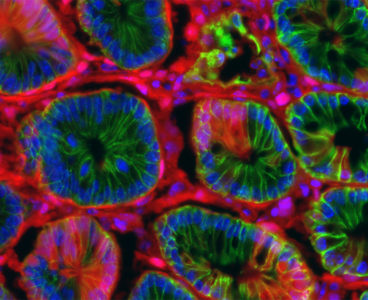
Using the gene-editing system known as CRISPR, MIT researchers have shown in mice that they can generate colon tumors that very closely resemble human tumors. This advance should help scientists learn more about how the disease progresses and allow them to test new therapies. Once formed, many of these experimental tumors spread to the liver,…
Method May Help Myeloma Patients Avoid Painful Biopsies
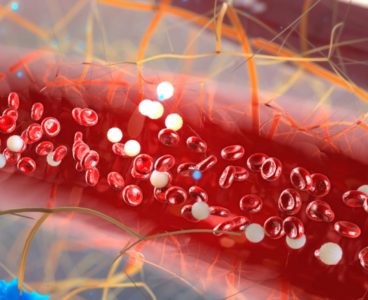
Multiple myeloma is a cancer of the plasma cells, which are white blood cells produced in bone marrow that churn out antibodies to help fight infection. When plasma cells become cancerous, they produce abnormal proteins, and the cells can build up in bone marrow, ultimately seeping into the bloodstream. The disease is typically diagnosed through…
‘Virtual Batteries’ Could Lead to Cheaper, Cleaner Power

In the power grid, supply and demand need to match exactly. If consumers demand more power than producers can supply, or if producers provide more power than consumers need, the result can be rolling blackouts. Power producers usually keep turbines spinning at a few offline plants, so they can ramp up production if demand spikes.…
Electrons Go Superballistic

A new finding by physicists at MIT and in Israel shows that under certain specialized conditions, electrons can speed through a narrow opening in a piece of metal more easily than traditional theory says is possible. This “superballistic” flow resembles the behavior of gases flowing through a constricted opening, however it takes place in a…
Technique Could Yield Hyperprecise Gravitational Measurements

Atom interferometry is the most sensitive known technique for measuring gravitational forces and inertial forces such as acceleration and rotation. It’s a mainstay of scientific research and is being commercialized as a means of location-tracking in environments where GPS is unavailable. It’s also extremely sensitive to electric fields and has been used to make minute…
New Kind of Supercapacitor Made without Carbon

Energy storage devices called supercapacitors have become a hot area of research, in part because they can be charged rapidly and deliver intense bursts of power. However, all supercapacitors currently use components made of carbon, which require high temperatures and harsh chemicals to produce. Now researchers at MIT and elsewhere have for the first time…
Calculating Financial Risks of Renewable Energy

For investors, deciding whether to invest money into renewable-energy projects can be difficult. The issue is volatility: Wind-powered energy production, for instance, changes annually—and even weekly or daily—which creates uncertainty and investment risks. With limited options to accurately quantify that volatility, today’s investors tend to act conservatively. But MIT spinout EverVest has built a data-analytics…