First-time lab developers succeed not by replicating existing models, but by intentionally building flexible, partnership-driven discovery ecosystems that align tenants, infrastructure and market timing. As demand for science and research space grows and traditional office markets soften, developers are increasingly exploring laboratory and advanced manufacturing projects to diversify their portfolios. Entering the life sciences market, however, presents unique challenges, from understanding specialized infrastructure requirements to navigating unfamiliar cost structures and regulatory expectations.

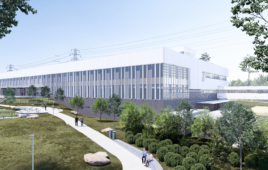
Modern science facilities succeed when they function as discovery ecosystems that connect research organizations, advanced manufacturers, startups, and supporting infrastructure within a flexible, innovation-focused environment. Image courtesy of Hanbury.
It’s vital for developers to evaluate the balance between research and development (R&D), manufacturing, pilot, flex and support space while understanding core development metrics such as Building Owners and Managers Association (BOMA) measurements, rental structures and cost per square foot. They must also assess established science markets alongside emerging competitors. By applying practical frameworks and embracing flexibility, developers can create facilities that support innovation in rapidly evolving science and manufacturing sectors.
Science facilities thrive as discovery ecosystems
Today’s successful scientific developments function as discovery ecosystems that intentionally bring together organizations with operational and research synergies. These environments may include early-stage biotech firms, research institutions, engineering teams, startups, pharmaceutical companies and pilot manufacturing operations.
When the right tenant mix is established, collaboration accelerates growth and innovation. Tenants can access specialized utilities, flexible laboratory environments, advanced heating, ventilation, and air conditioning (HVAC) and power systems, clean rooms and collaborative amenity spaces without independently carrying the full cost burden.
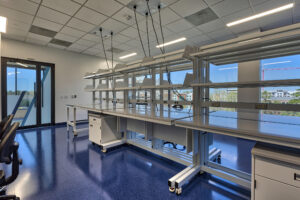
Shared laboratory infrastructure allows organizations to access specialized workspaces, utilities, and equipment while reducing the cost and complexity of building those capabilities independently. Image courtesy of Hanbury.
Co-locating R&D, testing and small-scale manufacturing capabilities shortens development timelines by allowing teams to move seamlessly from discovery to prototyping and validation within the same environment. Cross-disciplinary collaboration frequently generates new business opportunities and breakthrough ideas. For instance, Syngenta’s North American Crop Protection HQ has a Greensboro cornerstone campus established in the 1960s that required significant renovation to integrate advanced technologies, robotics, and artificial intelligence (AI). This was step one. After empowering R&D, the next focus became customer engagement. With the introduction of open entryways, interactive tours and educational opportunities, these advanced R&D areas become vital communal spaces for customers, stakeholders, and partner tenants alike, creating a fluid connection between labs and offices. Syngenta incorporates an interactive tour and educational opportunities to strengthen collaborative ties with the community and stakeholders.
As traditional office demand diminishes, developers have an opportunity to reposition properties to support the next generation of life sciences and advanced technology industries.
The rapid adoption of automation, robotics, artificial intelligence (AI)-driven workflows and advanced instrumentation is increasing power-density requirements. Developers are recognizing the need to design future-ready science facilities with scalability, adaptability and long-term infrastructure capacity from the outset. As the boundaries between R&D and manufacturing continue to blur, demand for flexible, infrastructure-rich facilities will increase.
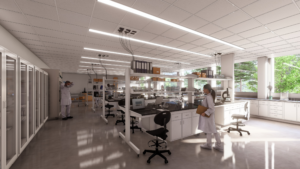
Flexible laboratory environments with scalable infrastructure help developers accommodate evolving tenant needs while supporting collaboration, research, testing, bench, and pilot-scale manufacturing activities. Image courtesy of Hanbury.
Partnership drives successful entry into the lab market
Developers entering the lab market for the first time benefit from a flexible, phased approach that balances long-term infrastructure investment with the ability to respond to changing market conditions. Early collaboration with experienced lab designers, engineers, contractors, utility providers and regulatory specialists helps developers avoid costly redesigns and construction delays while navigating infrastructure constraints and long equipment lead times.
Partnerships between developers, brokers, consultants and end users help align the right tenant with the right environment before major decisions are made regarding power, loading logistics, hazardous materials, utilities and waste handling.
Successful life science campuses are deeply connected to the broader innovation ecosystem around them. Relationships with universities, workforce development programs, economic development groups, research institutions and industry organizations are mutually beneficial. When incorporated into discovery ecosystems as experienced partners, these trusted advisors help developers interpret key indicators to strategically position projects in the market, including National Institutes of Health (NIH) grant activity, startup formation trends, manufacturing growth, workforce pipelines and university research partnerships. Local organizations also benefit from expanded workforce development efforts that strengthen talent pipelines in fields and roles in emerging science markets.

Successful science facilities are designed to attract and encourage interaction among researchers, technical specialists, and industry partners, which helps to accelerate innovation and knowledge sharing. Image courtesy of Hanbury.
Incentives and community partnerships are most effective when projects establish a clear mission and identity. Developers who align projects with local priorities around sustainability, innovation, ongoing education and quality of life are often more successful in attracting science tenants and the specialized talent those organizations depend on.
Navigating first-time lab and manufacturing development
It’s vital for developers entering life sciences and advanced technology sectors to balance several competing pressures throughout the project lifecycle:
Speculative (spec) development versus tenant-driven buildouts. This decision fundamentally shapes the project’s pace, risk profile and design strategy. Spec development enables developers to respond quickly to growing demand from life sciences and advanced manufacturing tenants, who may be hindered by multi-year construction schedules. In emerging science markets, available inventory helps establish momentum, attract startups and support broader ecosystem growth.
At the same time, speculative projects require developers to build without knowing what type of science will ultimately occupy the space. Designing too specifically can limit future adaptability, while remaining too generic may make the building less attractive to serious tenants.
Tenant-driven buildouts reduce much of this uncertainty because facilities can be designed around defined workflows, operational goals and compliance requirements from the beginning. However, waiting for a committed tenant can delay market entry and slow ecosystem development.
Speed to market versus infrastructure certainty. Research organizations and advanced manufacturers often operate on accelerated funding, regulatory, and commercialization timelines.
Companies cannot afford to wait years for facilities to come online without risking lost investment opportunities or delayed product development. At the same time, developers face increasing infrastructure challenges related to power availability, utility upgrades and specialized building systems. Moving too quickly without adequate infrastructure planning can result in costly retrofits or operational limitations later. Developers who plan scalable infrastructure early are better positioned to respond quickly while maintaining long-term flexibility.
Flexibility versus cost. Developers increasingly prioritize modular and phased infrastructure systems that allow facilities to evolve with changing market demands. Expandable utility corridors, scalable power systems, modular HVAC infrastructure and adaptable production spaces create opportunities for projects to pivot as tenant needs evolve. While these systems may increase initial costs, they provide long-term resilience and reduce the likelihood of significant future renovations. Take VGXI’s Biomanufacturing facility serves as a model of flexibility. The, a 20-acre research park that reflects a commitment to transformational life science. TheIts modular design incorporates manufacturing, laboratory and office space in tandem, without sacrificing a dynamic appearance. Most of all, this modularity also maintains the highest standards of safety, containment and cGMP requirements required in the field while allowing for future expansion necessary for scientific excellence. While these systems may increase initial costs, they provide long-term resilience and reduce the likelihood of significant future renovations.
Developers who embrace flexibility early in the planning process are better positioned to accommodate future challenges and change.
Collaboration as the catalyst for innovation
In science and research, collaboration has long been a core driver of innovation and shared progress. Developers who embrace this same culture of partnership during the design and development process help accelerate growth across the entire ecosystem.
Science facilities perform best when tenants view themselves as collaborators. When developers intentionally create environments that support interaction, flexibility, and shared resources, they establish the conditions for discovery, innovation and long-term economic growth. For first-time lab developers, success is defined by the strength of the ecosystem it creates.
About the Authors:

David Cole, Regal Leftwich and Chris Small
David Cole is a principal and senior design architect, Regal Leftwich is principal and laboratory planning director, and Chris Small is principal and science market leader at Hanbury. Hanbury is a 100% employee-owned, multidisciplinary design practice founded in 1979, specializing in architecture, planning, and interior design across the higher education, life science, and civic and community markets. Over more than four decades, the firm has grown into a recognized industry leader with a diverse team of experts across multiple offices who approach every project through partnership and shared vision, aligning design with the global impact of clients’ work to address critical issues and enhance community well-being. For more information, please visit www.hanbury.design.