Research & Development World

  • R&D World Home
  • Topics
    • Aerospace
    • Automotive
    • Biotech
    • Careers
    • Chemistry
    • Environment
    • Energy
    • Life Science
    • Material Science
    • R&D Management
    • Physics
  • Technology
    • 3D Printing
    • A.I./Robotics
    • Software
    • Battery Technology
    • Controlled Environments
      • Cleanrooms
      • Graphene
      • Lasers
      • Regulations/Standards
      • Sensors
    • Imaging
    • Nanotechnology
    • Scientific Computing
      • Big Data
      • HPC/Supercomputing
      • Informatics
      • Security
    • Semiconductors
  • R&D Market Pulse
  • R&D 100
    • 2025 R&D 100 Award Winners
    • 2025 Professional Award Winners
    • 2025 Special Recognition Winners
    • R&D 100 Awards Event
    • R&D 100 Submissions
    • Winner Archive
  • Resources
    • Research Reports
    • Digital Issues
    • Educational Assets
    • Subscribe
    • Video
    • Webinars
    • PharmSci360
    • Content submission guidelines for R&D World
  • Global Funding Forecast
  • Top Labs
  • Advertise
  • SUBSCRIBE

Discovery Sets New World Standard in Nano Generators

By University of Alberta | December 11, 2017

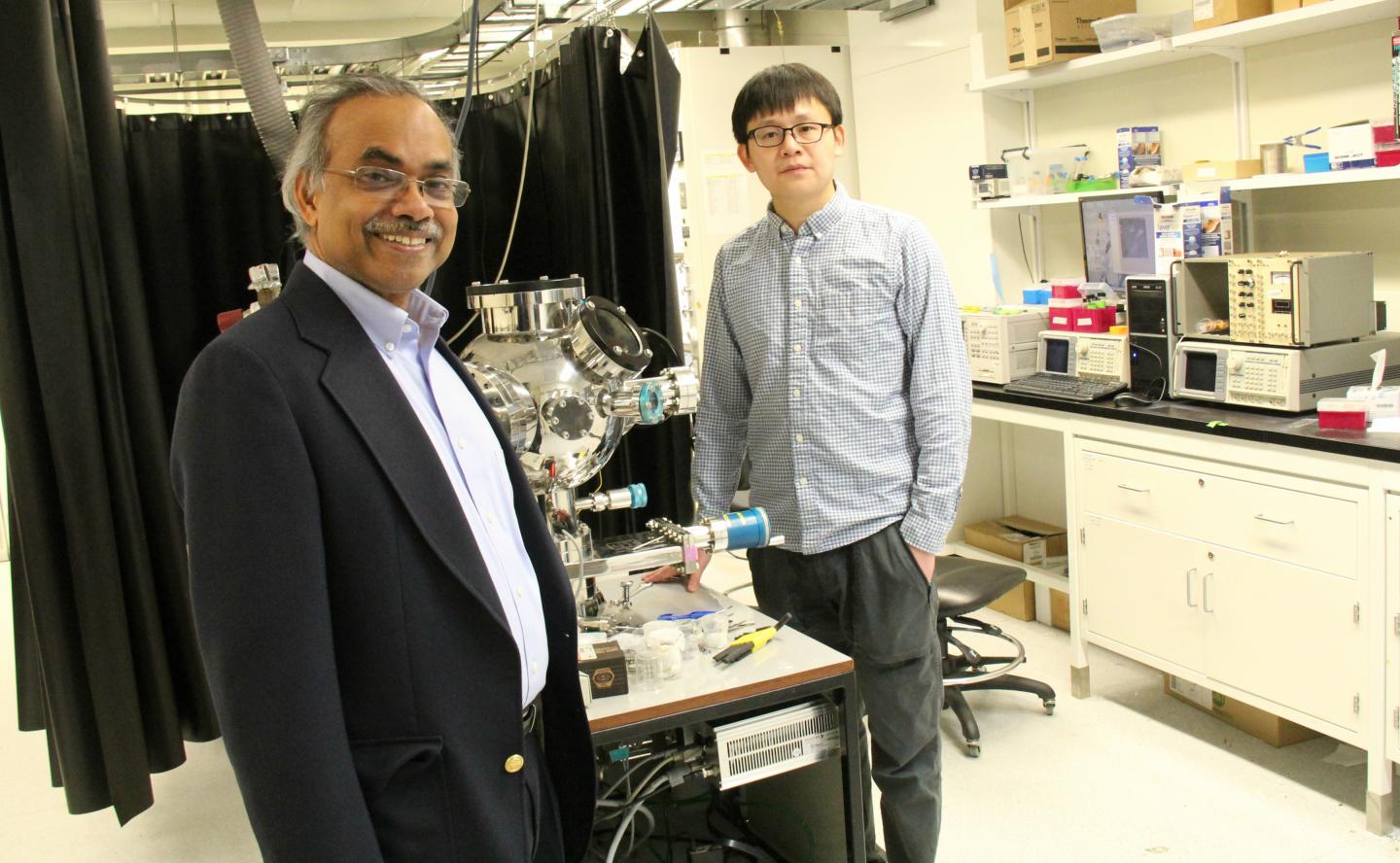
University of Alberta researcher Thomas Thundat and PhD student Jun Liu have made a major advance in the development of triboelectric nan generators. These devices can turn small amounts of mechanical energy, like vibrations, into a steady DC power current. The nanogenerators can power small handheld devices or sensors that monitor anything from pipelines to medical implants.

A team of University of Alberta engineers developed a new way to produce electrical power that can charge handheld devices or sensors that monitor anything from pipelines to medical implants. The discovery sets a new world standard in devices called triboelectric nanogenerators by producing a high-density DC current–a vast improvement over low-quality AC currents produced by other research teams.

Jun Liu, a PhD student working under the supervision of chemical engineering professor Thomas Thundat, was conducting research unrelated to these tiny generators, using a device called an atomic force microscope. It provides images at the atomic level using a tiny cantilever to “feel” an object, the same way you might learn about an object by running a finger over it. Liu forgot to press a button that would apply electricity to the sample–but he still saw a current coming from the material.

“I didn’t know why I was seeing a current,” he recalled.

One theory was that it was an anomaly or a technical problem, or interference. But Liu wanted to get to the bottom of it. He eventually pinned the cause on the friction of the microscope’s probe on the material. It’s like shuffling across a carpet then touching someone and giving them a shock.

It turns out that the mechanical energy of the microscope’s cantilever moving across a surface can generate a flow of electricity. But instead of releasing all the energy in one burst, the U of A team generated a steady current.

“Many other researchers are trying to generate power at the prototype stages but their performances are limited by the current density they’re getting–that is the problem we solved,” said Liu.

“This is big,” said Thundat. “So far, what other teams have been able to do is to generate very high voltages, but not the current. What Jun has discovered is a new way to get continuous flow of high current.”

The discovery means that nanoscale generators have the potential to harvest power for electrical devices based on nanoscale movement and vibration: an engine, traffic on a roadway–even a heartbeat. It could lead to technology with applications in everything from sensors used to monitor the physical strength of structures such as bridges or pipelines, the performance of engines or wearable electronic devices.

Liu said the applications are limited only by imagination.
Related Articles Read More >

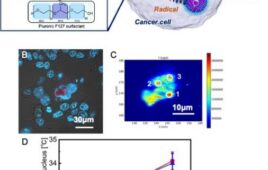
Researchers developed quantum nanosensors that can measure the temperature of a single cell
Overcoming the 100-nanometer barrier: New microbottle resonators scale up optical trapping
R&D 100 winner LLNL achieves 1,000x speed boost in 3D nanofabrication
CEA-Leti achieves 400°C CMOS fabrication milestone for 3D chip stacking
rd newsletter
EXPAND YOUR KNOWLEDGE AND STAY CONNECTED
Get the latest info on technologies, trends, and strategies in Research & Development.

R&D World Digital Issues

Fall 2025 issue

Browse the most current issue of R&D World and back issues in an easy to use high quality format. Clip, share and download with the leading R&D magazine today.

R&D 100 Awards
Research & Development World
  • Subscribe to R&D World Magazine
  • Sign up for R&D World’s newsletter
  • Contact Us
  • About Us
  • Drug Discovery & Development
  • Pharmaceutical Processing
  • Global Funding Forecast

Copyright © 2026 Arrowfly LLC. All Rights Reserved. The material on this site may not be reproduced, distributed, transmitted, cached or otherwise used, except with the prior written permission of Arrowfly
Privacy Policy | Advertising | About Us

Search R&D World

  • R&D World Home
  • Topics
    • Aerospace
    • Automotive
    • Biotech
    • Careers
    • Chemistry
    • Environment
    • Energy
    • Life Science
    • Material Science
    • R&D Management
    • Physics
  • Technology
    • 3D Printing
    • A.I./Robotics
    • Software
    • Battery Technology
    • Controlled Environments
      • Cleanrooms
      • Graphene
      • Lasers
      • Regulations/Standards
      • Sensors
    • Imaging
    • Nanotechnology
    • Scientific Computing
      • Big Data
      • HPC/Supercomputing
      • Informatics
      • Security
    • Semiconductors
  • R&D Market Pulse
  • R&D 100
    • 2025 R&D 100 Award Winners
    • 2025 Professional Award Winners
    • 2025 Special Recognition Winners
    • R&D 100 Awards Event
    • R&D 100 Submissions
    • Winner Archive
  • Resources
    • Research Reports
    • Digital Issues
    • Educational Assets
    • Subscribe
    • Video
    • Webinars
    • PharmSci360
    • Content submission guidelines for R&D World
  • Global Funding Forecast
  • Top Labs
  • Advertise
  • SUBSCRIBE