A surprising form of cell-to-cell communication in glioblastoma promotes global changes in recipient cells, including aggressiveness, motility, and resistance to radiation or chemotherapy.
Paradoxically, the sending cells in this signaling are glioblastoma cells that are undergoing programmed cell death, or apoptosis, according to research by a team at institutes in the United States, Russia and South Korea.
The dying cancer cells send their signals by means of extracellular vesicles induced and released during apoptosis. These vesicles — small, membrane-bound blobs known as exosomes — carry components that alter RNA splicing in the recipient glioblastoma cells, and this altered splicing promotes therapy resistance and aggressive migration.
This mechanism thus becomes a possible target for new therapies to treat glioblastoma, a primary brain cancer, and the mechanism may apply to other cancer types as well.
“Clinically, our data may provide the rationale to the molecular targeting of RNA splicing events or specific splicing factors for novel cancer therapies,” said Ichiro Nakano, M.D., Ph.D., leader of the international study being published in Cancer Cell. “This may lead to decreased acquisition of therapy resistance, as well as reduction in the migration of cancer cells.”
Nakano is an academic neurosurgeon at the University of Alabama at Birmingham who conducts both brain tumor translational research and clinical brain tumor surgery. He is professor of neurosurgery in the UAB School of Medicine and a senior scientist for the UAB Comprehensive Cancer Center.
Glioblastoma exhibits invasive behavior, abrupt growth and poor patient survival. As the number of the cancer cells rapidly increases, abundant apoptotic tumor cells are intermingled with neighboring proliferating tumor cells. The apoptotic cells can account for up to 70 percent of the tumor cell population.
The discovery of this unusual cell-to-cell communication began with a simple experiment — injecting a combination of lethally irradiated human glioblastoma cells, which makes them apoptotic, and “healthy” glioblastoma cells into a mouse xenograft model. This combination led to much more aggressive tumor growth, as seen in brain scans, compared to “healthy” glioblastoma cells or irradiated glioblastoma cells alone. The combination was also more therapy-resistant.
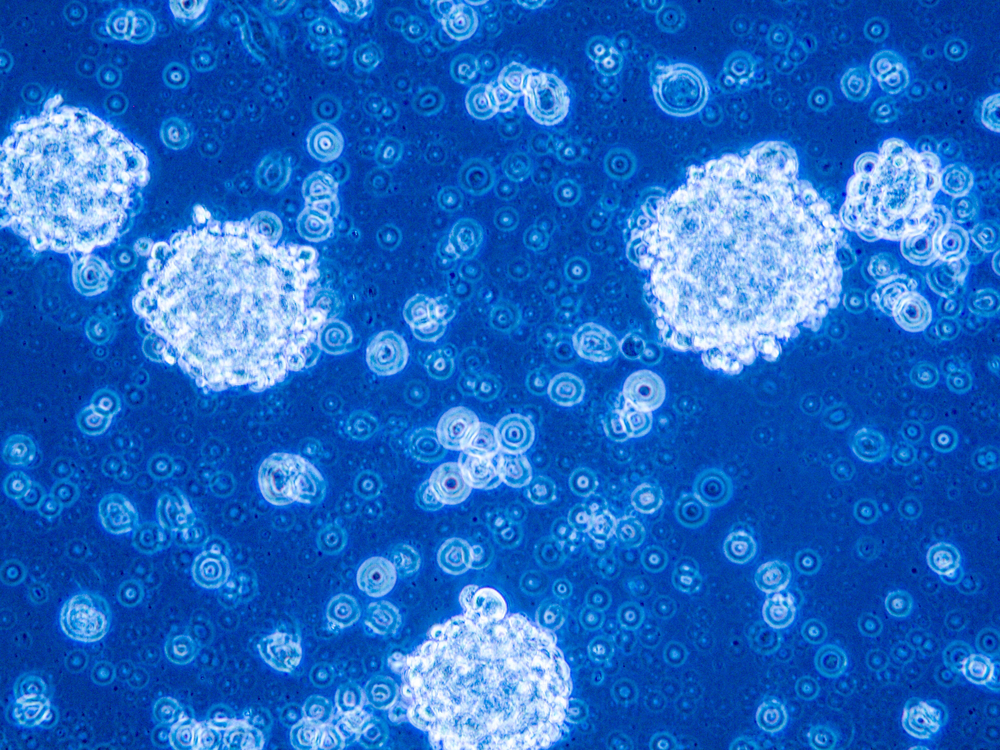
The UAB researchers and colleagues found that, after induction of apoptosis, glioblastoma cells shed significantly higher numbers of exosomes with larger average sizes.
Those apoptotic exosomes, when combined with “healthy” glioblastoma cells, significantly increased tumor growth in the xenograft model and cell motility in bench experiments. Also, while the “healthy” glioblastoma cells alone had a clear border between the tumor and adjacent normal tissue in the xenograft, the glioblastoma cells co-injected with apoptotic exosomes invaded into adjacent brain tissue. Exosomes shed by non-apoptotic cells did not have these effects.
To discover the mechanism underlying these changes, the researchers looked at what was inside the apoptotic exosomes. The vesicles were enriched with spliceosomal proteins and several U snRNAs — parts of the cellular machinery that remove introns from pre-messenger RNA.
These are normally confined to the nuclei of cells; but the Nakano team found that, as the glioblastoma cells underwent apoptosis, the spliceosomal proteins were transported out of the nucleus to the cell cytoplasm, where they could be packaged into vesicles for release.
Glioblastoma cell subtypes include the proneural subtypes and the mesenchymal subtype. Recent data have shown that, after therapy, glioblastoma cells shift from the less aggressive proneural subtype to the more aggressive and therapy-resistant mesenchymal subtype. The researchers found that apoptotic exosomes induced substantial alternate RNA splicing in recipient cells that resembled the splicing patterns found in the mesenchymal glioblastoma subtype.
Part of this was caused by the splicing factor RBM11, which is encapsulated in the vesicles. The researchers found that exogenous RBM11 caused upregulation of endogenous RBM11 in the recipient cells and activated glycolysis. Overexpression of RBM11 increased the migration of glioblastoma cells.
They also found that RBM11 altered RNA splicing to produce an isoform of the protein cyclinD1 that promotes DNA repair and an isoform of the protein MDM4 that has significantly higher anti-apoptotic activity. These changes can make the cells more therapy-resistant.
Examination of the Cancer Genome Atlas database showed that elevated expression of those two isoforms is associated with poor prognoses for glioblastoma patients.
Finally, the Nakano-led team looked at paired glioblastoma specimens of primary and recurrent tumors from matched patients. In most of the 43 pairs of matched samples, the RBM11 protein levels were substantially higher in the recurrent glioblastoma compared to the original, untreated tumors. In two other patient cohorts, they found that the higher RBM11 levels correlated with poor post-surgical survival for glioma patients.