Research & Development World

  • R&D World Home
  • Topics
    • Aerospace
    • Automotive
    • Biotech
    • Careers
    • Chemistry
    • Environment
    • Energy
    • Life Science
    • Material Science
    • R&D Management
    • Physics
  • Technology
    • 3D Printing
    • A.I./Robotics
    • Software
    • Battery Technology
    • Controlled Environments
      • Cleanrooms
      • Graphene
      • Lasers
      • Regulations/Standards
      • Sensors
    • Imaging
    • Nanotechnology
    • Scientific Computing
      • Big Data
      • HPC/Supercomputing
      • Informatics
      • Security
    • Semiconductors
  • R&D Market Pulse
  • R&D 100
    • 2025 R&D 100 Award Winners
    • 2025 Professional Award Winners
    • 2025 Special Recognition Winners
    • R&D 100 Awards Event
    • R&D 100 Submissions
    • Winner Archive
  • Resources
    • Research Reports
    • Digital Issues
    • Educational Assets
    • R&D Index
    • Subscribe
    • Video
    • Webinars
    • Content submission guidelines for R&D World
  • Global Funding Forecast
  • Top Labs
  • Advertise
  • SUBSCRIBE

Fake Shewanella reveals how bacteria breathe iron

By R&D Editors | March 26, 2013

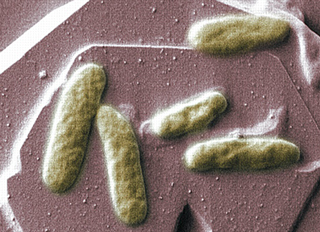
Certain bacteria can breathe iron like we breathe oxygen. Understanding how they do so will help researchers use the microbes for cleaning up soil contaminants, trapping carbon dioxide, or making batteries out of bacteria. Now, a team of researchers report in the Proceedings of the National Academy of Sciences that proteins on the surface of bacteria produce an electric current by simply touching a mineral surface, allowing them to breathe the iron in the rock.

To do so, the team created a simulated bacterium using just the proteins thought to shuttle the electrons from the inside of the microbe to the rock. They inserted these proteins into lipid layers of vesicles, which are small bubbles of lipids such as the ones that make up a bacterial membrane. Using instruments and expertise at EMSL, the Department of Energy’s Environmental Molecular Sciences Laboratory, the team showed that the proteins protruded through the lipid bubbles in the same way they do in real bacteria, known as Shewanella oneidensis.

Then they tested how well electrons traveled between an electron donor on the inside and an iron-bearing mineral on the outside. The electron transfer rate they measured was fast enough to support bacterial respiration, showing that those proteins were the only ones the bacteria would need to conduct electricity.

In addition to contaminant cleanup and biobatteries, the finding is important for understanding how carbon works its way through the atmosphere, land and oceans. If researchers understand electron transfer, they can learn how bacteria control the carbon cycle.


Source: Pacific Northwest National Laboratory

Related Articles Read More >

California microgrid pilots EV integration model for wildfire-prone regions
Solving the EV charger problem with streetlights
New scalable supercapacitors store more energy using graphene
Probiotics power a bioresorbable battery that can run from 4 to 100+ minutes
rd newsletter
EXPAND YOUR KNOWLEDGE AND STAY CONNECTED
Get the latest info on technologies, trends, and strategies in Research & Development.
RD 25 Power Index

R&D World Digital Issues

Fall 2025 issue

Browse the most current issue of R&D World and back issues in an easy to use high quality format. Clip, share and download with the leading R&D magazine today.

R&D 100 Awards
Research & Development World
  • Subscribe to R&D World Magazine
  • Sign up for R&D World’s newsletter
  • Contact Us
  • About Us
  • Drug Discovery & Development
  • Pharmaceutical Processing
  • Global Funding Forecast

Copyright © 2025 WTWH Media LLC. All Rights Reserved. The material on this site may not be reproduced, distributed, transmitted, cached or otherwise used, except with the prior written permission of WTWH Media
Privacy Policy | Advertising | About Us

Search R&D World

  • R&D World Home
  • Topics
    • Aerospace
    • Automotive
    • Biotech
    • Careers
    • Chemistry
    • Environment
    • Energy
    • Life Science
    • Material Science
    • R&D Management
    • Physics
  • Technology
    • 3D Printing
    • A.I./Robotics
    • Software
    • Battery Technology
    • Controlled Environments
      • Cleanrooms
      • Graphene
      • Lasers
      • Regulations/Standards
      • Sensors
    • Imaging
    • Nanotechnology
    • Scientific Computing
      • Big Data
      • HPC/Supercomputing
      • Informatics
      • Security
    • Semiconductors
  • R&D Market Pulse
  • R&D 100
    • 2025 R&D 100 Award Winners
    • 2025 Professional Award Winners
    • 2025 Special Recognition Winners
    • R&D 100 Awards Event
    • R&D 100 Submissions
    • Winner Archive
  • Resources
    • Research Reports
    • Digital Issues
    • Educational Assets
    • R&D Index
    • Subscribe
    • Video
    • Webinars
    • Content submission guidelines for R&D World
  • Global Funding Forecast
  • Top Labs
  • Advertise
  • SUBSCRIBE