Stanford scientists have discovered a new kind of cell death in flatworm immune cells. Called ruptosis, the mechanism results in the cell exploding and taking out approximately 70 cells surrounding it.
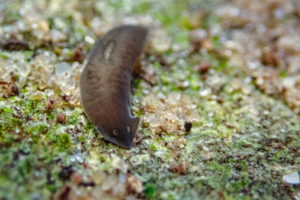
A freshwater planarian flatworm. Image courtesy of Adobe Stock.
The flatworms, Schmidtea mediterranea, evolved to sacrifice healthy cells through this process in order to ensure the elimination of biological threats. Unlike vertebrate immune systems that often target specific individual cells, the planarian’s regenerative biology requires a more destructive, less specific approach.
Planarians possess an abundance of neoblasts, adult stem cells, that constantly divide to maintain tissue. If a cell becomes mutated or hypersecretes hormones, simply killing the single mutated cell is not sufficient. The stem cell that produced it must be destroyed to prevent it from creating more mutated cells.
A single blast releases toxins in a 100-micron radius
A single ruptoblast releases toxins that kill everything within a 100 micron radius, including pathogens, non-self tissues and healthy cells. The response is used to clear bacterial infections and reject incompatible tissues, which is what researcher Chew Chai was studying when she discovered ruptosis.
“Chew was working on understanding this mysterious observation in planarian biology that you can stick two animals together, and then they will fuse and form the same animal. Sometimes the tissues will fight each other, and one will win over the other and push the other part of the body away,” explained co-author Bo Wang. “So Chew was trying to understand if there are any immune cells that are involved in this process when she noticed that about 50% of the worms formed a lesion one or two weeks after fusion. When she opened up the worm and dissociated it into single cells, she watched how the cells were behaving.”
“We saw the cells exploding. It’s kind of really crazy, just because the speed of the explosion was very fast,” Chai said.
Wang and Chai captured the phenomenon in videos and asked other researchers if they had seen anything like it before. No one had.
Regenerative biology allows for scorched-earth tactics
Planarians are able to sacrifice healthy tissue because of their regenerative capabilities. These organisms can regrow entire body parts from just a few remaining cells, allowing them to tolerate the collateral damage of ruptosis. Healthy cells lost in the explosion are quickly replaced by neoblasts. This could explain why ruptosis isn’t seen in other organisms.
“Vertebrates all lost the ruptoblast cells, potentially because they have a lower regenerative capacity,” said Wang.
Ruptosis is triggered by the hormone and cytokine activin. When ruptoblasts detect excessive activin via their receptors, it triggers an inflammatory p-38 mediated response, resulting in the cell exploding within two minutes. This results in the destruction of the cell’s plasma membrane, nucleus and cytoskeleton.
When activin binds to the cell’s receptors, it triggers Phospholipase C (PLC), generating inositol triphosphate (IP3), which binds to receptors on the endoplasmic reticulum (ER). Calcium is then released from the ER into the cytosol. The actomyosin cytoskeleton provides feedback that amplifies the release, and the calcium spike coordinates the disassembly of the cytoskeleton and the rupture of the plasma membrane.
This is distinct from other kinds of cell death, such as apoptosis, necroptosis and NETosis, that involve gradual membrane permeabilization, often taking hours to complete. These mechanisms also do not result in the destruction of surrounding cells.
The toxins released by ruptosis are non-specific. The study found that ruptosis successfully eliminated planarian neoblasts and differentiated cells, bacteria such as E. coli and mammalian cells, including human kidney cells.
The researchers believe that this mechanism can be artificially triggered to destroy cells. This could have implications for precision drug delivery, bioengineering cytotoxicity and antibacterial discovery.
“It could be a delivery method, or it could be a cytotoxic killing method where you could trigger a cytotoxic event at the tumor that could eliminate those cells that are hard to eliminate,” Wang said. “You could transport a specific agent and then induce an explosion on site, where and when you want.”