Researchers at Washington University have genetically engineered hookworms to produce and secrete a human antibody, creating a “living pharmaceutical biofactory,” according to the study published in Nature Communications.
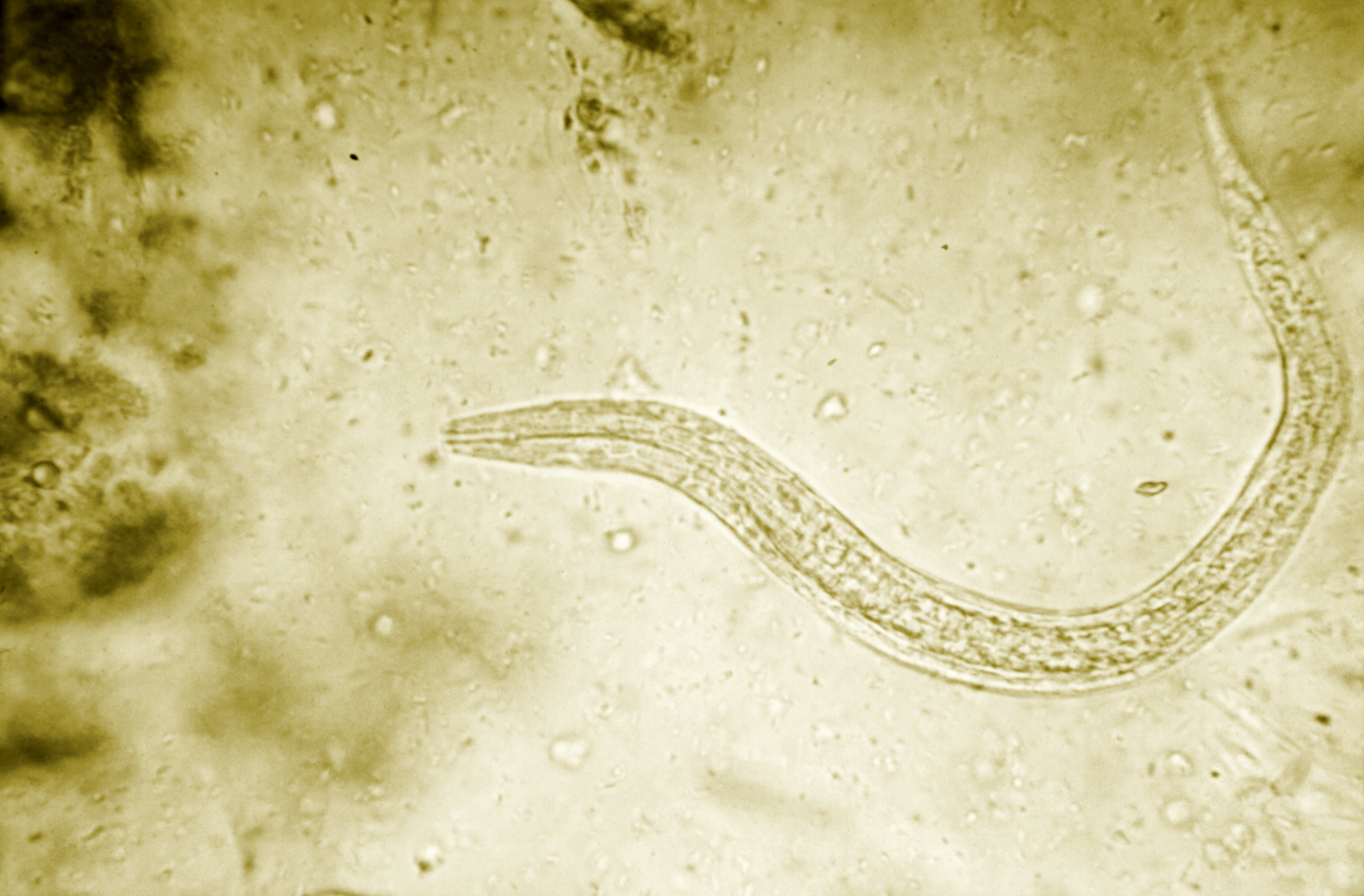
A human hookworm. Credit: CDC/ Dr. Mae Melvin
To survive within the human gut, hookworms secrete over 800 molecules to modulate inflammation and maintain homeostasis.
“We thought: what if we make it secrete one more thing,” said researcher Makedonka Mitreva, “And that could be a drug of interest.”
The scientists genetically engineered the hookworm Ancylostoma ceylanicum to produce the antibody (s16-HuScFv) that neutralizes the lethal neurotoxin tetrodotoxin (TTX).
The researchers identified specific Genome Safe Harbors (GSHs) that allowed for transgene insertion without disrupting native gene expression. In rodent tests, transgenic hookworms successfully secreted the human antibody into host circulation. The secreted antibodies demonstrated the ability to partially neutralize the TTX.
“I thought it was like the perfect moment where we can start embarking on hookworms being a two-in-one platform because they can not only deliver a drug, but produce that drug and deliver it in the human host,” Mitreva said.
By collecting eggs from the hamsters’ feces, the researchers were able to verify that the genetic modification was heritable and transmitted to the F1 generation.
Hookworms can survive for years within a human host and studies have shown they are well-tolerated in controlled infections. They have also been shown to have anti-inflammatory benefits in the human gut.
The platform could offer an approach to delivering sustained biologics for chronic conditions with a single dose.
CRISPR-mediated gene editing for antibody production
The researchers prioritized two GSH regions based on high transcriptional activity and accessibility. The final site, located on contig13, was selected due to higher CRISPR-mediated editing efficiency and more consistent indel distribution.
Testing revealed that electroporation significantly outperformed lipofection in delivering the CRISPR-Cas9 ribonucleoprotein (RNP) complexes to the hookworm eggs.
The scientists added the ASP-1 signal peptide, which yielded the highest secretion levels of the peptides tested, to direct the antibody into the hookworms’ secretory pathway, ensuring it was released into the host.
The construct included a human cytomegalovirus (CMV) promoter for robust expression, a C-terminal hexa-histidine (6-His) tag for detection and 600 bp homology arms to facilitate homology-directed repair.
Validation showed almost 5x increase in the antibody
Oxford Nanopore Technology (ONT) sequencing confirmed the precise insertion of the transgene at the locus. Transgenesis was confirmed in F0 eggs, adult F0 worms and the F1 generation of eggs.
Global gene expression analysis showed that the insertion of the transgene did not significantly disrupt the surrounding genome. Only six genes showed differential expression, none of which were critical for survival. The transgenic worms exhibited normal motility and infectivity compared to wild-type worms.
Mass spectrometry confirmed a 4.71-fold increase in the antibody abundance in transgenic samples compared to controls. The antibodies neutralized 16.3% of the TTX.
Hookworms do not reproduce within the host, allowing for dose control, and infections are easily cleared with standard oral medications.
The platform could be used for gastrointestinal disorders, autoimmune diseases or allergies.
“It’s very unconventional, but it’s something that has a lot of potential,” Mitreva said. “In my eyes, it’s a game changer.”