Research & Development World

  • R&D World Home
  • Topics
    • Aerospace
    • Automotive
    • Biotech
    • Careers
    • Chemistry
    • Environment
    • Energy
    • Life Science
    • Material Science
    • R&D Management
    • Physics
  • Technology
    • 3D Printing
    • A.I./Robotics
    • Software
    • Battery Technology
    • Controlled Environments
      • Cleanrooms
      • Graphene
      • Lasers
      • Regulations/Standards
      • Sensors
    • Imaging
    • Nanotechnology
    • Scientific Computing
      • Big Data
      • HPC/Supercomputing
      • Informatics
      • Security
    • Semiconductors
  • R&D Market Pulse
  • R&D 100
    • 2026 R&D 100 Award Winners
    • 2026 Professional Award Winners
    • 2026 Special Recognition Winners
    • R&D 100 Awards Event
    • R&D 100 Submissions
    • Winner Archive
  • Resources
    • Research Reports
    • Digital Issues
    • Educational Assets
    • Subscribe
    • Video
    • Webinars
    • PharmSci360
    • Content submission guidelines for R&D World
  • Global Funding Forecast
  • Top Labs
  • Advertisers
    • Advertise
    • PR Submissions
    • Eblast Submissions
  • SUBSCRIBE

Genome of Sea Lettuce That Spawns Massive ‘Green Tides’ Decoded

By Rutgers University | October 3, 2018

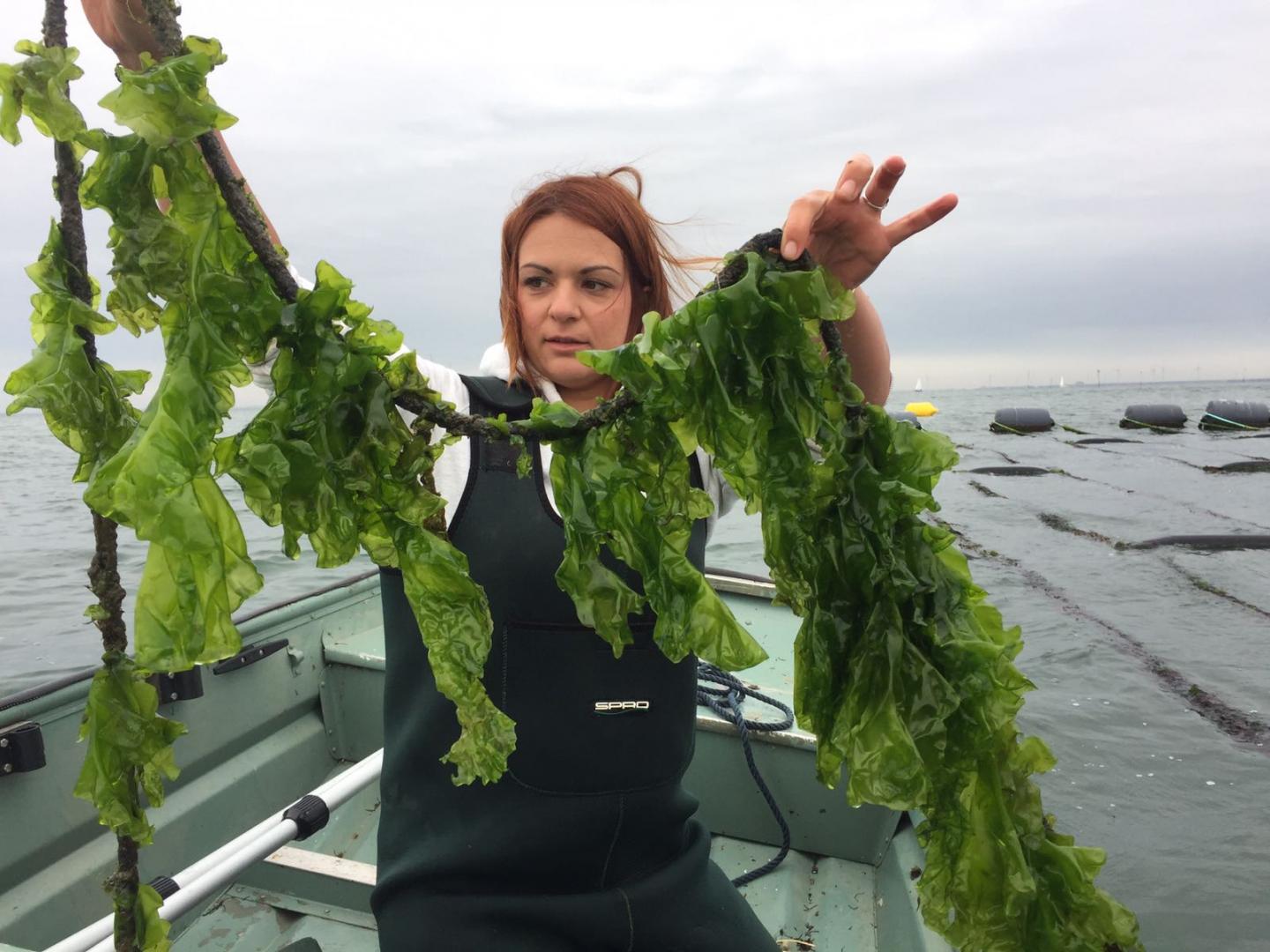
Julia Wald from Seaweed Harvest Holland shows Ulva growing on lines. Credit: Courtesy of Olivier De Clerck

Sea lettuce, a fast-growing seaweed that spawns massive “green tides,” is a prolific thief, according to research that for the first time sequenced the genome of a green seaweed.

An international team including Rutgers scientists found 13 cases where the sea lettuce Ulva mutabilis stole genes from bacteria. Remarkably, this ubiquitous seaweed expanded more than half of the pilfered genes – creating so-called “gene families” – and used some of them to adapt to stresses such as excessive light, high salinity and dehydration to become a dominant intertidal seaweed, according to study co-author Debashish Bhattacharya, distinguished professor at Rutgers University-New Brunswick. Ulva also lives with bacteria and relies on them to gain its multicellular form. Both stolen genes and intact bacteria that live in symbiosis with Ulva play key roles in the seaweed’s success.

Ulva‘s rapid growth is not all negative. Indeed, it can be exploited to produce biofuels, generate protein for animal feed, remove excessive nutrients in aquaculture and serve as a seaweed crop, according to a study published online in Current Biology.

“Ulva provides insights into how evolution acts on genomes to modify the biology of organisms,” said Bhattacharya, who works in the Department of Biochemistry and Microbiology in the School of Environmental and Biological Sciences. “Learning these rules will be crucial to understanding what traits define winners and losers under climate change, allowing us to better predict future trends among seaweed, algae and other life at the base of the food chain.”

Fatima Foflonker, a post-doctoral researcher, and Bhattacharya were part of an international team that analyzed Ulva‘s recently determined genome sequence. They studied the sea lettuce to gain insights into the growth and reproduction of multicellular green algae. Seaweeds evolved independently from land plants, and the research found that the mechanisms underlying their growth and development are distinct.

Ulva species are widely found along tropical and temperate coasts, and several species penetrate freshwater streams and lakes. In high-nutrient conditions, spectacular blooms of Ulva (green tides) often cover several hundred kilometers of coastal waters. Beached algae may reach one million tons and smother entire coastlines. Although not toxic, green tides have killed people when blooms die and generate hydrogen sulfide.

The Ulva genome offers new opportunities to understand coastal and marine ecosystems and the evolution of green seaweeds. Comparison of Ulva species that bloom and don’t bloom may boost understanding of the molecular mechanisms underpinning growth and reproduction in response to environmental conditions, the study says.


Related Articles Read More >

Female doctor using medical AI assistant on laptop computer in clinic office. modern medicine
Google is teaching healthcare professionals to incorporate AI into the everyday practice of medicine
Carnyx targets 2027 IND filing for oral sleep candidate CNYX-005
OpenAI unveils BioBasicsBench, a benchmark to gauge how well AI agents read raw experimental data across 100 routine wet-lab tasks.
Kosmos world model diagram: three colored paths of connected nodes trace three discoveries built from data-analysis agent steps, literature-review agent steps and established findings.
Edison’s Kosmos AI scientist moves into Pfizer R&D; Edison details the math behind its $99 million-per-program estimate
rd newsletter
EXPAND YOUR KNOWLEDGE AND STAY CONNECTED
Get the latest info on technologies, trends, and strategies in Research & Development.

R&D World Digital Issues

Fall 2026 issue

Browse the most current issue of R&D World and back issues in an easy to use high quality format. Clip, share and download with the leading R&D magazine today.

R&D 100 Awards
Research & Development World
  • Subscribe to R&D World Magazine
  • Sign up for R&D World’s newsletter
  • Contact Us
  • About Us
  • Drug Discovery & Development
  • Pharmaceutical Processing
  • Global Funding Forecast

Copyright © 2026 Arrowfly LLC. All Rights Reserved. The material on this site may not be reproduced, distributed, transmitted, cached or otherwise used, except with the prior written permission of Arrowfly
Privacy Policy | Advertising | About Us

Search R&D World

  • R&D World Home
  • Topics
    • Aerospace
    • Automotive
    • Biotech
    • Careers
    • Chemistry
    • Environment
    • Energy
    • Life Science
    • Material Science
    • R&D Management
    • Physics
  • Technology
    • 3D Printing
    • A.I./Robotics
    • Software
    • Battery Technology
    • Controlled Environments
      • Cleanrooms
      • Graphene
      • Lasers
      • Regulations/Standards
      • Sensors
    • Imaging
    • Nanotechnology
    • Scientific Computing
      • Big Data
      • HPC/Supercomputing
      • Informatics
      • Security
    • Semiconductors
  • R&D Market Pulse
  • R&D 100
    • 2026 R&D 100 Award Winners
    • 2026 Professional Award Winners
    • 2026 Special Recognition Winners
    • R&D 100 Awards Event
    • R&D 100 Submissions
    • Winner Archive
  • Resources
    • Research Reports
    • Digital Issues
    • Educational Assets
    • Subscribe
    • Video
    • Webinars
    • PharmSci360
    • Content submission guidelines for R&D World
  • Global Funding Forecast
  • Top Labs
  • Advertisers
    • Advertise
    • PR Submissions
    • Eblast Submissions
  • SUBSCRIBE