[Adobe Stock]
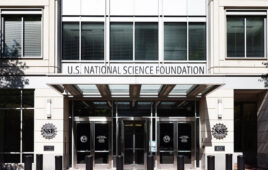
This could erode American science as scientists look to move abroad. More than 75% of scientists who responded to a Nature poll said they were considering leaving the country following the disruption to science prompted by the Trump administration. Scientists are already departing the country, evidenced by the European Research Council seeing the number of applicants for early-career grants from the U.S. nearly triple in recent years. Meanwhile, a STAT survey of nearly 1,000 NIH-funded researchers (May 4, 2026) also signals that fewer scientists from abroad are coming to the U.S. Nature found that NSF funded 25% fewer new grants in 2025 than its ten-year average, and NIH issued 24% fewer,
Meanwhile, there has been recent churn among scientists in federal agencies. A Science analysis of White House OPM employment data, published April 21, 2026, found that roughly 10,109 doctoral-trained STEM and health experts left their federal jobs in 2025.
Revolving doors at the CDC and FDA
At the CDC, director Susan Monarez was removed in August of 2025 after resisting vaccine policy changes. She was replaced by acting director Jim O’Neill, who left in February 2026 to fill the role of director at the NSF. Jay Bhattacharya, the NIH director, then began performing the delegable duties of CDC director and is still serving in both roles. Ralph Abraham, who served as principal deputy director, also resigned in February 2026 due to family obligations.
At the FDA, Marty Makary, the commissioner, resigned on May 12 following clashes with the White House on flavored vapes, abortion access, vaccine policy, rare disease drugs and internal agency management. In December, Markary acknowledged trust in government health advice was falling. He was replaced by Kyle Diamantas, who is now serving as acting commissioner.
“I think Diamantas will be a stabilizing force, but is unlikely to be a long-term solution, given his lack of relevant subject matter expertise,” Peter Lurie, president and executive director of the Center for Science in the Public Interest, said in an email to R&D World.
Tracy Beth Hoeg, the acting director of the center for drug evaluation and research at the FDA was fired in May after Makary resigned. Katherine Szarama, the acting head of the center for biologics evaluation and research at the FDA, departed the agency in May after filling a vacancy left by Vinay Prasad.
The chairs of the U.S. Preventive Services Task Force, John Wong and Esa Davis, were fired in May 2026 via a letter from Kennedy. New appointments are expected in June. Jeffery Taubenberger, the acting director of the NIAID, left his post in May and is expected to be replaced by John Powers III.
Now, many roles across the HHS are being filled by acting officials or individuals juggling multiple full-time responsibilities. Bhattacharya filling the roles of directors of the NIH and CDC has drawn criticism from some wondering how one individual could manage both roles.
Brain drain and the talent pipeline
Experts warn that the instability could harm the research pipeline and threaten the nation’s global leadership. The administration is actively redirecting major institutions. Bhattacharya stated that the NIAID is shifting away from biodefense to focus on “conditions that people actually have,” such as allergies and immunology. He notes that this shift will require “new leadership.”
The departure of senior officials also represents a loss of decades of experience and talent, while budget cuts are simultaneously presenting challenges for early-career investigators, eroding the talent pipeline at both ends.
Administrative delays have also reportedly left a $100 million grant for AI in cancer research sitting in review for months. Senator Schatz brought up the grant during Bhattacharya’s Senate hearing, where the director said he would “look into it.”
“At least in the immediate or intermediate future, the United States is going to be hobbled and hollowed out in its scientific leadership,” Lawrence Gostin, a Georgetown University public health law professor who was removed from a National Institutes of Health advisory board earlier this year, told PBS. “I think it will be extraordinarily difficult to reverse all the damage.”