[Adobe Stock]
Repairing the lattice through direct recycling
Now, companies are turning to short-loop, or direct, recycling, which aims to keep the cathode crystal structure intact while “relithiating” it. When a lithium-ion battery is used, it loses active lithium as lithium ions get trapped in the battery’s solid electrolyte interphase (SEI) layer, the protective layer on the surface of the anode, or stop moving altogether. “Relithiating” is the process of forcing fresh lithium back into the cathode.
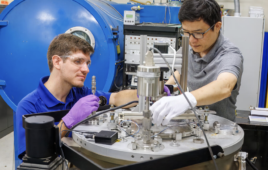
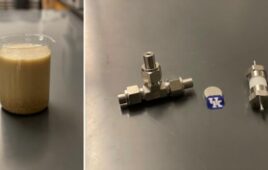
Usually, recycling a battery involves melting the materials into a soup through pyrometallurgy. In direct recycling, researchers soak the cathode in a lithium-rich solution like lithium hydroxide and apply heat or pressure. The lithium ions migrate into the empty holes that ions vacated, making the cathode ready to perform in a battery again without being melted down.
This method is allowing labs to use molten salt systems to repair spent cathode lattices at 600°C rather than melting cathodes at 1,400°C. While these chemical innovations solve the recovery problem, they introduce a new challenge: keeping track of the materials’ origins.
Designer solvents
Instead of using corrosive acids, which are effective at dissolving everything they touch, researchers are now using deep eutectic solvents (DES), also called designer solvents. These solvents are formed with a hydrogen bond acceptor, such as choline chloride, with a hydrogen bond donor, such as citric acid, combined in a specific ratio. The solvents become liquid at room temperature and develop an affinity for specific metals.
Early DES trials struggled to separate lithium from cobalt, but new systems are able to pull lithium into a water phase while keeping cobalt and nickel in the solvent phase in a single step.
For many organic acid systems, like citric acid, the activation energy for metal dissolution is approximately 43 to 70 kJ/mol. Once the system reaches 80°C, it has sufficient energy to surpass this barrier. This makes the process much more environmentally friendly than traditional recycling methods. As most DES begin to thermally degrade above 90°C, keeping the system at 80°C allows the solvents to be recycled through multiple batches, limiting the waste generated.
Introducing the digital battery passport
The European Union has passed the law that makes battery passports mandatory by Feb. 18, 2027. This means that all electric vehicle, e-bikes and scooters and industrial batteries with a capacity greater than 2 kWh that are sold in the EU must have a battery passport, a unique QR code that provides access to a digital record that contains the battery’s carbon footprint, disclosure of recycled content, evidence of supply chain due diligence and state of health data.
This, combined with a new emphasis on recycling, creates a new problem for battery manufacturers. How can you track the purity of a nickel atom as it moves from a 2018 Tesla to a shredder, through a solvent bath and then into a 2026 Ford?
Researchers are now focusing on “hardened identifiers” that survive the recycling process and investigating shifting to embedded industrial RFID built into the battery casing. Scientists are experimenting with adding unique isotopic “signatures” or synthetic DNA-based tracers directly into the electrolyte or cathode binder, meaning that even if a battery is shredded, a lab test can confirm its digital passport ID.
Conclusion
As regulations change, the shift from pyrometallurgy to direct recycling is more necessary than ever. While DES and relithiation have been proven to work well in the lab, scaling up to 100kg per day, or tons per hour, remains an essential challenge. 2026 is the final transition year for the industry to reach the 80% recycled content thresholds before next year.
Unzipping the battery at a molecular level isn’t just solving a waste problem, it’s unlocking a new mine of recyclable materials that could be a more sustainable and cost-effective way to power the future.