[Adobe Stock]
Agencies can remove Schedule Policy/Career employees without advance written notice, a documented performance improvement plan or an opportunity to respond. These employees cannot challenge adverse personnel actions before the Merit Systems Protection Board (MSPB). Additionally, whistleblower complaints by Schedule Policy/Career employees are investigated by their own agencies instead of the Office of Special Counsel.
While the most recent reclassification affects only 8,000 jobs, the policy could ultimately impact approximately 50,000 positions across the executive branch, according to the Office of Personnel Management.
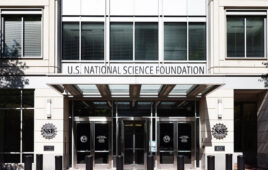
The OPM guidance noted that federal employees with “substantive participation and discretionary authority in agency grantmaking” should be classified as Schedule Policy/Career. This could affect federal employees in scientific agencies like the National Institutes of Health and the National Science Foundation.
These agencies dictate how billions of tax dollars are distributed to universities and labs. Stripping protections from the officials who manage this could grant political appointees power to restrict funding for research that contradicts administration platforms, such as climate science or reproductive health, and redirect resources towards initiatives favored by the administration without congressional approval.
The Trump administration frames the reclassification as an accountability measure. OPM Director Scott Kupor said the rule ensures that senior career officials responsible for advancing the president’s agenda can be held to the same performance expectations that exist throughout much of the American workforce. “It’s also about a restoration, in our mind, of the democratic process,” Kupor said in a press call, according to FedSupport. “You can have any political views, but if you allow those views to basically interfere with your willingness to actually carry out lawful orders and policy directives with the administration, then this provides a mechanism for people in those agencies to be able to be removed effectively at-will.”
An analysis by the Union of Concerned Scientists (UCS) estimated that this could impact up to 816 workers whose positions specifically support independent federal science and STEM-related activities.
“These hundreds of people and others like them play a pivotal role in conducting independent scientific research and providing technical expertise to ensure policymakers have the best available science at their fingertips… Without the ongoing work of independent scientists, our health, safety and democracy will be put in jeopardy,” Kristie Ellickson, a senior scientist with the Center for Science and Democracy at UCS, said in a statement.
One potential outcome of the reclassification is that scientists may begin to soften conclusions, alter data framing or avoid controversial research topics to protect their livelihoods. Over time, this could drive scientific talent away from the public sector into academia and industry, leaving vacancies that may be filled based on loyalty rather than scientific experience. “With fewer whistleblower protections, both scientists and their leadership who synthesize studies and data into policy recommendations or impact assessments are more likely to be disciplined if they report that their findings are being suppressed, manipulated or delayed. This puts them under greater pressure to report only what aligns with political priorities, not report inconvenient facts or findings and not report to their superiors if they are being unduly pressured,” Ellickson said in an email to R&D World.
The return of the spoils system
The roots of this development trace back to the 19th century. Before 1883, the U.S. operated under a spoils system popularized under President Andrew Jackson, where political parties rewarded loyal supporters with government jobs, regardless of qualifications.
In 1883, the Pendleton Act changed this after President James Garfield was assassinated by a political job-seeker. The act established a non-partisan merit system, making it unlawful to fire or demote federal employees for political reasons. The Trump administration is challenging this with its reclassification.
Schedule F was first proposed in an executive order in October 2020, but Biden rescinded the edict after taking office in January 2021. In Trump’s second term, his administration has walked back Biden-era protections to implement the Schedule Policy/Career classification.
The policy is the subject of multiple lawsuits by federal employee unions, including the American Federation of Government Employees and Public Employees for Environmental Responsibility. They argue that the policy would violate federal statutes, the Constitution and the Administrative Procedure Act’s ban on arbitrary and capricious decision-making.
“This profoundly troubling rule advances efforts by the administration to politicize policymaking by removing scientists and experts and inserting, instead, those who will follow the wishes of political leaders,” Tim Whitehouse, PEER’s executive director, told Government Executive. “It would allow political leaders to reach deep into federal agencies to remove and replace unknown and unheralded civil servants whose work is critical to keeping our country safe but whose viewpoints may run afoul of the prevailing political narrative of the day.”
“It is the job of scientists to bring the public the truth and these new changes make that job harder,” Ellickson said in her email.