 Imagine a hospital spending millions on advanced imaging equipment yet relying on decades-old computers to run the software.
That paradox propelled robotics and computer vision veteran Camilo Buscaron—a former systems engineer at NVIDIA and Chief Technologist for AWS Robotics—into action. In 2023, he set out to commercialize an open-source computer vision library known as Kornia, which quickly surged to two million monthly downloads. The adoption data from that experience “opened our eyes to the medical imaging opportunity,” said Buscaron, founder and CEO of ALAFIA Supercomputers. Though he stepped away from that open-source project, the lessons learned fueled his pivot to HPC systems designed for on-prem AI—serving both radiology and pathology demands.
That realization led him to a hospital aiming to develop an AI application. “They had a $2–3 million scanner on one side,” he said in an interview at the J.P. Morgan Healthcare Conference. And on the other, an ancient PC struggling to keep up. “Now that they want to do AI, they’re bottlenecked by old systems.”
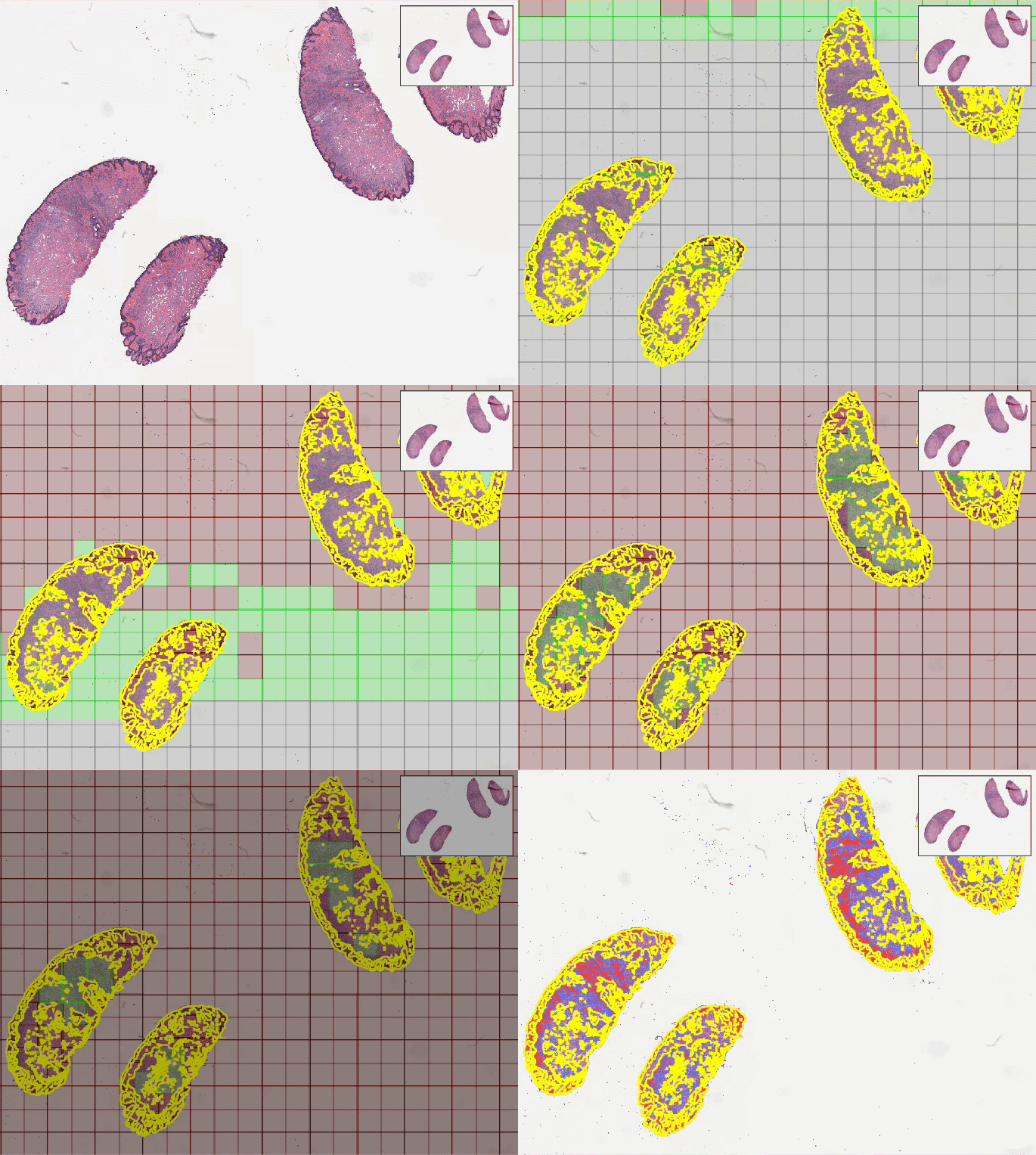
The visualization above shows the capability of ALAFIA hardware to visualize cell segmentation, cell classification and nuclei detection in real time.
While computer specs vary from hospital to hospital, it’s not uncommon to see powerful imaging systems paired with aging PCs. Still, in 2025, one major medical imaging company, for instance, was still selling HP8400-class systems—a workstation that debuted nearly two decades ago. It is not unusual for such legacy systems to persist alongside cutting-edge medical equipment. Meanwhile, researchers online (including Reddit users) describe assembling “CT rigs” with gaming parts—maybe 64 to 128 GB of RAM here, a 12 GB GPU there—in hopes of handling massive image stacks or running AI models without maxing out resources. Such configurations fall far short of the computational demands required for deep learning on high-resolution medical imaging data, where a single pathology are often about 80,000 x 60,000 pixels and can reach 500,000 x 250,000 pixels in extreme cases.
“It was a big eye-opener to see so much underinvestment in infrastructure. We had to fix that before AI could really help,” Buscaron says. (See the bar chart series below for more on how Alafia’s hardware compare to typical radiology workstations.)
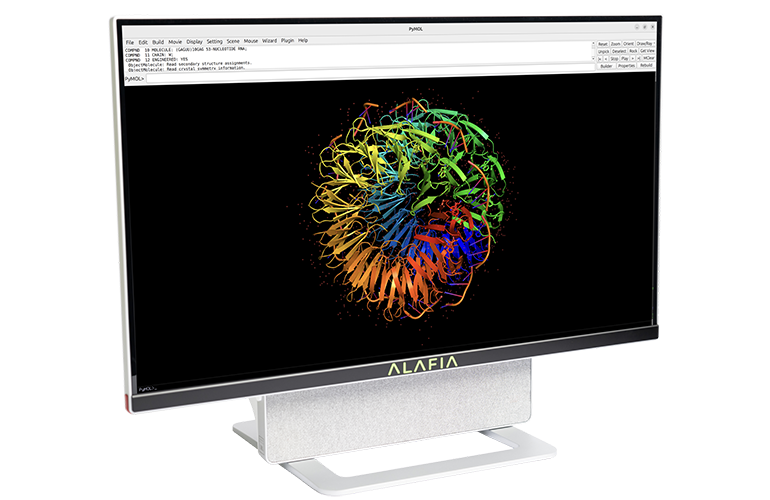
[ALAFIA’s AIVAS]
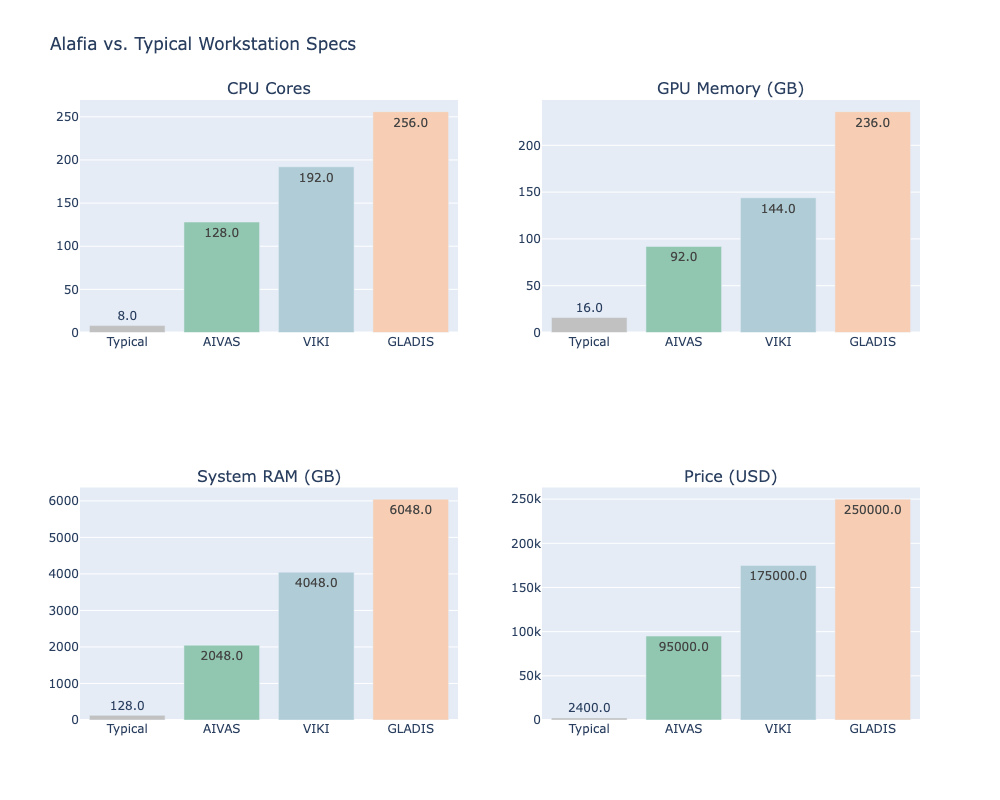
Alafia’s supercomputers offer a dramatic leap in performance compared to typical workstations used in radiology and digital pathology. The values for typical PCs were based on a review by R&D World of radiology workstations specifications and online discussions on PCs for radiology workflows. Specs for ALAFIA hardware sourced from its website.
Enter Alafia: “Personal supercomputers” for healthcare
From that initial encounter with a hospital running million-dollar imaging equipment on decades-old PCs, Buscaron saw an opportunity. In 2024, he founded Alafia to offer a new generation of personal supercomputers built specifically for the computational demands of modern healthcare and research.
A hidden expense many hospitals face is relying on public cloud GPU compute. Busy labs can quickly rack up five-figure monthly cloud bills. A single hospital pathology lab can process thousands of slides per day, while a busy radiology department might handle hundreds of cases.
ALAFIA’s on-prem HPC systems—packed with high CPU/GPU memory—let institutions keep data securely in-house and drastically reduce recurring cloud costs.
ALAFIA’s research into advanced neurological applications began with foundational collaborations focused on FreeSurfer implementations in fMRI-guided TMS research. These initial efforts involved Dr. Robert Cowan at Stanford and Danielle DeSouza at Acacia and led to an expanded partnership with the research team at Harvard/MGH/Martinos.
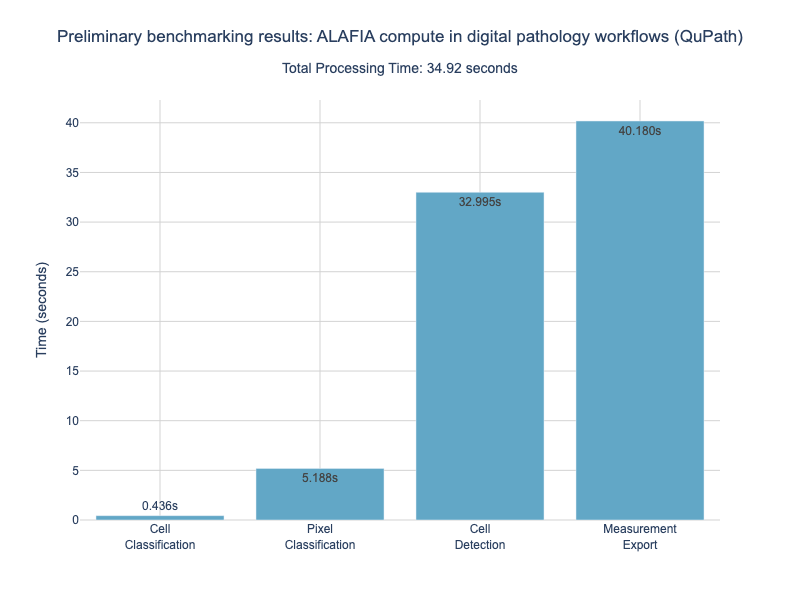
Through a strategic introduction from Tillman, the team connected with Dr. Mark Zaidi. Dr. Zaidi’s benchmarking methodology, QuMark (originally developed to gauge pathology workstation performance), provides a standardized benchmark for evaluating QuPath 0.2.3 performance. The preliminary benchmarking results below demonstrate the quantifiable performance of ALAFIA’s compute:
Data center in a box
Alafia’s AIVAS system is designed to handle massive datasets and high-volume AI workloads. Clinicians can load entire volumetric scans or train complex machine-learning models locally—without waiting hours for batch processing.
As Dr. Danielle D. DeSouza, Vice-President of Research at Acacia Clinics and Research Staff at Stanford University’s Department of Neurology, noted in
a press release: AIVAS can reduce “individual subject reconstructions from over 24 hours to under 2 hours” and cut “clinical trial cohort pre-processing that used to take weeks to months…in under a week.”
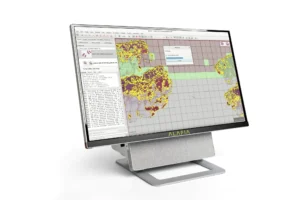
ALAFIA AIVAS workstation displaying QuPath-based real-time tissue analysis capabilities.
Radiology and pathology: AI-ready workflows
Unlike typical radiology workstations that top out at 128 GB of RAM, Alafia’s entry-level AIVAS system comes with 2 TB of ECC memory—enough to load massive imaging datasets directly into working memory with no slowdown. Where a standard workstation might rely on a single high-end GPU, Alafia’s systems can pack tens of thousands of GPU cores (28,416 in the baseline model, up to 54,528 or 47,359 in higher-tier systems) plus hundreds of Arm-based CPU cores. That parallel firepower means AI tasks that once took hours can be executed in real-time, letting clinicians scan through volumetric data or train complex machine-learning models locally, on demand.
Such speed translates to more than just faster workflows for pathologists and radiologists. For patients, achieving an accurate cancer diagnosis with greater speed can significantly improve patient outcomes.
A 10% productivity gain can lead to a quick payback period
Buscaron sees a clear financial imperative for hospitals to upgrade. “Even a 10% gain in a radiologist’s throughput means our system pays for itself in two months,” he explains. “Our hardware is built with industrial-grade HPC parts, backed by a 12-year software maintenance guarantee through Canonical. After those first two months, every improvement is pure benefit.”
This need for faster AI-driven approaches is heightened by a looming workforce shortage. Years ago, AI pioneer Geoffrey Hinton famously warned that radiologists might become obsolete—discouraging some from entering the field. With fewer radiologists now available, remaining staff face higher workloads and potential burnout. “If you can handle more patients without burning out your staff,” Buscaron adds, “that’s where the real savings and patient benefits kick in.”
What’s Next: The shift to multimodal AI and ‘world models’
Looking ahead, Alafia envisions a future of multimodal models—integrating radiology, pathology, genomics, and more. “Each patient is almost like a world unto themselves,” Dr. Pearce says. “We’re moving from narrow tools to AI systems that consider multiple data streams in unison.”
Through hardware partnerships with NVIDIA and Ampere, and software integrations with Qt, QuPath, and FreeSurfer, Alafia tailors its end-to-end systems for specific clinical use cases. With clients like Stanford, Harvard/MGH, Baptist Health System, and Jackson Memorial Hospital, the company aims to bring real-time AI to healthcare facilities worldwide—minus complexity and inefficiency of dealing with external GPUs — or relying on aging computational infrastructure.