Research & Development World

  • R&D World Home
  • Topics
    • Aerospace
    • Automotive
    • Biotech
    • Careers
    • Chemistry
    • Environment
    • Energy
    • Life Science
    • Material Science
    • R&D Management
    • Physics
  • Technology
    • 3D Printing
    • A.I./Robotics
    • Software
    • Battery Technology
    • Controlled Environments
      • Cleanrooms
      • Graphene
      • Lasers
      • Regulations/Standards
      • Sensors
    • Imaging
    • Nanotechnology
    • Scientific Computing
      • Big Data
      • HPC/Supercomputing
      • Informatics
      • Security
    • Semiconductors
  • R&D Market Pulse
  • R&D 100
    • 2025 R&D 100 Award Winners
    • 2025 Professional Award Winners
    • 2025 Special Recognition Winners
    • R&D 100 Awards Event
    • R&D 100 Submissions
    • Winner Archive
  • Resources
    • Research Reports
    • Digital Issues
    • Educational Assets
    • Subscribe
    • Video
    • Webinars
    • PharmSci360
    • Content submission guidelines for R&D World
  • Global Funding Forecast
  • Top Labs
  • Advertise
  • SUBSCRIBE

Ice Shapes the Landslide Landscape on Mars

By Springer | November 21, 2017

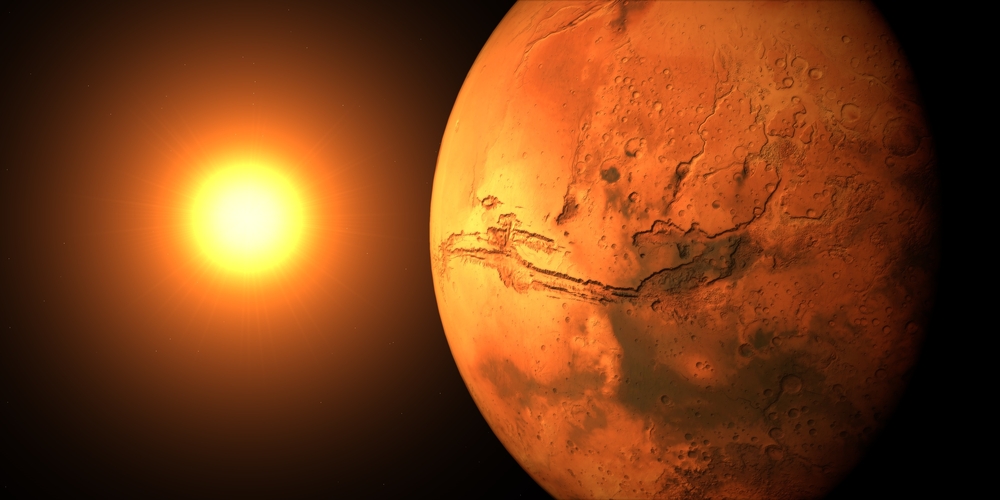
How good is your Martian geography? Does Valles Marineris ring a bell? This area is known for having landslides that are among the largest and longest in the entire solar system. They make the perfect object of study due to their steep collapse close to the scarp, extreme thinning, and long front runout. In a new research paper published in EPJ Plus, Fabio De Blasio and colleagues from Milano-Bicocca University, Italy, explain the extent to which ice may have been an important medium of lubrication for landslides on Mars. This can in turn help us understand the geomorphological history of the planet and the environment of deposition.

The authors noted that the landslides in Valles Marineris are of similar shape as ice-lubricated landslides on Earth. In their paper, they feed these observations, combined with remote sensing measurements showing the presence of massive ice under the soil, into a numerical simulation exploring the possibility that such landslides were lubricated by ice.

They then explore two possible scenarios to explain what happens to landslides rocks: one in which ice is only present at the base, and another in which ice impregnates the soil. To reproduce the vertical collapse of landslide material in the landslide scarp area and the extreme thinning and runout in the front, the model must take into account the presence of ice in the calculations.

The authors, therefore, demonstrate how the presence of ice, exposed on the ground or in the collapsing slope, could affect the shape and velocity of these landslides. The calculated velocity of landslides are often well in excess of 100 m/s and up to 200 m/s at peak. The authors then compare the results of the numerical simulations with real images and elevation profiles, allowing them to draw conclusions regarding the influence of the climate on shaping Martian landscapes.


Related Articles Read More >

No storms, no forecast: NASA’s DAPHNE mission targets quiet-time space weather
How a plant virus could keep astronauts medicated on a trip to Mars
The science behind the Prada-designed spacesuit for Artemis 
NASA is confident Blue Origin will be ready for Artemis III despite explosion
rd newsletter
EXPAND YOUR KNOWLEDGE AND STAY CONNECTED
Get the latest info on technologies, trends, and strategies in Research & Development.

R&D World Digital Issues

Fall 2025 issue

Browse the most current issue of R&D World and back issues in an easy to use high quality format. Clip, share and download with the leading R&D magazine today.

R&D 100 Awards
Research & Development World
  • Subscribe to R&D World Magazine
  • Sign up for R&D World’s newsletter
  • Contact Us
  • About Us
  • Drug Discovery & Development
  • Pharmaceutical Processing
  • Global Funding Forecast

Copyright © 2026 Arrowfly LLC. All Rights Reserved. The material on this site may not be reproduced, distributed, transmitted, cached or otherwise used, except with the prior written permission of Arrowfly
Privacy Policy | Advertising | About Us

Search R&D World

  • R&D World Home
  • Topics
    • Aerospace
    • Automotive
    • Biotech
    • Careers
    • Chemistry
    • Environment
    • Energy
    • Life Science
    • Material Science
    • R&D Management
    • Physics
  • Technology
    • 3D Printing
    • A.I./Robotics
    • Software
    • Battery Technology
    • Controlled Environments
      • Cleanrooms
      • Graphene
      • Lasers
      • Regulations/Standards
      • Sensors
    • Imaging
    • Nanotechnology
    • Scientific Computing
      • Big Data
      • HPC/Supercomputing
      • Informatics
      • Security
    • Semiconductors
  • R&D Market Pulse
  • R&D 100
    • 2025 R&D 100 Award Winners
    • 2025 Professional Award Winners
    • 2025 Special Recognition Winners
    • R&D 100 Awards Event
    • R&D 100 Submissions
    • Winner Archive
  • Resources
    • Research Reports
    • Digital Issues
    • Educational Assets
    • Subscribe
    • Video
    • Webinars
    • PharmSci360
    • Content submission guidelines for R&D World
  • Global Funding Forecast
  • Top Labs
  • Advertise
  • SUBSCRIBE