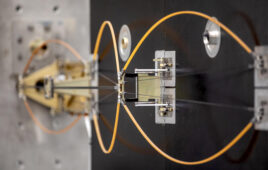
Electrical physicists from Czech Technical University have provided additional evidence that new current sensors introduce errors when assessing current through iron conductors. It’s crucial to correct this flaw in the new sensors so that operators of the electrical grid can correctly respond to threats to the system. The researchers show how a difference in a conductor’s magnetic permeability, the degree of material’s magnetization response in a magnetic field, affects the precision of new sensors. They also provide recommendations for improving sensor accuracy. The results are published this week in AIP Advances, from AIP Publishing.
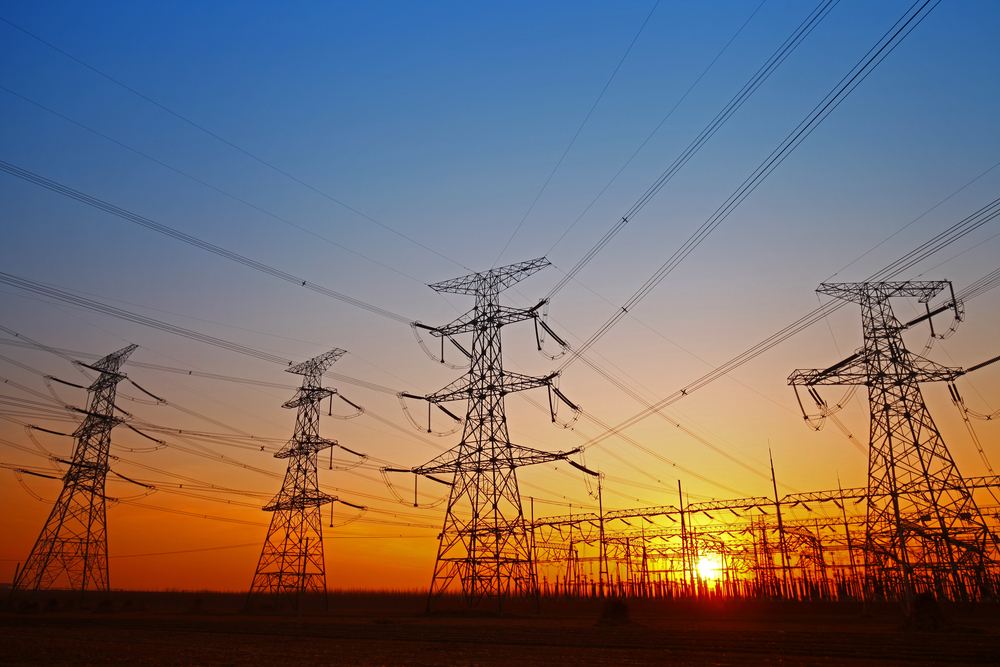
With the addition of new renewable energy sources and smart homes demanding more information, the electrical grid is becoming more complex. Author Pavel Ripka said, “If you have [a] grid at the edge of capacity, you have to be careful to monitor all the transients (power surges).” Surges are overloads or failures to the system, which can be caused by something as simple as a broken power line, or more dramatic events like lightning strikes or geomagnetic storms.
Ripka explained the importance of monitoring electrical currents: “Every day you get a lot of these small events (surges) within a big power grid, and sometimes it is difficult to interpret them. If it is something really serious, you should switch off parts of the grid to prevent catastrophic damage, but if it’s a short transient which will finish fast there is no need to disconnect the grid. It’s a risky business to distinguish between these events, because if you underestimate the danger then parts of the distribution installations can be damaged causing serious blackouts. But if you overestimate and disconnect, it is a problem because connecting these grids back together is quite complicated,” he said.
To address the increasing complexity of the grid and power outage threats, there has been an increase in use of ground current sensors in the past couple of years. New yokeless current sensors are popular because of their low cost and compact size. These sensors are good for assessing currents in nonmagnetic conductors such as copper and aluminum. However, ground conductors are usually iron due to its mechanical strength, and iron has a high magnetic permeability.
Using these new sensors to measure ground currents when iron is present is a bit like using a thermometer to assess if the heating needs to be switched on, not taking into account where exactly the thermometer is placed. Near a door or window, the thermometer’s reading can be affected differently than elsewhere. In the same way, this study has shown that not taking into account the magnetic permeability of a conductor distorts the accuracy of a reading with a yokeless sensor.
Ripka and his team matched experimental measurements with theoretical simulations to highlight the difference in yokeless sensor readings between nonmagnetic and magnetic conductors.
“We can show how to design (yokeless) current sensors so that they are not so susceptible to this type of error,” Ripka said. “[This study is] just a small reminder to make [engineers] design sensors safely.”
To further prove the point, Ripka’s group is starting to take long-term readings at power stations, comparing results to commercial uncalibrated sensors. In the future, Ripka envisions cooperating with geophysicists to correlate ground currents and geomagnetic activity, to better understand how these currents are distributed within the earth and even predict future disruptions to the grid.