Research & Development World

  • R&D World Home
  • Topics
    • Aerospace
    • Automotive
    • Biotech
    • Careers
    • Chemistry
    • Environment
    • Energy
    • Life Science
    • Material Science
    • R&D Management
    • Physics
  • Technology
    • 3D Printing
    • A.I./Robotics
    • Software
    • Battery Technology
    • Controlled Environments
      • Cleanrooms
      • Graphene
      • Lasers
      • Regulations/Standards
      • Sensors
    • Imaging
    • Nanotechnology
    • Scientific Computing
      • Big Data
      • HPC/Supercomputing
      • Informatics
      • Security
    • Semiconductors
  • R&D Market Pulse
  • R&D 100
    • 2025 R&D 100 Award Winners
    • 2025 Professional Award Winners
    • 2025 Special Recognition Winners
    • R&D 100 Awards Event
    • R&D 100 Submissions
    • Winner Archive
  • Resources
    • Research Reports
    • Digital Issues
    • Educational Assets
    • Subscribe
    • Video
    • Webinars
    • PharmSci360
    • Content submission guidelines for R&D World
  • Global Funding Forecast
  • Top Labs
  • Advertise
  • SUBSCRIBE

Laird Thermal Systems launches the next generation eco-friendly recirculating chillers

By Heather Hall | May 19, 2020

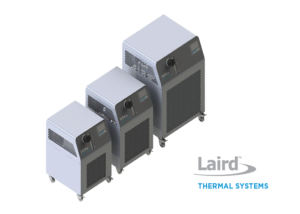
Laird Thermal Systems has released its next generation of eco-friendly recirculating chillers for precise temperature control of analytical, medical and industrial equipment. The Nextreme Recirculating Chiller platform features high-quality components, environmentally friendly refrigerants, low-noise components and a user-friendly operator interface at a standard price. The new chiller utilizes high-performance variable speed motors for noise reduction, lower room heat input and reduced energy consumption by up to 50% compared to conventional compressor-based systems.

The Nextreme Recirculating Chiller platform is designed with a semi-open coolant system which offers several advantages including decreased bacterial growth and evaporation while still being easy to maintain. The chiller utilizes high-quality components that minimize downtime and features sensor instrumentation that provides system status and the ability to integrate predictive maintenance / failure analysis. By using environmentally friendly R513A refrigerant, it delivers similar performance with less than half the Global Warming Potential (GWP) compared to traditional hydrofluorocarbons (HFC) refrigerants.

“The Nextreme Chiller line is designed for OEMs, laboratories and research universities that need an energy-efficient chiller versatile enough to support the cooling needs of their entire equipment installation,” said Greg Ducharme, Product Director at Laird Thermal Systems. “Laboratory technicians, R&D engineers and equipment operators will appreciate the quiet, maintenance-free operation of the system, knowing it also has a lower environmental impact due to its refrigerant type and reduced energy consumption.”

The Nextreme Recirculating Chiller platform cools well below ambient temperature and offers temperature stability of ±0.1°C of the designated temperature. The Nextreme Chiller Series is available with three standard cooling capacities including 1800 W, 2800 W and 5000 W models.

An RS-232 / RS-485 communications interface offers complete control integration of the chiller into a higher-level assembly control system where users can remotely request data or send setpoints to the chiller using communication commands. The LCD touchscreen display allows users to easily control temperature setpoints, coolant type, flow and alarm setting. The Nextreme Chiller platform offers several optional features to meet unique application requirements such as flow control and measurement, coolant filtration, high purity plumbing and more.

For more information, visit lairdthermal.com/nextreme
Related Articles Read More >

Business, Finance and Investment, data analysis concept. Business woman using calculator to calculate financial report and analyzing market data, business planning, market research
The NIH tried to make research more accessible, researchers are paying the price
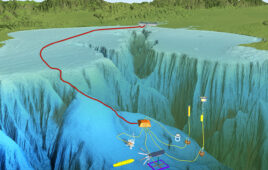
MBARI's Monterey Accelerated Research System (MARS) connects seafloor instruments to shore through a roughly 51-kilometer power and fiber-optic cable (red line) ending at a node about 891 meters down. The Geo-Sense system described in the new paper takes the opposite approach: a portable, battery-powered cable that records locally with no link to shore. Researchers used MARS's own fiber data to cross-check Geo-Sense's earthquake detections. Credit: MBARI
How lightweight AI startup Lightscline helped turn one to two years of seafloor data analysis into a two-month sprint
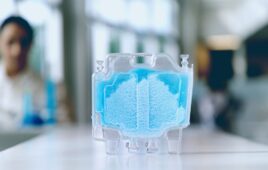
Interphex 2026 awards honor technologies focused on flexibility, automated workflows and ease of use
The photon frontier: how O2O Lasercom is redefining deep-space data on Artemis II
rd newsletter
EXPAND YOUR KNOWLEDGE AND STAY CONNECTED
Get the latest info on technologies, trends, and strategies in Research & Development.

R&D World Digital Issues

Fall 2025 issue

Browse the most current issue of R&D World and back issues in an easy to use high quality format. Clip, share and download with the leading R&D magazine today.

R&D 100 Awards
Research & Development World
  • Subscribe to R&D World Magazine
  • Sign up for R&D World’s newsletter
  • Contact Us
  • About Us
  • Drug Discovery & Development
  • Pharmaceutical Processing
  • Global Funding Forecast

Copyright © 2026 WTWH Media LLC. All Rights Reserved. The material on this site may not be reproduced, distributed, transmitted, cached or otherwise used, except with the prior written permission of WTWH Media
Privacy Policy | Advertising | About Us

Search R&D World

  • R&D World Home
  • Topics
    • Aerospace
    • Automotive
    • Biotech
    • Careers
    • Chemistry
    • Environment
    • Energy
    • Life Science
    • Material Science
    • R&D Management
    • Physics
  • Technology
    • 3D Printing
    • A.I./Robotics
    • Software
    • Battery Technology
    • Controlled Environments
      • Cleanrooms
      • Graphene
      • Lasers
      • Regulations/Standards
      • Sensors
    • Imaging
    • Nanotechnology
    • Scientific Computing
      • Big Data
      • HPC/Supercomputing
      • Informatics
      • Security
    • Semiconductors
  • R&D Market Pulse
  • R&D 100
    • 2025 R&D 100 Award Winners
    • 2025 Professional Award Winners
    • 2025 Special Recognition Winners
    • R&D 100 Awards Event
    • R&D 100 Submissions
    • Winner Archive
  • Resources
    • Research Reports
    • Digital Issues
    • Educational Assets
    • Subscribe
    • Video
    • Webinars
    • PharmSci360
    • Content submission guidelines for R&D World
  • Global Funding Forecast
  • Top Labs
  • Advertise
  • SUBSCRIBE